
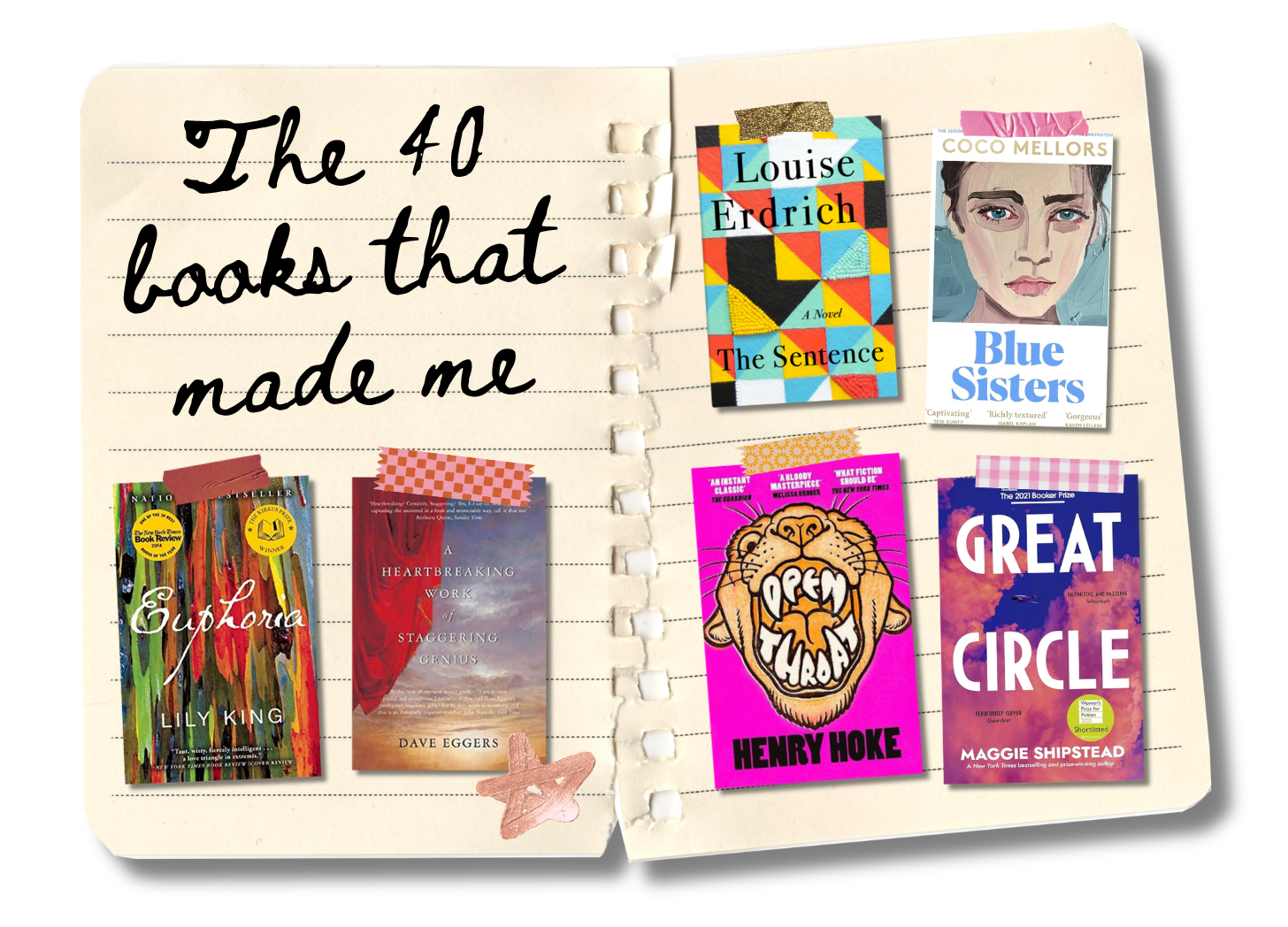
The 40 books that made me
The family lore is that I taught myself how to read before kindergarten. I’m an eldest daughter so I guess that tracks. Point is, I’ve always been a reader. The first book I remember being seduced by was Roald Dahl’s The BFG. I went on to read any other book of Dahl’s I could find, like Matilda, James and the Giant Peach, and Danny the Champion of the World.
Around the time I was reading books for English class in high school (The Giver, To Kill a Mockingbird, The Great Gatsby, etc.), I came across the Harry Potter series. This, I think, is where I first felt something like obsession for reading. The experience of reading Harry Potter is so specific and largely inaccessible to me now. For one, I grew up and learned that the author isn’t as great as her storytelling (not writing!) capabilities. And second of all, I’m twenty years older and don’t think a fantasy series could play with my imagination the same way Harry Potter was able to. My mind was a freer place then and the books came to me at the right time.
Ditto the Twilight and Hunger Games series. I was a new adult when Twilight came out, fresh off to college and more interested in immersive fiction than the journalism books I was reading for school. The Hunger Games came out the year I graduated from college. These three series contributed to my love for reading and storytelling, but when I think about which books helped inform my current reading tastes, none of them make the cut. Nor do many classics. When I read a classic, I’m usually reminded that old literature is hard for me to get into. You’ll see Lonesome Dove and The Remains of the Day below, but Jane Austen doesn’t get a mention. Leo Tolstoy doesn’t get a mention.
Books that influence what I read next, books that set the bar high and help me decide which ones to skip, books that encourage me to DNF others — in no specific order, these are the forty books that have shaped the reader I am today:
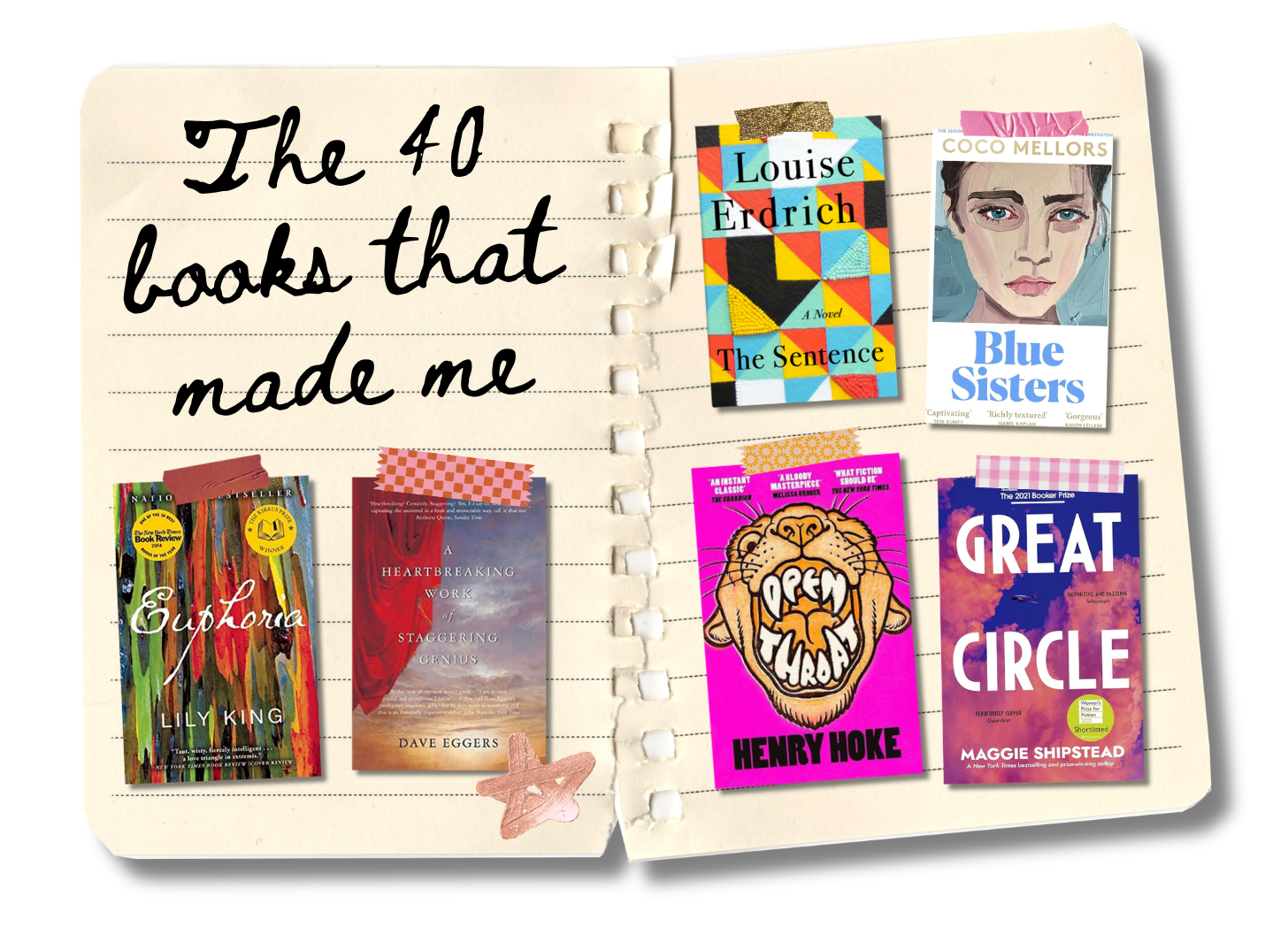
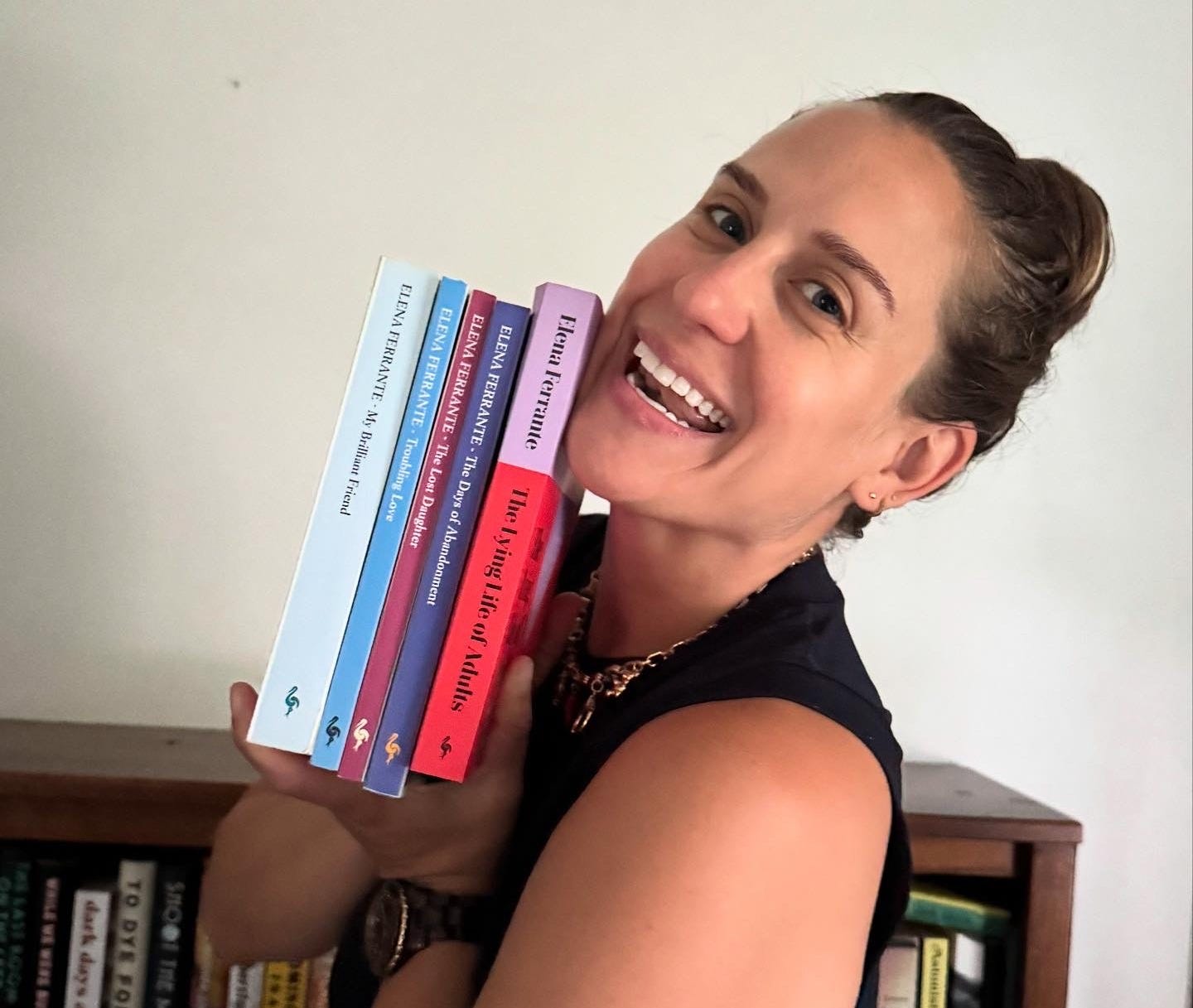
The Neapolitan Quartet by Elena Ferrante | This is a four-for-one, but I don’t think the books in this series need to be separate. When Elena Ferrante wrote the Neapolitan Quartet, she looked at it as one sweeping epic, which was the rationale for the 10-year-anniversary publication of My Brilliant Friend Deluxe Edition: The Four Volumes. The Quartet was the Kolina Cicero x Elena Ferrante origin story, which led to my becoming a devoted author completionist and enthusiastic fangirl.
A Heartbreaking Work of Staggering Genius by Dave Eggers | This was my gateway to Dave Eggers, who I regard as one of today’s greatest writers. Staggering Genius is the hilarious and heartbreaking (the title is not misleading!) memoir about Eggers losing both of his parents when he was in college, resulting in him having to care for his eight-year-old brother. If Eggers is new to you, he’s the founder of the McSweeney’s literary journal and writing and publishing programs for children around the country. He hasn’t written a bad book. Even his children’s books are good. He writes with equal parts humor and heart, which makes him my favorite male author.
Euphoria by Lily King | I refer to Lily King’s latest book Heart the Lover often, but Euphoria is more fundamental to my reading life and tastes. It’s about three anthropologists in New Guinea during the 1930s who get tangled in a nefarious affair. I am so drawn to King’s ability to bring readers to a faraway place in a long-ago time while maintaining enough modernity for me to feel I belong there.
The Idiot by Elif Batuman | It was summer, my daughter was almost a year old, and I was recovering from a botched wisdom teeth procedure. The levity and humor in this book kept me afloat in between my staggered doses of antibiotics and pain relievers. It was the first campus novel I ever loved, even if the laughter (real laugh out loud laughter!) hurt my swollen face.
Small Things Like These by Claire Keegan | This book led me to Foster, which led me to So Late in the Day — and all of them are astounding. Small Things Like These is about a simple man in a small Irish town in 1985 who learns an unfortunate truth. The story is how he handles the information. Keegan’s writing is as crisp as it gets.
Giovanni’s Room by James Baldwin | What an exceptional, moving, heart-wrenching book. An American goes to Paris in the 50s and lives that sexy art life, spending much of his time in the small room of his friend Giovanni while his girlfriend, to whom he had recently proposed, is galavanting around Europe. This was my first Baldwin book and I’m accepting recommendations for my next.
Orbital by Samantha Harvey | This novel has next to no plot and yet it one of the most brilliant novels I’ve ever read. I’m not being bombastic when I say this. It’s the 136-page story of six astronauts and the 24 hours they spend in space. Every sentence is honey-dipped and sugar-coated. “Out there it’s Argentina it’s the South Atlantic it’s Cape Town it’s Zimbabwe. Over its right shoulder the planet whispers morning — a slender molten breach of light. They slip through time zones in silence.” It’s not everybody’s taste, but I was thrilled when I realized books like this exist.
A Little Life by Hanya Yanagihara | This is the saddest book you’ll ever read, and if you know me, you know that means I think it’s really, really good. If I’m moved to tears, the author has me convinced. There are a lot of characters in A Little Life and it takes a good 50+ pages to get into it, but once you’ve fully entered the world, it’s hard to leave, despite how depressing it is. Many books have made me cry, but none have done it like this one.
The Remains of the Day by Kashuo Ishiguro | This is the story of a butler named Stevens who’s worked at a stately English home for 35 years. While the story is narrated in the present tense by Stevens, much of it is comprised of flashbacks to his time working for the American owner of the house. The narration is extremely tight and controlled, so when Stevens lets his emotions waver for even a minute, it’s a gut punch. For fun, I did a deep analysis of The Remains of the Day, which helped me understand why I thought it was so brilliant.
Man’s Search for Meaning by Viktor E. Frankl | I read this in 2015 and knew even then I’d never read another book like it. If you’ve not read Man’s Search for Meaning, quit what you’re doing and buy yourself a copy. It’s the story of the author’s survival in Nazi concentration camps. His reasons for enduring will knot your stomach and change the way you think about life.
Small Boat by Vincent Delecroix | Here’s yet another tiny book (see: Orbital and Small Things Like These) that impacts readers in unbelievable ways. It’s based on true events that took place in 2021, when an inflatable dinghy containing thirty migrants attempted to cross the English Channel. The way the French handled the call of distress was despicable. Author Vincent Delecroix writes a fictional story about why it may have happened the way it did. This is one of the most moving books I’ve ever read and it’s only 128 pages.
The Days of Abandonment by Elena Ferrante | This is the book that made me realize I love stories that are a little off-kilter. I like feeling a slight discomfort and am happy following unhappy, unreliable, and unhinged narrators when they earn their place in the story. The tone of this book is highly specific and appeals to readers looking for intellectual stimulation and perhaps a touch of schadenfreude. This is my favorite standalone novel of Elena Ferrante’s (and my only repeat author on this list).
Shuggie Bain by Douglas Stuart | Add this to the list of sad books! But, inexplicably, it is a beautiful one. Douglas Stuart won the Booker Prize for this novel, a brutal telling of a life of poverty and addiction in Glasgow, Scotland in the eighties.
Great Circle by Maggie Shipstead | About a female aviator in the 20th century who circumnavigates the globe, the story and the prose are equally beautiful. It has a present-day storyline as well, and the hopping between timelines further develops this gorgeous story. This is one of my favorite books I’ve ever read and I will recommend it to anyone looking for an immersive novel.
Four Thousand Weeks by | I will never shut up about this book. If you’re a person with passions or just want to live a fulfilling life, this book is informative in the best way — which is to say candid, funny, and self-deprecating. Thanks to the suggestion by , it’s now my go-to graduation gift.
The Goldfinch by Donna Tartt | This is one of those singular books in an echelon all its own. There’s not another book like it. The Goldfinch led me to Tartt’s other book, The Secret History, which is one of my favorites ever (I love a pretentious campus novel! I can’t help it!). It won the Pulitzer Prize and deserves every bit of its accolades. It is exquisite.
Lonesome Dove by Larry McMurtry | I just read this book in June (it took me the entire month to read it) and already it’s hitting one of my best-of lists. The characterization in this novel is some of the best I’ve ever seen. It’s made me curious about other Westerns, but I fear it has set the bar unattainably high.
The Sentence by Louise Erdrich | This was the first book about the pandemic that I liked. Louise Erdrich is from Minneapolis (where I’m from) and she accurately portrays the terror of the combination of Covid and the murder of George Floyd and subsequent decimation of our city. After reading this book, I now know she’s the only author I’d trust to write about the ICE occupation in Minneapolis.
Atomic Habits by James Clear | I’ve been tracking my habits for a gazillion years (eight) and this book was the impetus. It checks me and makes me hyper-aware of how I’m spending my life, which, as states the premise of the book, is the sum of all my little habits. Having just turned forty and finding myself in this space of reflection and reconciliation, I’m so grateful I read this book all those years ago.
Same As It Ever Was by Claire Lombardo | The prose, the characters, the humor — this is my kind of read. Her books are luxuriant, earning their size and length. Nobody writes about familial relationships like Claire Lombardo. This is my favorite of her two books.
Slouching Towards Bethlehem by Joan Didion | In this 1968 collection of essays, Didion includes a piece called On Keeping a Notebook that is an iconic exploration of the purpose and power of keeping personal notes. That essay inspired me to finally start a commonplace book and also reminded me of the importance of journaling. (“I think we are well advised to keep on nodding terms with the people we used to be, whether we find them attractive company or not.”)
Blue Sisters by Coco Mellors | I would do uncool things to be able to read this for the first time all over again. It’s the story of three sisters coming to terms with the passing of their fourth sister. It touches on addiction in ways both beautiful and heart-breaking. I’ll read anything Coco Mellors writes. Her first novel, Cleopatra and Frankenstein, could easily be on this list as well, but Blue Sisters was my intro to Mellors and therefore had a bigger influence on me.
James by Percival Everett | A modern classic. A reimagining of Adventures of Huckleberry Finn from the slave’s point of view. It’s one of the top five books I’ve read this decade, possibly ever.
Rebecca by Daphne du Maurier | This novel from 1938 was my introduction to Gothic literature. The elusive namesake of the book is ghostly and haunting, as is the prose the unnamed narrator uses to speak of her. It’s suspenseful and gripping and its resurgence among readers is well deserved. Here’s one of my favorite lines, when the narrator is speaking of rhododendrons: “They startled me with their crimson faces, massed one upon the other in incredible profusion, showing no leaf, no twig, nothing but the slaughterous red, luscious and fantastic, unlike any rhododendron plant I had seen before.”
Open Throat by Henry Hoke | This was the book that showed me slim novels can be as impactful as those of traditional length. This tiny book is narrated by a mountain lion living in the hills under the Hollywood sign. Don’t be distracted by this information! The mountain lion narrator is why this book works. They (this narrator goes by they/them pronouns) are not educated like you and me (they call LA ‘ellay’ because they only know what they hear from the hikers in the hills), but they pay witness to humanity in a way you and I never could.
Demon Copperhead by Barbara Kingsolver | Now might be a good time to admit this is the only Barbara Kingsolver I’ve ever read. Where do I even go from here? Demon Copperhead exists in my mind beside Everett’s James (and in fact they were both published in 2024). It was inspired by David Copperfield and modernizes a story that is still omnipresent today: that of institutional poverty.
Wintering by | The book that made me appreciate winter! It gave me perspective about hardships in general as well. Author Katherine May uses winter as the most cunning metaphor. Everyone has their own personal winters, or seasons of difficulty in which we must nurture ourselves and our souls to come out better than we were upon entering them. It’s a book I like to re-read during the cold, dark months. It gives me a fresh perspective and appreciation for the season.
Olive Kitteridge by Elizabeth Strout | This book was my introduction to the world of Elizabeth Strout. It’s a collection of interconnected short stories about a curmudgeonly woman named Olive in the town of Crosby, Maine. Strout’s books are a delight because the characters are lovable and grumpy, plus they show up in all her books. So once you fall in love with the characters, you experience the great joy of knowing you’ll see them again soon.
The Book of Longings by Sue Monk Kidd | All you need to know about this book is that it’s the fictional story of Jesus’s wife, were he to have married. It’s brilliant.
My Absolute Darling by Gabriel Tallent | I only know one other person who has read this book (👋🏼 Chris!) and I am wary of putting it on this list because the subject matter is unbearable at times. But in terms of defining the reader I am today, My Absolute Darling showed me what happens when you don’t look away.
Beatrice and Virgil by Yann Martel | You know Yann Martel from Life of Pi. Beatrice and Virgil is Martel’s under-celebrated book about a novelist, a howler monkey, a donkey, a taxidermist, and a dog. Similar to Small Boat, it raises questions about complicity and what is and is not our responsibility.
The Quickening by Elizabeth Rush | This is a memoir by a climate activist who travels to Antarctica to study the rapid melting of our glaciers while battling the human desire to reproduce. “As I stare at the lopsided straggler, this slab of ice so diminished it’s nearly gone, my enchantment with the idea Antarctica’s great glaciers are responding to us, to our actions thousands of miles away, by birthing bergs whose very bodies bear grave warnings all seems wrong. Because, I wonder, how bad must things get for a parent to make such a sacrifice?” It’s breathtaking.
Bluets by Maggie Nelson | An entire book about a single color. Who has the creativity to conceive of it and the audacity to do it? Maggie Nelson, as it turns out. It’s written as a list of 240 thoughts on love, all through the lens of the color blue.
Big Swiss by Jen Beagin | I’m beginning to think the weirder the book, the more I love it. The conceit of Big Swiss speaks for itself: a woman falls in love with the patient of the sex therapist whose sessions she’s transcribing. It’s crude and bizarre and every bit my taste.
Breasts and Eggs by Mieko Kawakami | This is a remarkable exploration of identity and a woman’s decision to be childless. The writing is lyrical and honest and reads like you’re a part of the conversation yourself.
The Catcher in the Rye by J D Salinger | The famous opener of this book is the best support for why I love it: “If you really want to hear about it, the first thing you'll probably want to know is where I was born, and what my lousy childhood was like, and how my parents were occupied and all before they had me, and all that David Copperfield kind of crap, but I don't feel like going into it, if you want to know the truth.” The voice is pitch-perfect and extends throughout the book.
The Tipping Point by Malcolm Gladwell | Malcolm Gladwell is a wonderful storyteller and supplements his narratives with an enormous amount of research. The Tipping Point is about what makes something — a virus, a phenomenon, a trend — cross the threshold from everyday into everywhere. This was the first Gladwell book I read, which led me to Blink, What the Dog Saw, and Outliers. Gladwell asks the questions nobody else thinks to ask.
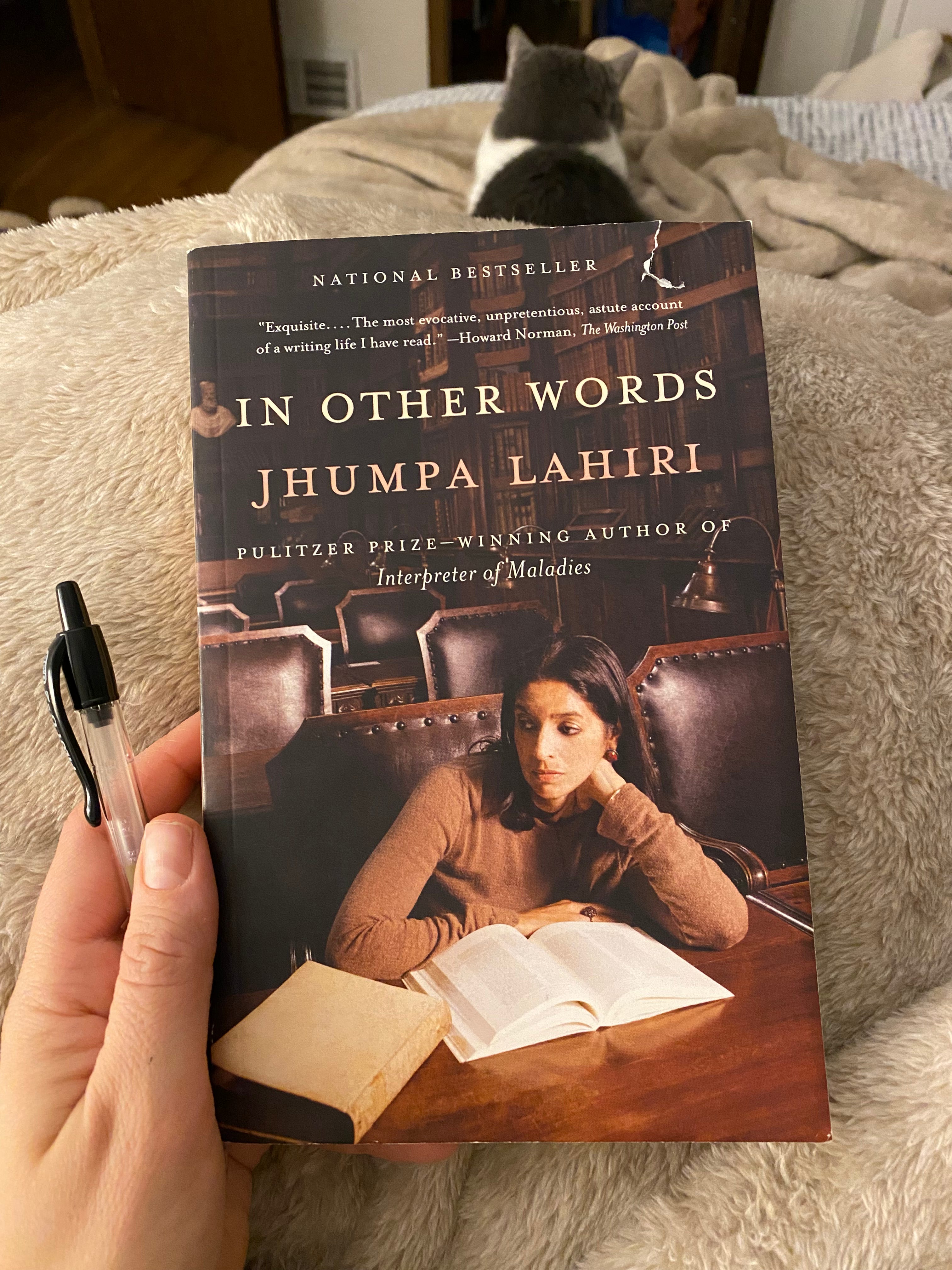
In Other Words by Jhumpa Lahiri | My first taste of Jhumpa Lahiri was The Namesake, which I read while in the top bunk of a couchette coursing through Europe in a month-long backpacking trip. I remember this because it was when I read the train accident scene. The book stuck with me, but somehow Lahiri herself didn’t. It wasn’t until I read In Other Words that I became fascinated by Jhumpa Lahiri. As an author, she is second only to Elena Ferrante in my list of favorites. In Other Words is her memoir about falling in love with the Italian language and moving her family to Rome so she could be immersed in it. Her obsession and passion made her feel like kin to me and led me to read everything she’s ever written. Her debut collection of short stories, Interpreter of Maladies, won the Pulitzer. Whereabouts is about a young woman wandering around Italy. In Other Words makes this list because it led me to everything else she’s written, and what a gift that was. If you’re new to Jhumpa Lahiri, I created a mood-based reading guide to get you started with this legendary author.
Prep by Curtis Sittenfeld | It’s a campus novel, but in a fictional swanky boarding school in Massachusetts. The protagonist is there on scholarship, which throws her up against the uber-wealthy and requires her to navigate her own way through the complicated caste system.
Bel Canto by Ann Patchett | This is one of those books people either love or hate. I’m in camp Love. It’s about a fancy birthday party gone wrong as terrorists arrive and hold the guests hostage. What unfolds is a story about forced proximity, endurance, and, somehow, love. After reading Bel Canto, I found Commonwealth, The Dutch House, Run, and This is the Story of a Happy Marriage. More recently, These Precious Days and Tom Lake. I am an everlasting fan of Patchett’s work. (My Whistler hold hasn’t come in yet but I’m dying to read it!)
Honorable Mentions
Forty books is so many but also not enough to cover every title that’s made an impact on my reading. Below are some other notable books.
The Friend by Sigrid Nunez
Revolutionary Road by Richard Yates
Between Two Kingdoms by Suleika Jaouad
The Great Believers by Rebecca Makkai
Matrix by Lauren Groff
The Marriage Portrait by Maggie O’Farrell
On Beauty by Zadie Smith
All the Pretty Horses by Cormack McCarthy
The Library Book by Susan Orlean
Vladimir by Julia May Jonas
Questions for you:
What books have informed the reader you are today? Share one, share forty. I want to know the books that made you.
What is it about a book that makes a profound impact on you? I know it changes from book to book, but I found some themes while creating this list and would love to know what sticks out to you.
Which of the books above resonated with you the way they have with me? There are also quite a few polarizing books listed. A Little Life sets people OFF! Bel Canto, too. Are there any above you dislike?

Thanks for reading! Love, Kolina
- What are you reading? What are you underlining?
- What I’m reading: After leaving my copy outside in a downpour and having to let it dry for weeks, I’ve returned to What is the What by Dave Eggers. I wanted to put this book on my list of 40 books that made me but I haven’t finished it yet and therefore felt I couldn’t include it. But wow wow wow.
When you purchase books through the links above, you support The Underlined and an indie bookstore of your choice at no additional cost to you.



