
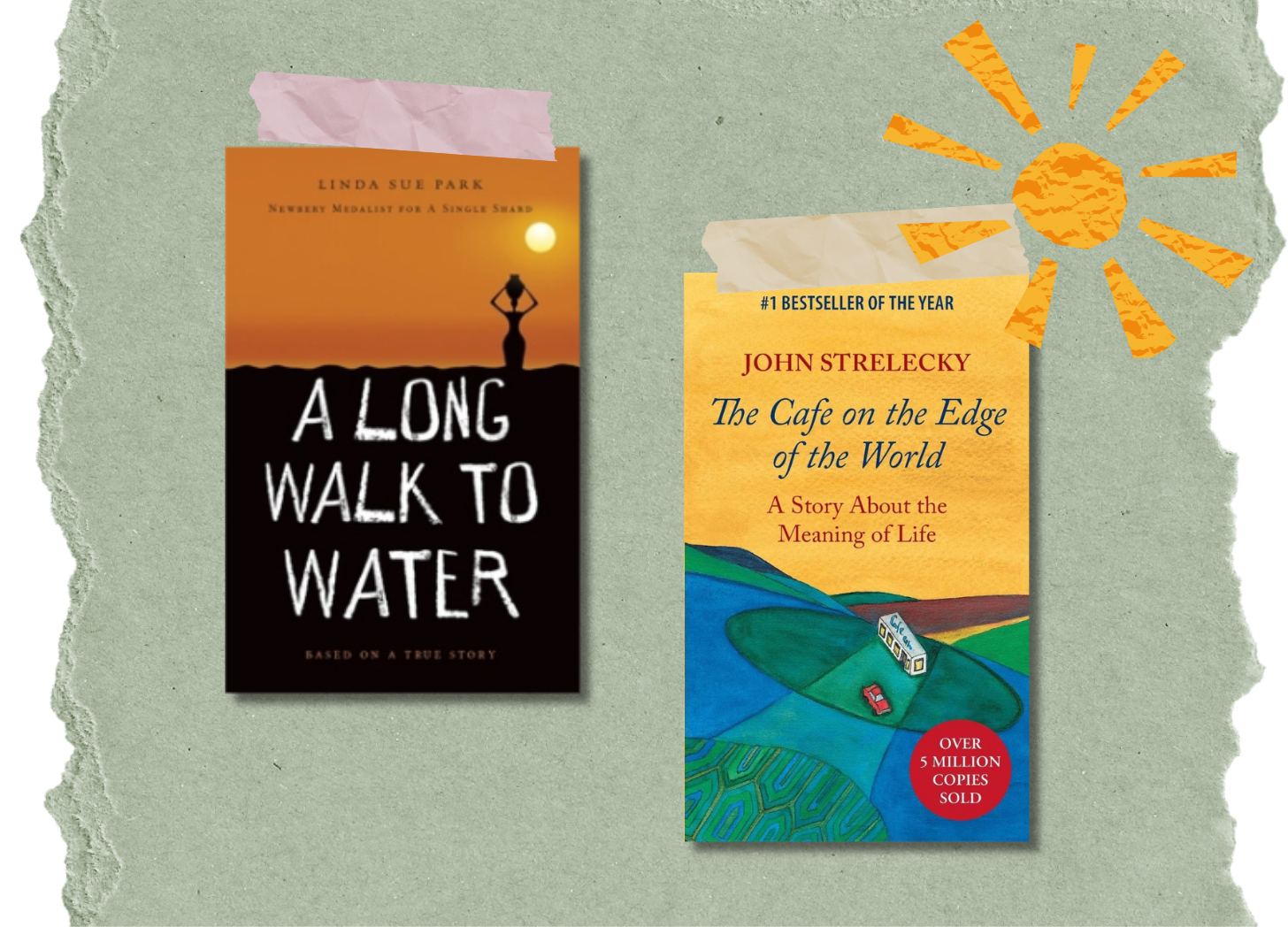
Two mind-expanding books to read in one sitting
I’ve read two books in the past couple of weeks that have expanded my mind in ways unexpected and entirely welcoming. I love epics that take weeks to read (I just started Lonesome Dove, so I better like them), but there’s something special about a book that leaves you with a changed mind in a quarter of the time. I imagine it takes incredible restraint and creativity to be able to write something so small and unforgettable.
Some of the most moving books I’ve ever read have been slim. Open Throat by Henry Hoke, Orbital by Samantha Harvey, Small Things Like These by Claire Keegan, Small Boat by Vincent Delecroix all come to mind.
I have two more titles to add to that list, and neither could be more different from the others.
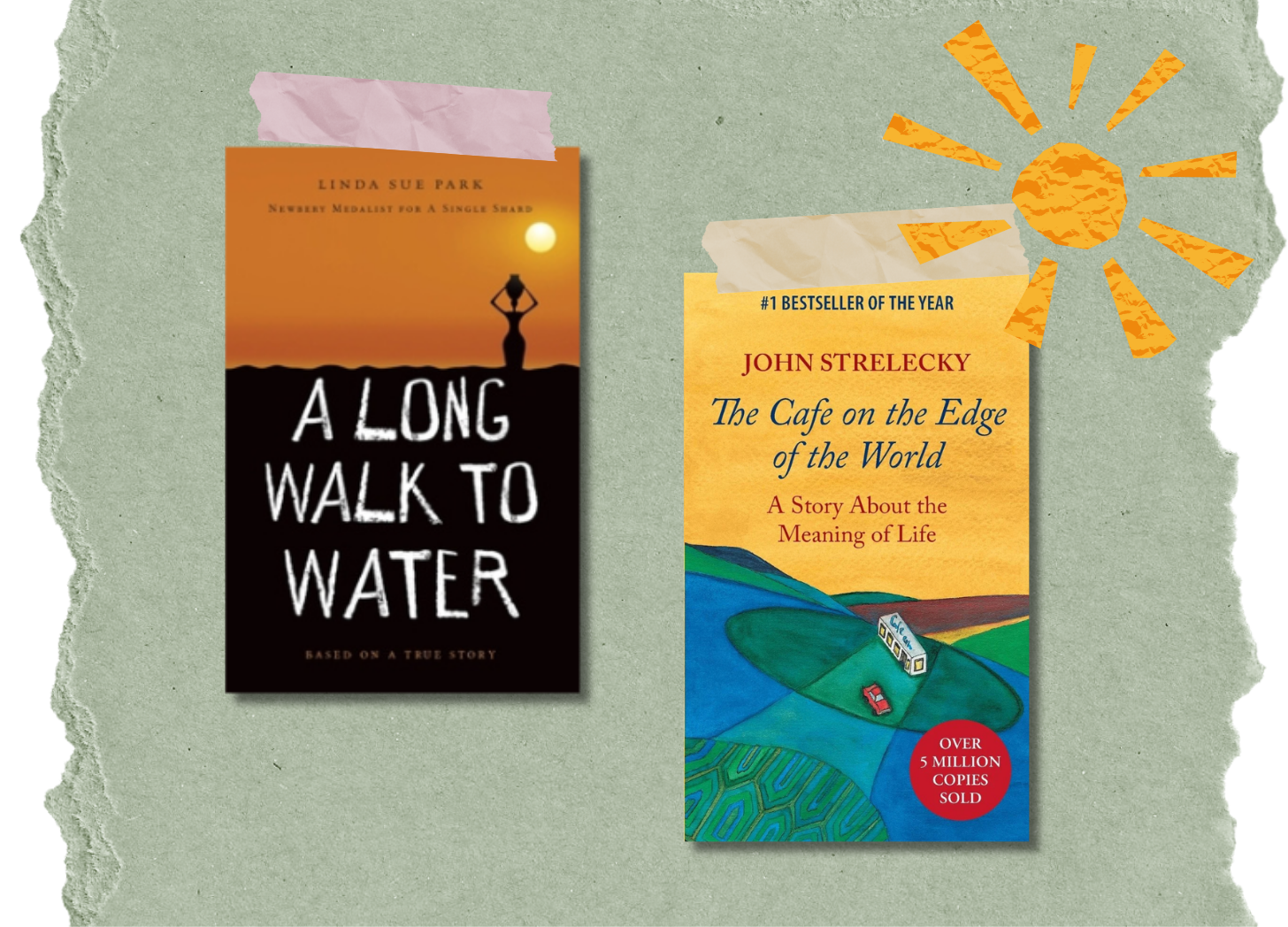
A Long Walk to Water by Linda Sue Park
My best friend is a teacher and recommended I read this book, which she’d recently read to her fifth graders. All she said about it was that it was based on a true story and it would teach me about the Second Sudanese Civil War.
A Long Walk to Water is a dual-timeline story following a young boy named Salva in 1985 and a young girl named Nya in 2008. Salva’s is the story of his escape from war-ravaged Southern Sudan via refugee camps in Ethiopia and Kenya. He walks through lion-filled deserts and across the murderous, alligator-abundant Gilo River. He walks for days and weeks and months. One stretch takes Salva and 1,200 other boys a year and a half by foot.
His is the story of The Lost Boys.
The Lost Boys.
That was what they were being called in America — the boys who had lost their homes and families because of the war and had wandered, lost, for weeks or months at a time before reaching the refugee camps.
Nya’s is a story of the young girl’s one job: to collect water for her family. Each morning she walks to a pond, returns home with the water, eats, then returns to the pond to fetch more water. For seven months of the year, this is Nya’s job, and it takes nearly a full-day of walking barefoot to accomplish both trips. For the other five months, when the pond dries up, Nya’s family lives at a camp near a lake. If it weren’t for the constant fighting over land between her tribe, the Nuer, and their rivals, the Dinkas, Nya and her family would remain by the lake.
Hers is the story of the long walk to water.
There was little weight, going. There was only heat, the sun already baking the air, even though it was long before noon. It would take her half the morning if she didn’t stop on the way.
Heat. Time. And Thorns.
The two narratives, one of a Dinka boy and the other of a Nuer girl , weave together beautifully in the end. The story of Sudanese refugees is an excruciating one. As this is a children’s novel, the book isn’t gruesome but a lot of brutality is implied. I was so moved by this book (I teared up at the end, naturally) that I went directly to another book about The Lost Boys, What is the What by Dave Eggers. It’s brilliant and beautiful and horrendous and I haven’t finished it yet because it’s still drying from an accidental foray out in the rain. But my interest in The Lost Boys remains.
Back in January I wrote about Her Left Foot, a children’s book about the Statue of Liberty, also written by Dave Eggers. I think children’s books are a perfectly suitable way for adults to keep learning. If the Second Sudanese Civil War is of interest to you, this children’s novel is a gentle way of learning about it.
The Cafe on the Edge of the World by John P. Strelecky
If A Long Walk to Water is serious and heart-wrenching, this book is the antidote. The Cafe on the Edge of the World is a weird little story about a man named John who gets lost on a drive and happens upon a cafe in the middle of the middle of nowhere. It’s got the smallest touch of the unbelievable (words moving on a menu, servers appearing out of nowhere) but it’s grounded in enough reality that it’s not distracting. The first several pages made me wince, so full of I thought to myself and I mumbled aloud notes. I quickly had to set aside my writer eye in order to keep going. But once John arrives at the cafe and engages with others, the story really gets moving.
John is seated by a friendly server name Casey and takes a look at the menu. He is starving. “Welcome to The Cafe of Questions,” the menu says. “Prior to ordering, please consult with our waitstaff about what your time here could mean.” On the back, Items to Ponder While You Wait:
Why are you here?
Do you fear death?
Are you fulfilled?
John inquires with Casey about the menu’s directions. So begins a casual conversation about one’s purpose for existing:
… if you aren’t in tune with what you want to do, you can waste your energy on lots of other things. Then when opportunities come your way for what you do want you might not have the time or strength to spend on them.
The owner and chef, Mike, guides John as much as Casey does.
… life is an amazing story. It’s just that sometimes we forget we’re the author and we can write it however we want.
John’s is a story about the purpose for existing.
Not your average cafe, nor your average book. You may leave it with more questions than when you picked it up, but the questions are ones we should all be asking ourselves all the time. Contextually, it gives Four Thousand Weeks vibes. Stylistically, I have nothing to compare it to.
“It’s in the face of our seeming insignificance that we find meaning,” John says in the epilogue — a spectacularly fitting sentiment for a post about small books with big messages.
Mike, the owner of the Cafe of Questions, tells John the challenge when finding your purpose for existence is to realize that something is fulfilling because we determine it’s fulfilling. Not because someone else tells us it is.” In that vein, take everything I say about books through your own filter. But if you’re looking for a fulfilling read by my standards, here are two to consider.

Questions for you:
How do you feel when you read those menu questions? (Why are you here? Do you fear death? Are you fulfilled?) No small question, I know. If they make you squirm, the book might be a perfect read for you.
Have you ever looked to a children’s book for understanding? Conversely, have you ever found yourself learning a great deal from a children’s book?
What are your favorite slim books? Which ones need to be on my radar?
Thanks for reading! Love, Kolina
- What are you reading? What are you underlining?
- What I’m reading: Lonesome Dove by Larry McMurtry. I’m ~200 pages in, only 600 to go! Many have expressed their envy (below) that I am reading it for the first time. I’m beginning to understand why.
When you purchase books through the links above, you support The Underlined and an indie bookstore of your choice at no additional cost to you.