
March & April Reads
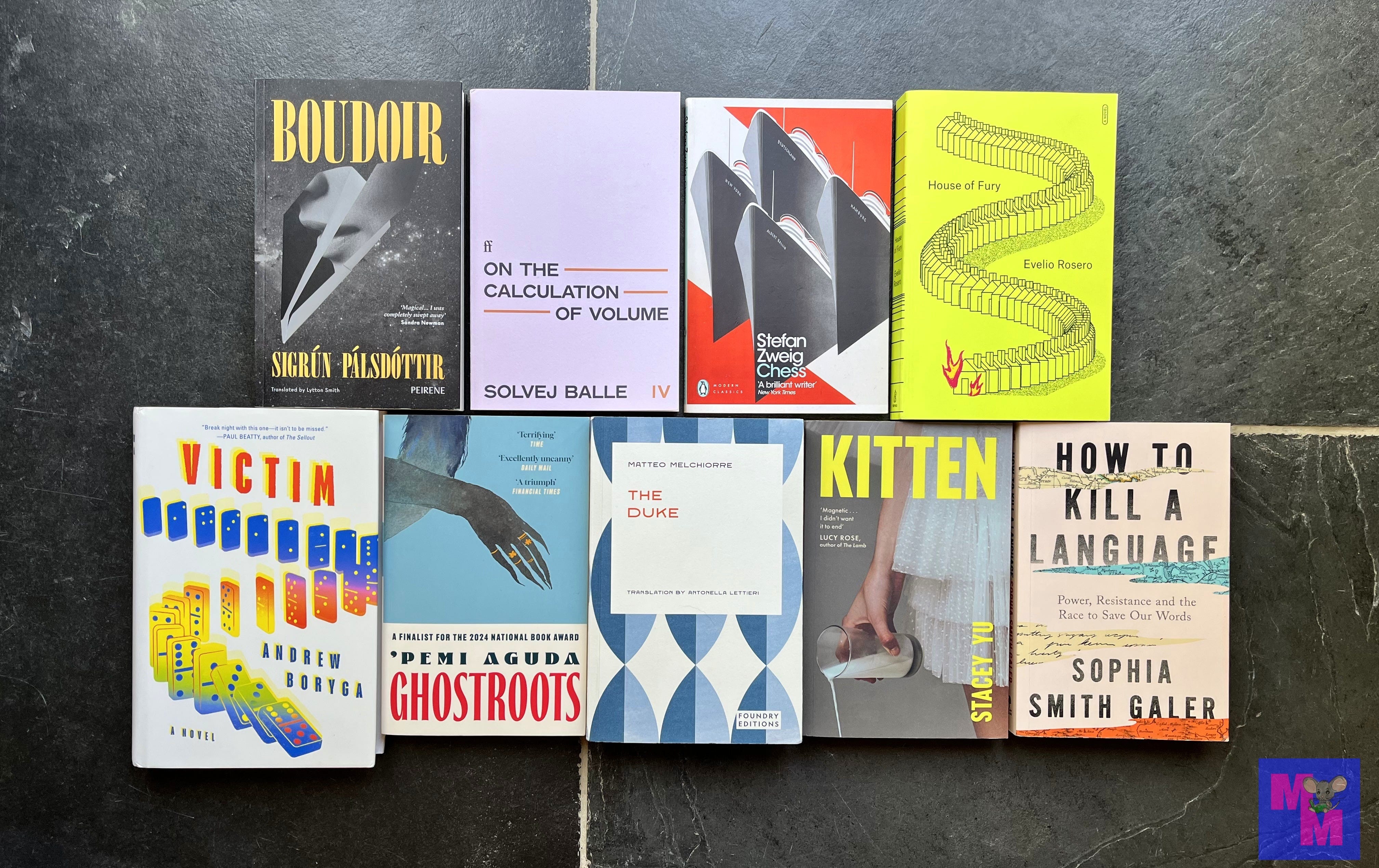
When something has been part of your life for a long time, you can lose sight of why you do it - or perhaps, wonder if you even like it anymore. It becomes a routine, something you do without even thinking. This is what was starting to become my relationship with the monthly reads. It’s almost been three years of reviewing what I have read every month. I did the maths, I’ve written 33 editions of the monthly reviews.
My reading hit a wall at the beginning of the year (something I dramatically declared in January and February), and I decided I should probably take a break - from both reading, and writing about it. I didn’t want to read, but I also didn’t want the expectation of ‘having’ to write reviews looming at the end of the month. It doesn’t take a genius to recognise that the pressure to write wasn’t going to encourage any reading. Truthfully, I was also intrigued to see how I would feel without doing it.
I’m so glad I took a month off the reviews because, you’ll be happy to hear, I missed it - a lot. It’s funny how sometimes you have to have space from something in order to gain some perspective on how much you enjoy it. While I wouldn’t say it solved everything, I am still reading ‘slower’ than I used to, I am enjoying reading again. Perhaps my reading metamorphosis is just that I read a bit less, and I have come to accept it. Because ultimately, my love for reading it back, and that’s all I care about.
The scope of the books over the last two months are all over the place. But two themes kept recurring, which was the idea of how much you can truly design where your life is heading, and be the architect of your own destiny. This was countered in many books with the exploration of class, and how static it can be. However ultimately the theme of March and April is that I’m back baby!
To see the translated reads from March and April on Martha’s Map, including authors from Denmark, Colombia, Italy, Austria and Iceland, click here.
For those who are new, buy, borrow, bust is my recommendation key: Buy = I loved this book and highly recommend it. Borrow = I liked this book and think it is worth a read. Bust = I wouldn’t recommend this book from my reading experience.
March Reads
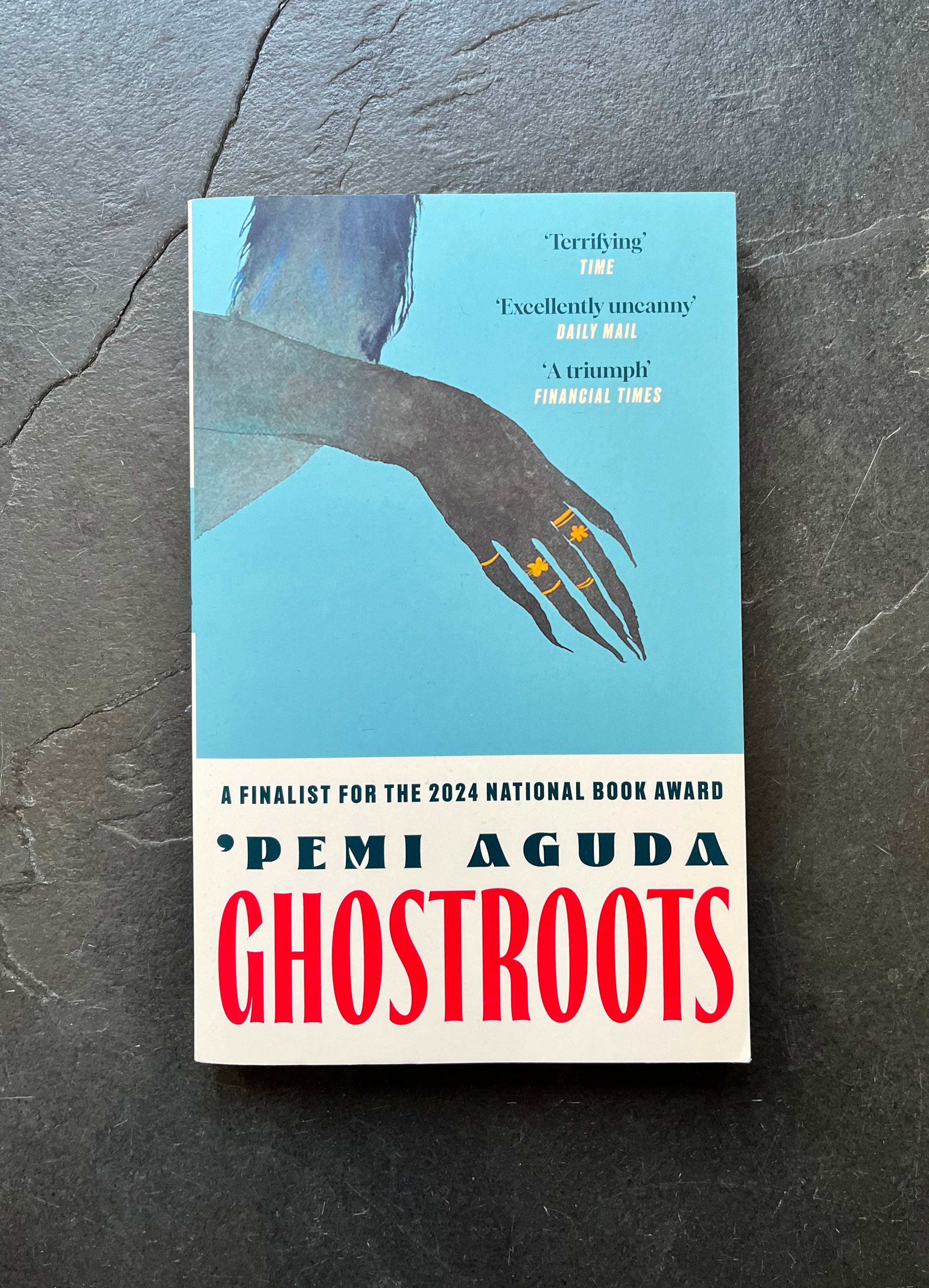
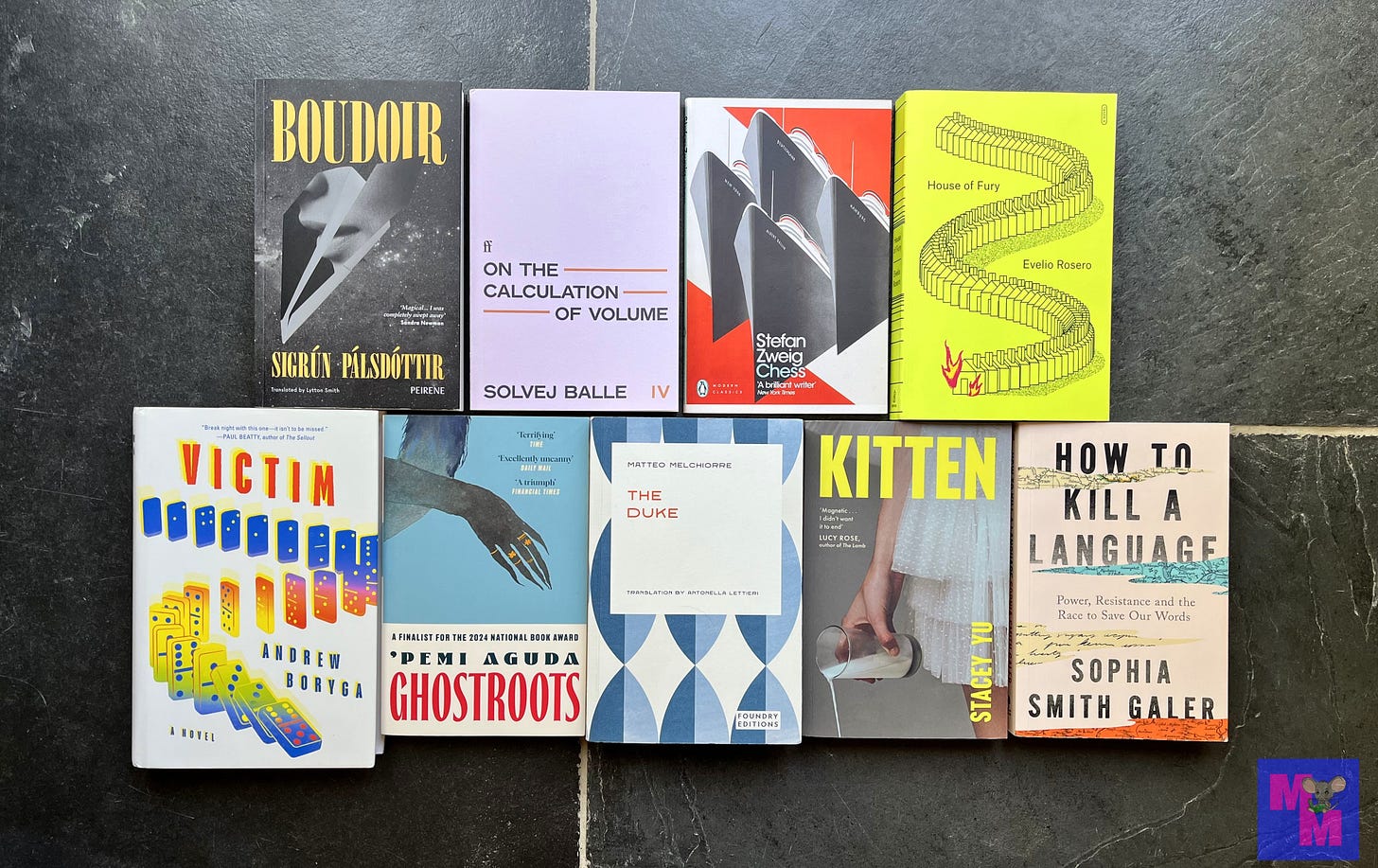
‘Ghostroots’ by `Pemi Aguda
At the beginning of the year I shared some of my reading goals (which feel overly ambitious now), including to ‘do not finish’ (DNF) more. Normally I finish everything I start reading, even the ones I hate, because I felt I otherwise can’t review them in the newsletter. I decided to axe that rule, which was serendipitous of me, and try to DNF with more abandon than ever, and mention the books regardless.
I abandoned Ghostroots about half way through because I got incredibly bored. Some of the earlier stories, such as ‘Manifest’ and ‘Breastmilk’, were incredible and their exploration of gender and trenchant;
‘A son? My heart broke a little. A son who could grow up to become a man, a man who might hurt other people no matter how well I raise him because a man is a man, even when he is the best man’ 1
But the strength of the opening dissipated as the stories continued. I tend to find that people struggle to review short stories (as I once did) and fall back on stock phrases such as ‘like all short story collections, some are stronger than others’ and this is lazy reviewing. Ultimately what makes short story collections good is cohesiveness of theme, consistency of writing and individuality of stories. This is a hard trifecta to hit (only 2 short story collections I have read have done this; Every Drop Is A Man’s Nightmare and The Accidentals) and Aguda could not reach it. The intricacy of some of these stories were miles ahead of the others, while multiple read jarringly similar. A lack of consistency in a collection is what makes it so discordant to read, and that was the case here. Interestingly, it reminded me of why I disliked Necessary Fiction - and the commonality between them being Nigerian magical realism. I struggled to connect with them, and I am curious as to why specifically Nigerian magical realism, and not any other kind, that I find it so hard to get on with.
Aside from my criticisms, I assume I was struggling to read the medium of short stories because I was struggling to read in general. It did, however, remind me of what I hate, which did mean once I read the next few books, I was thrilled to be reminded of what I love. Unsurprisingly, this is a bust. I know some readers loved this collection when it was a finalist for the 2024 National Book Award, but I just can’t see it! I’m willing for my perspective to be countered in the comments.
If you have the slightest desire to read this series (you should - it’s great), or have only read Vol I, I would not recommend you read this review because it spoils the suspense that this series relies on.
If you’re curious in what the series entails you can read my review of Vol I (spoiler safe & enticing) or my review of Vol 2 and Vol 3. This review is for those who have already read Vol 1,2 and 3.
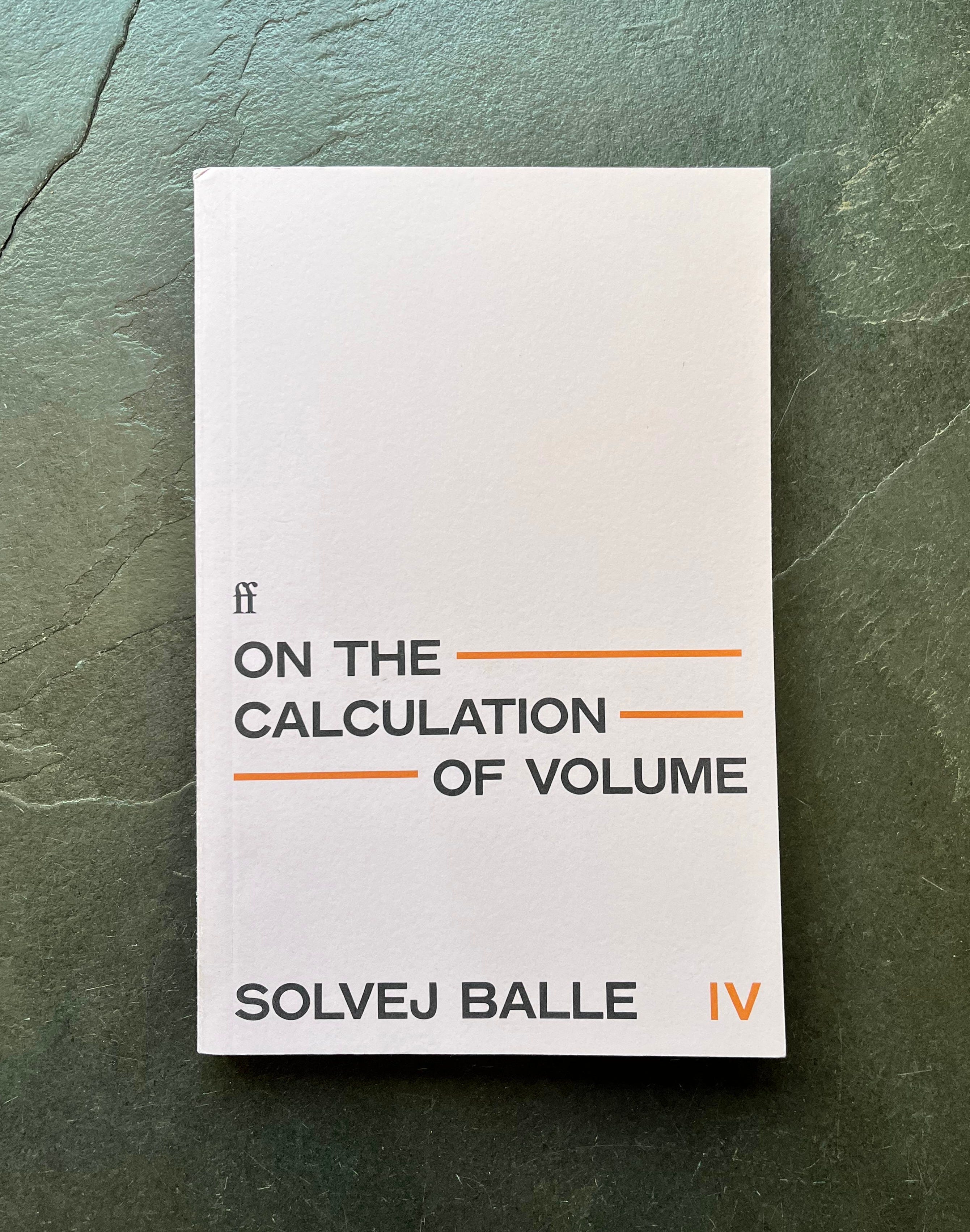
‘On The Calculation of Volume’ by Solvej Balle (translated by Jennifer Russel and Sophia Hersi Smith)
Volume IV opens with ‘it’s hard to know where something ends and where something begins’. While each of these volumes is so distinctly different, it is becoming increasingly difficult to pinpoint exactly when certain themes are introduced. Now in Volume IV, the stakes feel equally bigger and smaller. There are more people, and we can assume more to come, who are stuck in the eighteenth of November. But with every introduction, the world of the eighteenth is becoming increasingly claustrophobic. What was once quite an idyllic, introspective and melancholic story has transformed into a chaotic and slightly fraught tale. In the face of this ever growing community, it seems disorder might be increasingly inevitable.
Balle is balancing the world of the eighteenth of November on a precipice now, and while Tara is still our centre, she is not anchoring the story like she used to. There are so many options of what she could decide to do, so many places she could go. While this influx of new people is exciting, and suggests the promise of new perspectives, we are denied from truly knowing them. Instead of individual introductions like we had for Henry or Olga, we learn about the onslaught of new people as a collective mass - names dropped in passing, details flung out with no context to them. A tension arises from this, one that implies that, surprisingly, there is the chance that the eighteenth of November could get too busy. A stark departure from the incredibly lonely eighteenth of November Tara once resided.
Despite the enormous unifying factor of all being stuck in time together, the time loopers (a self prescribed title) are struggling to agree on anything. In trying to democratise the system of house chores to holding meetings to discuss what language they should all speak and how to measure time, contention sits squarely in the room. The tension is not hostile, but merely reflects the impossible task they are faced with, and the reality of trying to ‘create’ a society. With each volume, it is clear Balle is widening the perspective from the individual to the collection, and with it comes a new layer of existentialism about our lives. Volume IV asks what it means to be here and in time as we know it. The focus on material consumption moves to almost a reflection on immaterial consumption - how do the structures, systems and rules we create consume our lives?
This was the first volume that made me think about the title. Balle very intentionally places the word ‘volume’ several times in IV in a way that made me think. What is it she, or perhaps wants us, to calculate? When she discusses ‘volume’ does she mean us, humanity? On The Calculation has always pertinently interrogated what it means to be alive, and to move through time, but this volume did so in my favourite way. Each societal system we live under is organised by design, ultimately meaning almost all of our lives are determined by elements outside of us. While we believe we have control, and we do to an extent, Balle is ruminating on how much we would potentially fall apart without them. There is seemingly a consumption of ‘existence’ that is inherent to being in this world that Balle would like us to consider that more.
Volume IV interrogates something which was inevitable, but I have been eagerly waiting for; a woman’s body’s relationship to time. A female protagonist is the only protagonist that works to lead this series because of her biological relationship to time that men do not have. The questions of children, the ethics of bringing them into a world ‘without’ time and the rising anxiety of Tara’s biological clock all come to the fore. There is a quiet heartbreak, an unjust lack of agency and a much bigger interrogation into the group of people as less of a collective, and more as a ‘population’. When previous rules, ethics and laws are rendered obsolete by the collapse of time, are people still abiding by them? What would happen to a baby born outside time? This was my favourite part, and I am itching for it to get explored further in future volumes. But I am unsure if we will get it. Balle has a tendency to pose questions for us to consider that she rarely ever returns to.
Thankfully, it feels we have reached the end of Tara’s repetitive rumination of the previous volumes, and that it is almost entirely unpredictable as to what will come next. The ending of this volume in particular was my favourite yet - what a cliff hanger! On The Calculation of Volume is carried so seamlessly by what has come before, and perfectly sets up what is to come next. Balle consistently gets the balance *just* right and I am eagerly intrigued for Volume V. The whole series remains a buy for me - I love it more now than I ever did at the beginning!
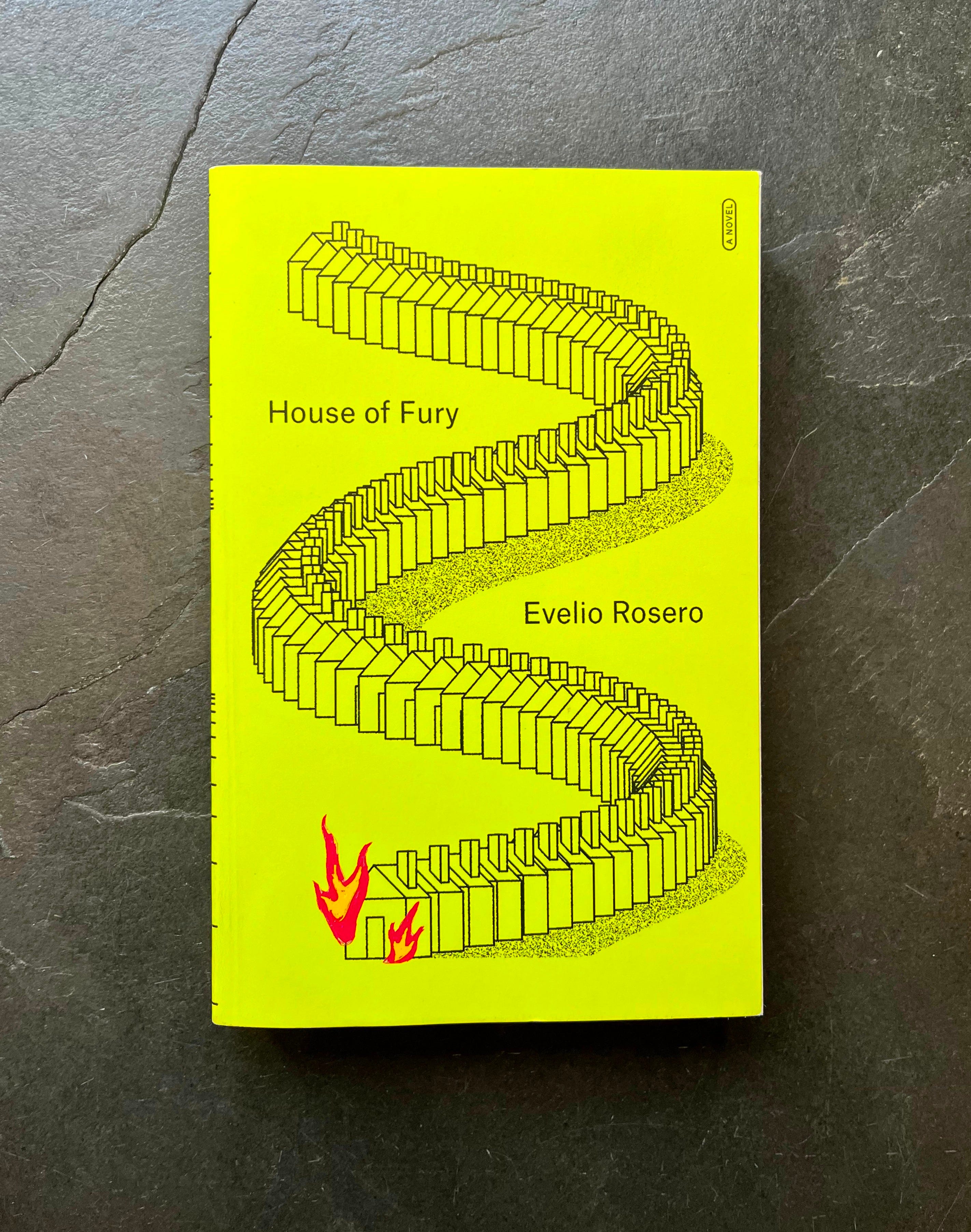
‘House of Fury’ by Evelio Rosero (translated by Victor Meadowcroft)
House of Fury takes place on the single evening of Friday 10th April 1970, in a large Bogotá mansion. Nacho Caicedo, a magistrate of the Supreme Court of Justice, lives in this mansion with his wife, Alma, and their six grown daughters. On this night, the Caicedo’s have planned a huge party in their home in celebration of their wedding anniversary. But before the party even starts, two shocking pieces of news come to the fore; their teenage daughter Italia is pregnant, and Alma’s idiotic, and specifically not invited to the party brother, Jesús, has arrived at the house. Guests from all corners of Bogotá society arrive, two earthquakes occur and the party descends into debauchery, kidnappings and chaos.
This book cured my reading malaise, and is without a doubt one of the best I have read in a long time. House of Fury is a black comedy that attempts to create a grim portrait set just before the beginning of the Colombian Conflict, which would range across the country for fifty years. It is a potent, and unflinching, depiction of chaos which is rooted in a plethora of illegal activity. Though this is an allegory, the novel vividly interrogates the painfully realistic injustice of a society ruled by guerilla activity and corruption. The Caicedo family head their own empire that draws adoration and enemies. Like a moth to a flame, the party attracts the ugliest parts of society who are eager to raise hell.
The brilliance of this novel lies in not knowing anything about what is coming next - so I will be telling you no more. What I will say is it is one of the most tantalisingly outrageous novels I have ever read. I had so much fun reading and could not get enough of Rosero’s enigmatic prose and electric characterisation. House of Fury houses an absolute swarm of protagonists, each one is as striking as the next. Not once does the story suffer from the enormity of its characters, instead continually strengthened by them. Rosero combines a profound undercurrent of tension with an explosion of gallivanting to create this uneasy, addictive story. It is outlandish in every sense, becoming increasingly seductive with every page.
Rosero’s exploration of the patriarchy was incisively amusing. The novel is plagued with outrageous levels of machismo. The men are domineering and arrogant, seamlessly objectifying every single woman they come into contact with. While this sounds depressing, Rosero handles it deftly, with almost every man who is arrogant depicted as a fool for being so, and it is a pleasure to witness them be bested. The victims of this story are simultaneously everyone and no one. There are few characters that are entirely absolved, which ultimately reflects the atmosphere of Colombian society at the time that Rosero wanted to capture; that even the innocent are not safe, and hope can feel hard to find. While he unnervingly explores how limitlessly horrifying human nature can be, he offers glimpses of nods to social justice to suggest there is always hope.
House of Fury has Shakespearean levels of tragedy and comedy. It is like a car crash you can’t look away from. Secrets and lies power this novel, creating a tumult of madness that is riveting. The novel is violent as it is fun, painting an incredibly perceptive commentary about a society in decay. Reading it is a hallucinatory day dream, but one I never wanted to end. I recommend this fiercely to those who enjoy satire and stories full of bad behaviour. I’d compare it to the violence in a Quentin Tarantino film, or the uneasy adrenaline of watching Uncut Gems and/or Marty Supreme (Josh Sadife in general). This is a buy of the highest degree, my life is infinitely better now I have read this. I am incredibly eager to read more Rosero - does anyone have any recommendations?
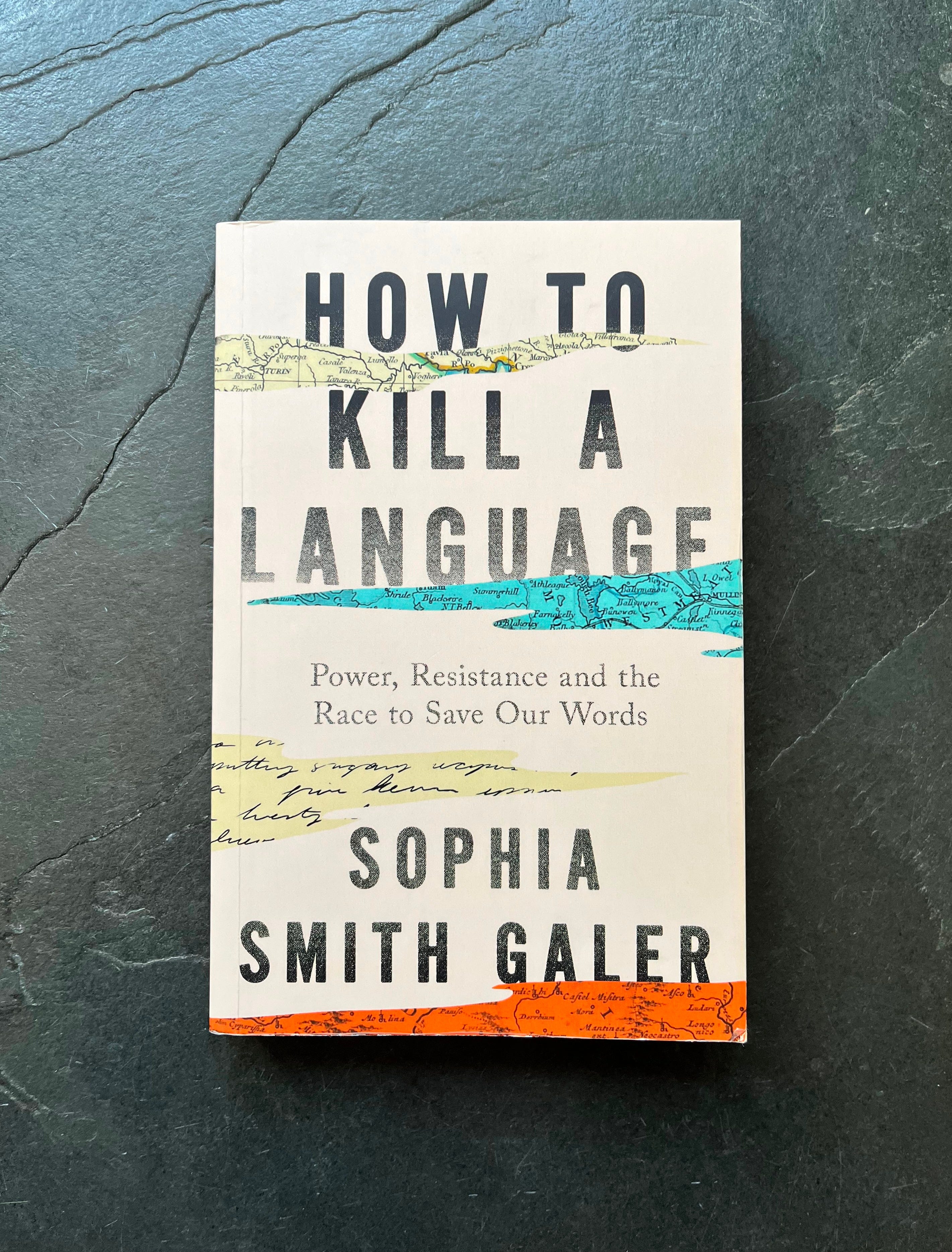
‘How To Kill A Language’ by Sophia Smith Galer
As Smith Galer’s Nonna lay dying in her house, a language was dying with her. Her Nonna spoke a language called dialët that Sophia could understand, but couldn’t speak. This is something called ‘third generation language loss’ which is becoming increasingly common as people emigrate in search for a better life. This horrifying fact, along with many others, make up an introduction which piercingly communicates how dire the state of language loss is. Smith Galer repeatedly stuns the reader in the first pages of this novel, sharing how in the next a hundred years, half of the world’s languages will die - that we will be lucky to have 4,000 languages with us in the next century (down from 140,000). Smith Galer’s urgency is fiercely palpable, but never dispels into fear mongering. In a world that feels increasingly polarised, especially since Trump’s inauguration in 2025, Smith Galer reminds us there is something much more unifying to us all; which is our relationship to language, and each other.
The enormity of language variety, and loss, is hard to fathom. But Smith Galer does an exceptional job of attempting to measure it, producing first hand accounts from those who are on the front lines of linguicide and offering insight into just how tragic language death is. We meet the last speakers of some languages who are facing the inevitability that with their death, their culture and language will disappear with them. Statements like this are hard to connect to, but Smith Galer roots it all in the story of her Nonna. While it is an admirable attempt to honour her, there is also the painful recognition that Smith Galer will be the last in her blood line to have heard dialët.
This is incredibly urgent, engrossing to read and hard to look away from. Smith Galer’s argument as to why we are losing languages is pressing, her research thorough. While she does not suggest that language loss rests on our shoulders, there is a firm suggestion that we are becoming too complicit with increasing monolingualism. Though governments, education systems and political parties are all fairly interrogated for the roles that they presently, and historically, have played in contributing to language death, she reminds us that we are not devoid of agency. The greatest language activists are often acting independently, taking it upon themselves to be the change they wish to see in the world. While she is not suggesting that it is within our ability to save all languages from extinction, it is within our ability to resist monolingualism.
It is challenging to write a non fiction with so much heart, and yet that is exactly what Smith Galer has done. The most profound aspect of this is the exploration of how powerful the emotion of shame is when it comes to languages. Countless communities across the world that Smith Galer visits suffer from the emotion of shame; communities conditioned that certain languages have more economic worth than others, adults too fearful to even attempt to relearn a language because they are scared they’ll fail, classrooms telling children they’re not ‘clever enough’ for language learning. This emotional charge is perhaps one of the most powerful sentiments of the book - a reminder of how similar we all are, despite being old otherwise.
It was a privilege to get to interview Sophia about a book so endlessly interesting. I recommend it fiercely and call it a buy. Nothing says ‘the perfect summer read’ like a book that will feed your brain, engage with the world and make you think about the kind of society we live in!
How To Kill A Language is out 7th May in the UK and 7th July in the US. Pre order here. Sophia is also looking for translators to translate HTKAL and I *know* I have several on my subscriber list - so just something to consider! <3
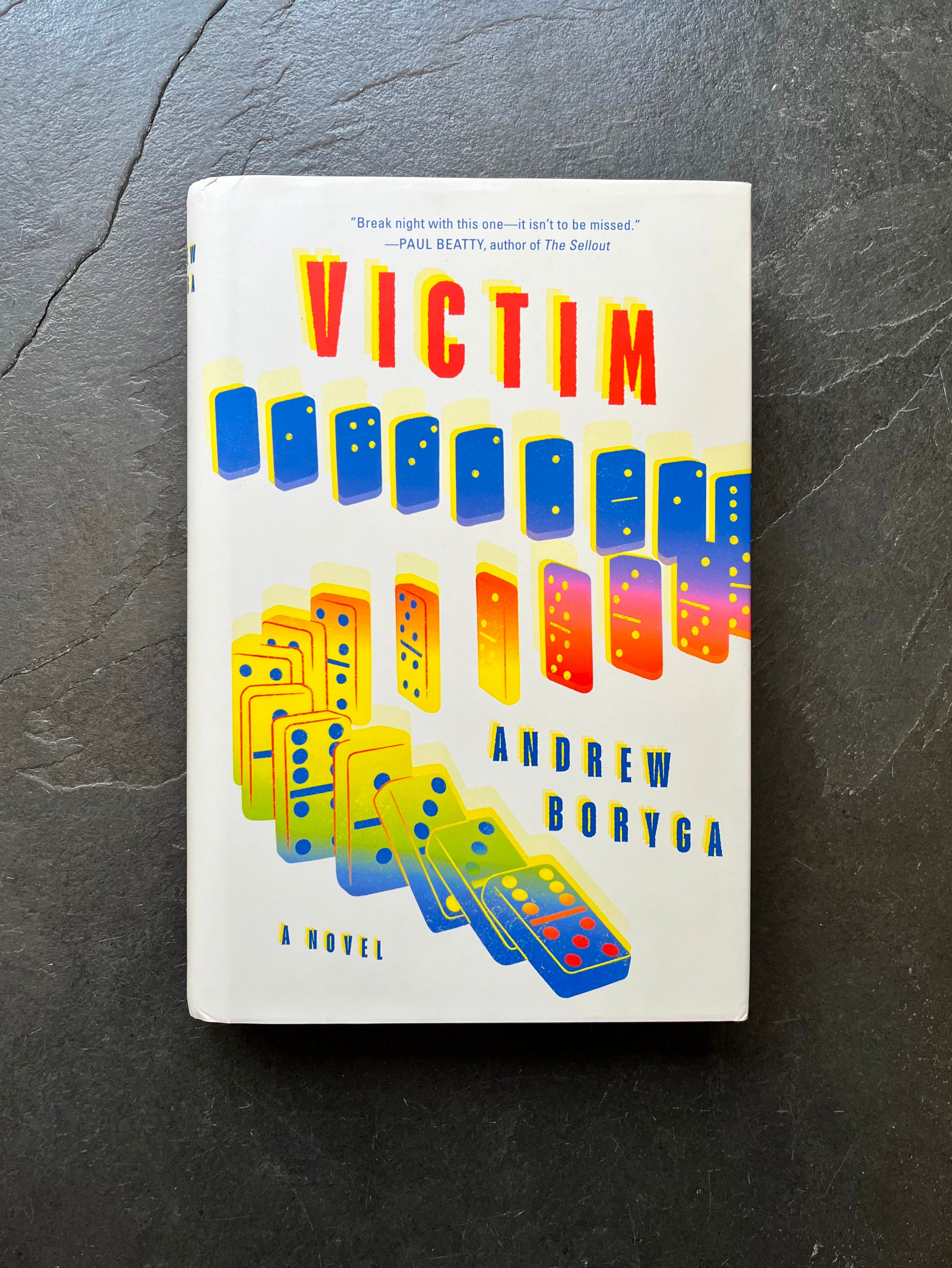
‘Victim’ by Andrew Boryga
Javi grew up in the Bronx, and previously thought little about his ‘story’. But when applying to college, a careers adviser suggests that Javi is sitting on a goldmine that is the key to getting through doors he didn’t know existed. He suggests he needs to focus on the fact his dad was a murdered drug dealer, his mum is single and his best friend, Gio, is currently in prison. Once his essay grants him a scholarship to one of the best schools in the country, Javi can’t stop lying in order to help him get what he wants.
Victim is a story about how profitable victim narratives have become. Boryga attempts to interrogate the ‘game’ that certain narratives are more profitable than others when it comes to convincing people of your worth. Javi is an interesting vehicle for this, because he lacks a strong sense of identity. He appears to have a strained relationship to his Puerto Rican heritage. This is not an avenue that Boryga deeply explores, and while I wish he did, it is implied that Javi’s lack of a centre is key to his willingness to lie to create an aspirational life for himself.
Once in college, Javi is put into conversations that extensively theorise about race and privilege that is entirely foreign to him, but he quickly understands engaging with them is the answer to upward mobility. An irony is explored here within how disconnected university campuses can be from real life, and how theorising about society, and actually living within it, are two drastically different things. He begins to fabricate stories that implicate others, with little regard for anything other than how it will further himself. The more Javi engages with creating a ‘victim narrative’, the more selfish and delusional he becomes.
Boryga attempts to criticise the increasing obsession with ‘narrative’. While it is not a discerning judgement, and Boryga attempts a much more ambivalent one, there remains quite an obvious sense of morality in the story. It is less a direct commentary, and more an exploration, on the kind of environment we have today, where constructed narratives can be more beneficial than reality. Though there are suggestions that this story isn’t political, it inherently is. Victim is an attempt to interrogate how political ‘victimhood’ is and why those from more disadvantaged backgrounds are more forced to engage with it. The discussion of wealth is vague, and oscillates throughout, but ultimately hoovers in the background to suggest that money is what determines whether you need to create a narrative or not.
While the adrenaline of this story is brilliantly palpable, it subsequently allows for a shallow narrative. Several characters lack depth, and an increasingly significant amount of context is missing; as the intensity of the story begins to climax, the complexity of the narrative continually declines. Nevertheless, this is perhaps by design, as Victim is technically a memoir authored by Javi, who has been created by Boryga. Javi is described as a bad writer, thus we never quite know whether Javi’s skill, or his inability to be honest, is the reason the story begins to diminish - or whether it is Boryga himself. A brilliant trick from a debut author who has swiftly managed to minimise any potential criticism by blaming his protagonist!
Victim is a paradox that continually throws up more questions than answers. I simultaneously admire Boryga, and feel frustrated by it. There was a lot more that could have been done to make this story better, but I also recognise the suspended disbelief was necessary to make it work. This was our book club pick for April and while it averaged a group borrow, I think we all enjoyed talking about it because itis a catalyst for conversation. It is a very American novel, which perhaps felt more entertaining for me as an outsider, than it did for my American readers who are familiar with this landscape of identity narratives. I’d recommend this for a good time, not a rigorous one, and call it a borrow!
April Reads
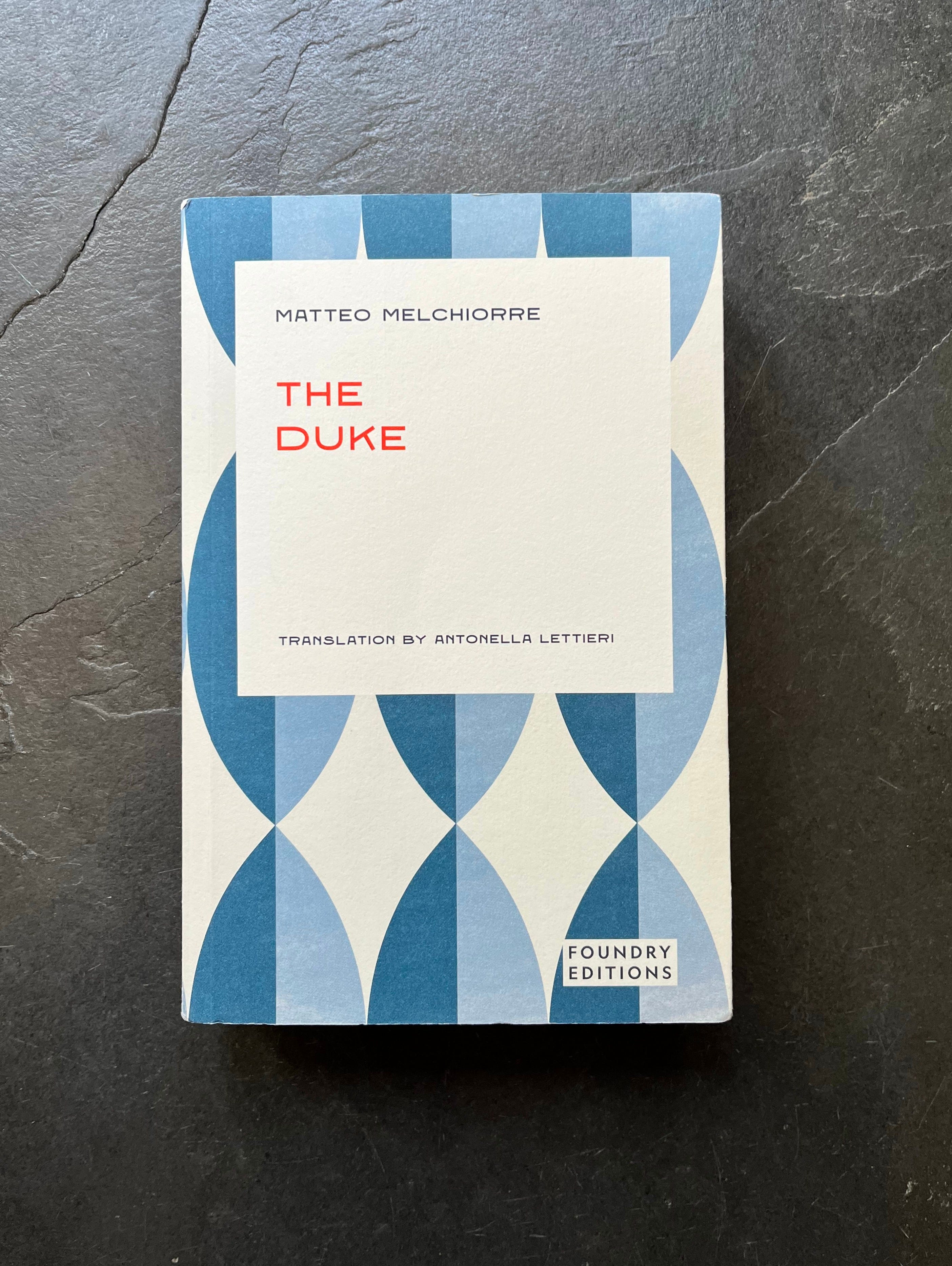
‘The Duke’ by Matteo Melchiorre (translated by Antonella Lettieri)
The Duke is a sweeping epic about a man who lives in a house full of secrets and history, nestled in the middle of the woods. He is known as ‘the Duke’ by the village of Vallorgàna, because he is of nobility. While the Duke is technically ‘A Count’, those ancient titles seem to hold little meaning societally and personally for the Duke. Thus, his name is both in jest and affection. It is in the old aristocratic Cimamonte manor where the Duke resides, and the boundary lines on this estate nestled in the Dolomites that are challenged. Here lies the contention of the novel, where the Duke learns that Mario Fastréda, the ‘village big man’, has cut down trees from his land. Will he remain in his idyllic isolation from the community that he is seemingly very comfortable in, or will he challenge Mario to honour his ancestral blood?
The Duke reads like a twentieth century classic suspended in time. The setting of Vallorgàna is vivid and hypnotising in its narrative, yet slightly amorphous. I’m not entirely sure I have ever described a book in this way before, but I would describe it a little like a fairytale. Melchiorre has crafted a narrative that is both current and historic, that feels both incredibly real and devoid from all reality. It is a masterfully complex narrative that is a complete pleasure to become transfixed with.
Ultimately this novel interrogates the concept of lineage, class and aristocracy. Exploring whether it is right to continue to identify with a status that was established a long time ago but fallen out of favour. Through the characterisation of the Duke we are enveloped into a minefield of past aristocratic power, and he has to live in its shadow. Melchiorre asks how do we carve our lives for ourselves despite the weight of what came before us, and how do we not get burdened by its history? The Duke wants to reject the previous injustice of nobility and the implication that some people are more inherently worthy than others, while also having a conflicting sense of pride for his ancestors.
Though the feud between Mario and the Duke is slightly futile, it is taken to great lengths by both, articulating that it is about class. Mario represents new money, and the Duke represents old money and nobility. It is evident both feel uncomfortable in the presence of the other, both feeling ousted by the changing nature status. Despite the Duke’s dismissal of his status, and not wanting to ‘rule’ the community, it slowly emerges that he does, to a degree, inherently believe he is better than the villagers, and better than Mario. Yet within all this status and nobility, he remains quite lonely - the complete opposite to Mario.
Back and forth, the exploration between these men and their opposing worlds, creates a charming and pertinent portrait of identity in relation to societal structures. It is endlessly entertaining to watch the Duke and Mario fight back and forth over obsolete systems, both feeling inadequate in the face of the other. In his incisive inquiry into the static strength of class, Melchiorre suggests that it only isolates us further from each other. In determining the worth of someone by the past, do we not suffer from an inability to engage with reality, and that we are the masters of our own fates? To get lost in the weight of the past, as both men do, is to risk getting lost entirely.
The Duke is exceptionally captivating to read. While it took me a while to ‘get into it’, once I was in, I was all in. Melchiorre’s prose is endlessly descriptive and charming, his characterisation of Duke is exquisite, his narrative voice marvelous. Writing this review is making me miss the petty and contentious world of Vallorgàna, which speaks to how enjoyable it was to be a part of. This novel has made me think a lot about the upheaval of nobility in most European countries over the last century, and what it means to go from being told there is nobility in your blood, to being rendered entirely obsolete to society. The mindset of believing you are inherently more worthy than others must be exceptionally hard to shake. Any experts on the history of Italian Nobility, hit me up. I loved this, and would recommend it to anyone who is interested in philosophical narratives about the construction of societies with incredibly rich characterisation. I would call it a buy!
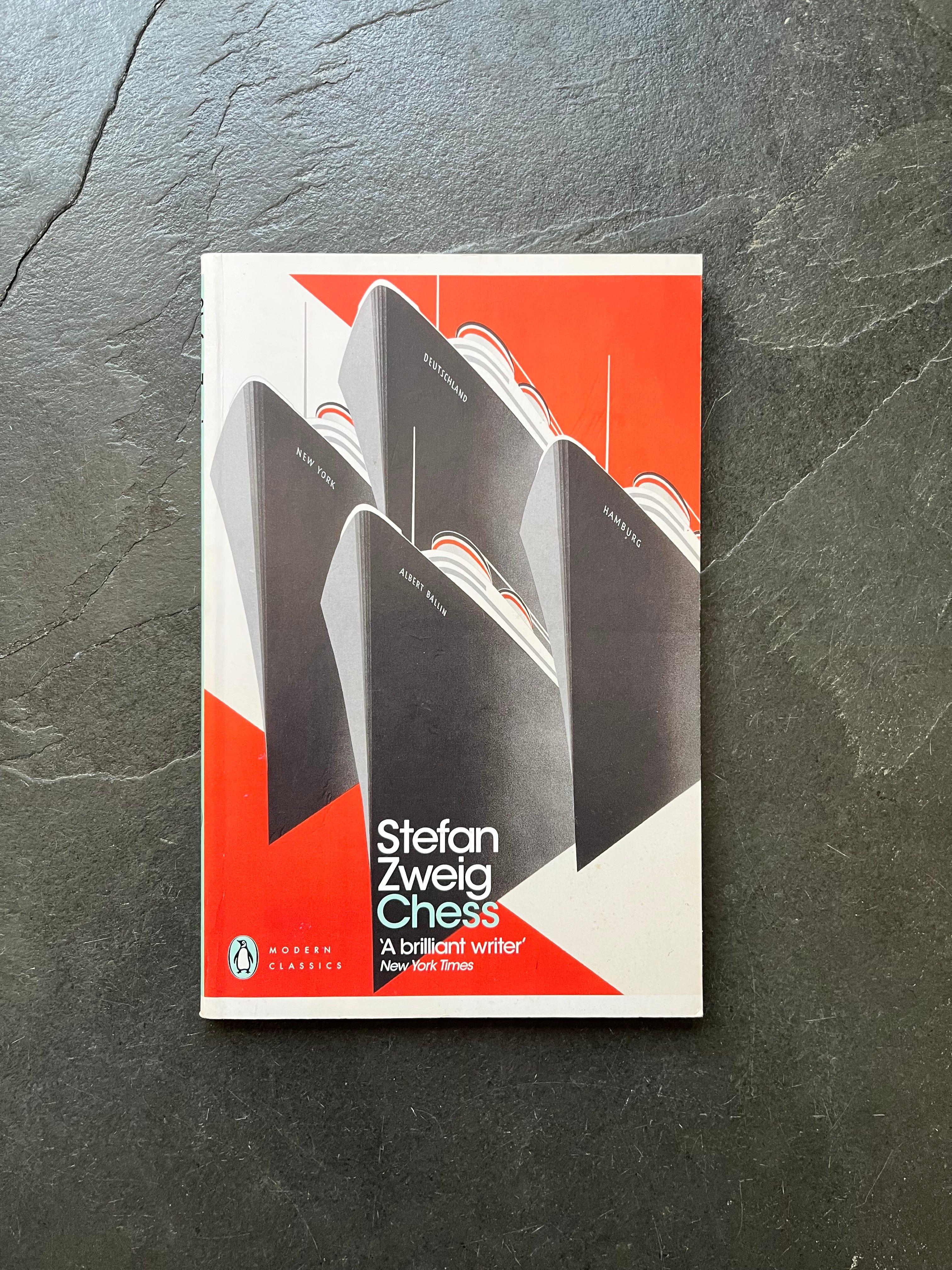
‘Chess’ by Stefan Zweig (translated by Anthea Bell)
On a cruise ship bound for Buenos Aires in 1941, a group of eager passengers challenge the world chess champion, Czentovic, to a match. This champion is unassuming in every way, a master who was found by chance. He accepts and at first, the challengers struggle in the face of ‘the master’. But a timid voice emerges from the crowd, and begins to whisper moves to the players - moves that perfectly anticipate all of Czentovic’s game. The timid speaker, Dr B, has not played a game of chess for more than twenty years, is both entirely unknown and completely formidable, and our protagonist wants to find out more.
This is the most thrilling, taut novel I have read in a long time. Chess is an electric, engrossing tale about the price of obsession and the boundless capacity of the human mind. It challenges the concept of ‘the genius’ and who is frequently excluded from those circles. Czentovic is an unlikely grand champion who was the son of a poor Slavonian boatman and an orphan. Taken into custody by a priest, his skill at playing chess was an enormous surprise because he was semi illiterate. He is a complete outsider who has infiltrated the elite world of chess;
‘So it was that the illustrious gallery of chess grandmasters, who unite in their ranks all kinds of intellectual superiority, who are philosophers, mathematicians, whose natures are calculating, imaginative and often creative, found their company invaded for the first time by a complete stranger to the world of the mind, a stolid, taciturn, rustic youth’ 2
Czentovic turned his skill into a profit, becoming one of the most financially successful chess champions of all time. Zweig explores the tension here between class and intellectualism, and the tendency we have to view them as inherent to each other. It seems as though Czentovic’s relationship to chess is not about the mind, it’s about its ability to create and sustain a lifestyle.
On the other hand, Dr B has an entirely different relationship to the game (and one I won’t spoil). To Dr B, chess is about survival and creating a capacity to endure profound isolation. His relationship to genius is a stark departure from Czentovic’s, but under the umbrella of chess, both driven by survival. The complexity of the game of chess is held up against the disintegration of psyche to suggest that humanity’s greatest resource, our mind, is also our greatest vulnerability.
The brevity of this novel is exquisite and manages to profoundly excavate the complexity of the human condition. Chess is a delicate portrait of difference, success and humanity’s capacity for madness. It is understood that Chess is semi-autobiographical, based on Zweig’s own experience with exile and the Nazi regime. It is believed that Dr B must serve as a portrayal of Zweig himself, and the chess board a metaphorical battleground for Europe during the second world war between facism and democracy which is a pretty epic metaphor. The incisive fluidity of this novella makes it difficult to look away from, and I was enraptured by it.
As I finished this, after months of having such a stagnant relationship with reading, I wrote ‘this is what literature is about!’ which is indicative of how much I loved it. Staunchly thought provoking with profound emotional and psychological depth, Chess is a book I’d recommend to anyone. I loved this, it is without a doubt a buy. I am eager to head straight to Beware of Pity and read more of his work.
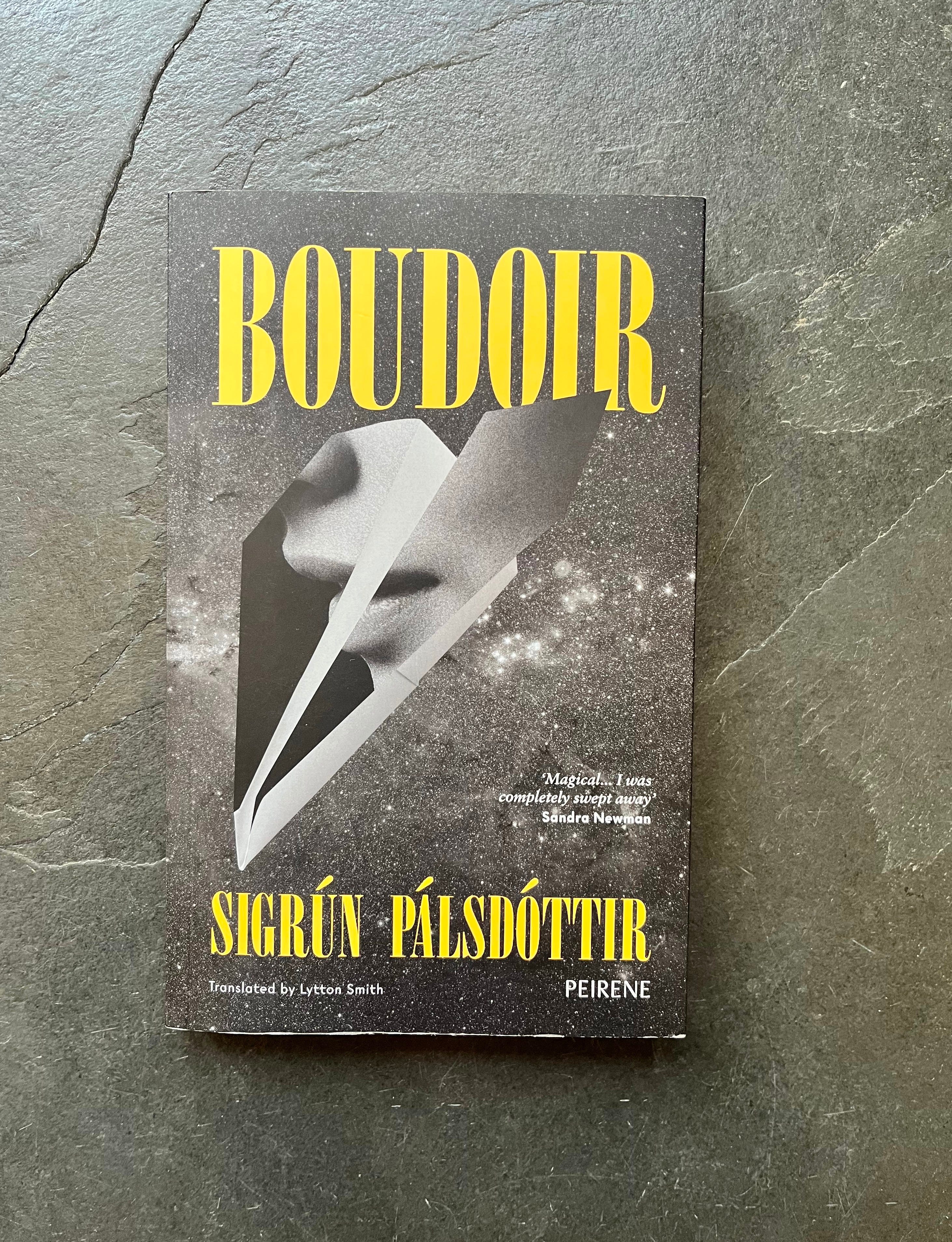
‘Boudoir’ by Sigrún Pálsdóttir (translated by Lytton Smith)
Teddý lives with her parents on a farm in the Icelandic wilderness. It’s 1962 and the world is changing, but not for Teddý. Her life is marked by the boundaries of lava fields, mountains and the knowledge that she is soon to become a young woman. After two strange, chance encounters, Teddý’s dreams of a world beyond the farm begin to crystalise in unexpected ways. But life, in all the unforeseen ways it pans out, has other plans. Boudoir is the story of Teddý’s life, spanning five decades, moving from farm to city, 1970s air travel and living with the reality of thwarted ambition and the selves we worry we have lost forever.
While Boudoir spans fifty years, it is sparse in detail, dipping into Teddý’s life only when pivotal events occur. Pálsdóttir’s characterisation of Teddý is superb, she has such a rich emotional landscape that transcends the limited time we spend with her on the page. This is a novel about dreams, and Teddý’s dreams to travel beyond the rural life she knows in Iceland. It is discovered by a visiting scientist, Cooper, that Teddý is a bit of a secret genius, and this is the light she needs to guide her ambition. Boudoir poignantly explores how the dreams we have as children can consume us, be forgotten and always remain important to you, no matter your path. With seemingly everything stacked against her, she remains steadfast on being something one day.
To the reader, Teddý is enigmatic and fiercely determined, but to those around her, she is distant and unknown. Teddý walks both a life of necessity and desire, one of expectation and one which surpasses it all. She is both a rural girl in a bank, a pilot in training, a criminal and a daughter. Her complexity enriches the story, and a feverishness emerges as we are desperately watching, and waiting, for Teddý to win. She is subject to a mix of luck and misfortune, constantly putting her on, and knocking her off, the path of her ambition. She never loses sight completely, despite the odds being stacked against her, which is exceedingly beautiful.
I was utterly enveloped by Teddý and her spell of ambition. Pálsdóttir achieves this remarkable balance in her prose which are simultaneously luxurious and scant. We both know so much about Teddý’s internal landscape, but so little about the life that surrounds her. Though occasionally it was challenging to visualise Teddý, she remained enigmatic with a remarkable emotional pull, which characterised her beyond any physical description. It was such a pleasure to be wrapped up in the whirlwind of an adult never giving up on a dream that others would call fruitless.
Boudoir is magnetic and speaks to Pálsdóttir’s immense talent that I was completely swept away by the tale. It is poetic to be reminded that dreams do not have an expiry date, and that they are always within reach, even if you are convinced they are not. While it suffers slightly from some inconsistent time jumps, I loved it. I felt moved by the reminder that while adolescence dreams can be so fraught, they are also endlessly important. Next time I am feeling wobbly about chasing those dreams, I’ll be thinking of Teddý and her gutsy determination. I recommend this if you like sagas that follow a protagonist over a long period of time and alternative coming-of-age narratives. I’d call this a borrow!
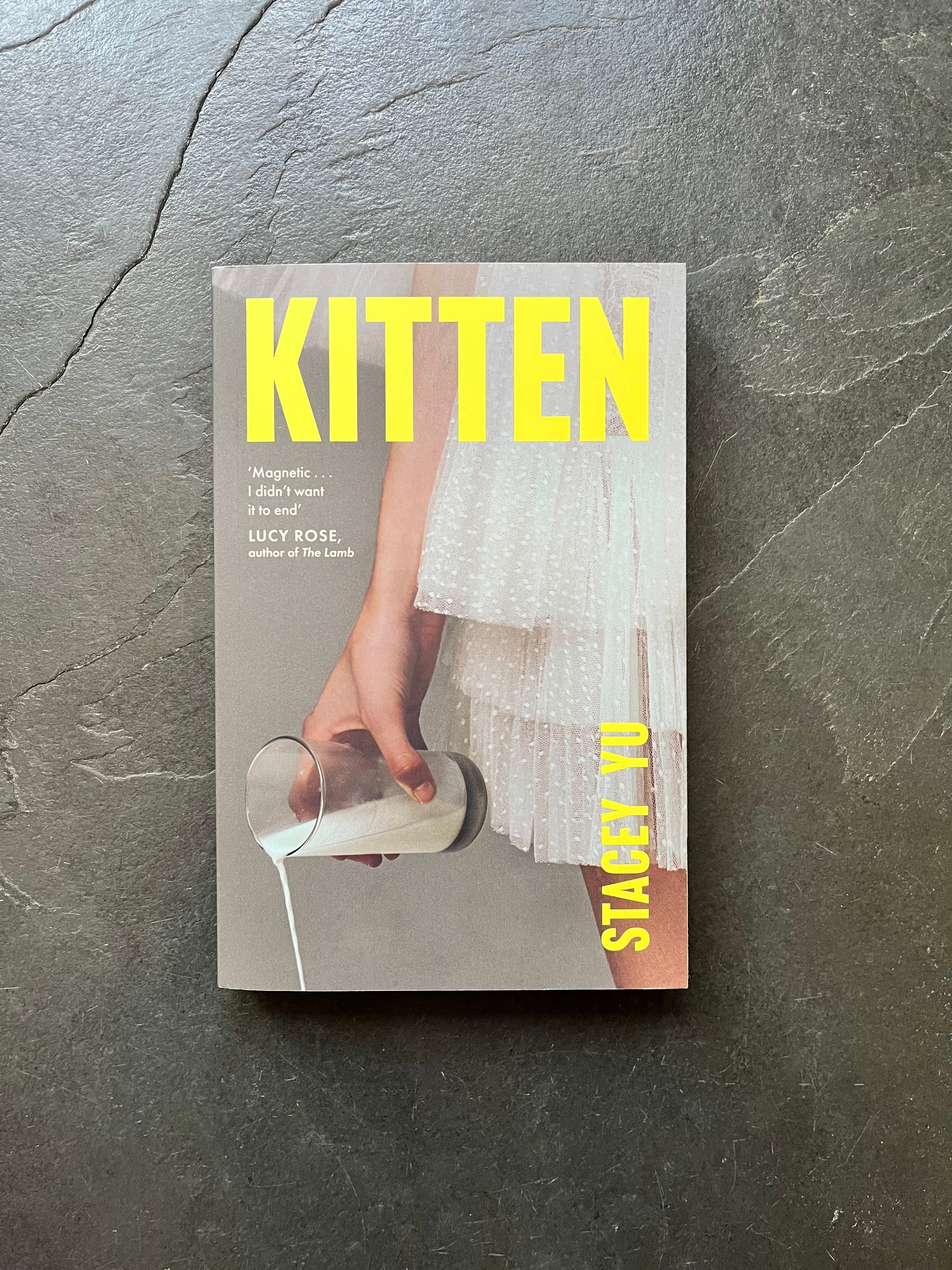
‘Kitten’ by Stacey Yu
I am not a reader of upmarket fiction, but I am a friend of someone who is just about to publish her debut and therefore, for one night only, I became a reader of upmarket fiction. Kitten is the story of Katie who has just graduated college, hasn’t spoken to her mum in over a year and has just started dating James, a financially secure boy who knows exactly what he wants. Despite the world at her fingertips, Katie is hellbent on trying to avoid every decision possible, skirt any agency and disappear into an aimless vessel devoid of desires. Consequently it makes total sense when she meets James’ cat, Silver, she becomes infatuated in a way that is entirely reflective of her internal landscape. Silver is looked after, babied and absent from having to make decisions - just what Katie wants.
Primarily, Kitten is an exploration about the violent act of having to grow up. From life changing from something that is mapped out for you, to something you realise you have to architect yourself. The enormity of this realisation, coupled with her strained and complicated relationship with her mum, leaves Katie trying to perpetually remain a child. While Yu unfortunately does not give us much context to Katie’s relationship with her mother, which is a shortfall to the story, there is implication that without knowing the specifics, their relationship is tangled and terse.
Katie’s pathetic and careless approach to life (e.g she intentionally gives the cat an entire cup of coffee (what the hell), another time she wets herself in the car because she fails to articulate her desire to go to the toilet) was truly infuriating to read. I have a challenging relationship to reading about people’s active choice to ignore their agency when, having been unwell for years, I had my agency ripped from me. Katie is my antithesis in every way; someone who doesn’t want to make any choices about her future but has every capacity too. It can be hard to separate yourself as a reader, because we all project our lived experiences onto stories to a degree, and I recognise that I struggled with this here. Regardless, Kitten provoked an interesting reflection about what it means to truly come to understand that you can architect your life, and that it is a privilege to do so.
There is a pervasive myth in younger generations that being helpless is something cool (this is such a direct link to the earlier review of Victim) and Yu is interrogating how ridiculous this is. Often we can fall victim to the narratives that are thrust upon us, which in this case Katie’s mum pushes on her, and forget that our existences are ours to make. Katie spends so long in her mothers emotionally wrought shadow that she is unable to recognise that she can make choices. Sometimes growing up is not just about who we become on our own, but specifically who we become away from our parents. They can (lovingly or not) encroach our identities in ways we aren’t even able to recognise, which is exactly what happens with Katie.
Kitten had great propulsion and I enjoyed my time with it, despite wanting more friction. There is depth that wasn’t explored here, but perhaps in doing so we would have lost Katie’s delicate characterisation to the much more complex portrait of her mother. Ultimately Katie isn’t that complex, she is just scared of growing up. It’s as if Peter Pan was a Gen Z American woman. I would recommend this and call it a borrow! Don’t be fooled by the marketing of this book, I don’t think the tag line of ‘a woman’s awakening when she falls in love with her boyfriend’s cat’ does it justice (marketing is stupid). Instead, understand it to be a late coming of age about reluctantly coming to terms with the reality of choosing the type of life you want to live.
Kitten is out in July in the UK and August in the US. Pre order here.
And that concludes my March and April reads! My favourite reads in March were, without a doubt, ‘House of Fury’ and ‘How To Kill A Language’. For April, it was ‘The Duke’ and ‘Chess’!
My first read for May is ‘Tomb of Sand’ by Geetanjali Shree. I don’t feel I am ‘into’ it yet, but coming in at 735 pages, I think its safe to suggest it might take me a while? If you have read it, let me know how you found it.
End Notes
In March, I shared my interview with Translator Antonella Lettieri. I am profoundly proud of this and would love for you to read it if you haven’t already. We had so much fun and I am so grateful for Antonella’s willingness to chat about the industry, and her wonderful outlook on reading, translating and life in general. She also gave some book recommendations at the end that I will be reading!
In April, another interview (look at me go!!) was published on ’ newsletter Books + Bits. Again, very proud of this. I loved reading Smith Galer’s book and chatting to her about our worlds relationship to language. Essentially, I finished the book, and our discussion, with the ambition to learn a language again. I definitely believed the propaganda I received at school that languages are inherently hard, which was not helped by my French teacher who would never show up to class, but yell at us every now and then for not being able to speak any French. He made language learning so painful. Sophia tells us all to be shameless, get over it and embrace being a life long learner. These are sentiments I try to embrace in most of my life anyway, so why not languages too?! Duolingo here I come.
reached out and asked for some book recommendations for a slump and I gave some suggestions here. I also suggested House of Fury, which didn’t make the cut, but is a great book for a slump (because it helped mine!)
Our next book club pick for June was announced last week! We’re reading Rock, Paper, Grenade by Artem Chekh (translated by Olena Jennings and Oksana Rosenblum) and I am very excited! The Book Club is quickly becoming my absolute favourite thing in the world - which is a testament to the type of readers that are a part of it, who are so interesting, generous and thoughtful! Friend of the book club officially stated how fun and thoughtful the conversation was, which is deeply kind and also accurate - it is the atmosphere I try to create!


Let me know your thoughts:
✹ What have you read and enjoyed in March and April? Do you have any recommendations for me?
☆ Have you read any of these books? Would you like to?
✼ Who’s keeping track of the International Booker Prize? Any outstanding recommendations for me? I saw the shortlist and am, unsurprisingly, still championing She Who Remains or On Earth As It Is Beneath to win! Has anyone read the rest of the shortlist? I always feel much less ‘moved’ by the shortlist - I think the longlist is the main event!
✵ Do you have any recommendations for me based on the themes or books from this month?
☞ As we edge closer to summer, is there any specific book coverage would you like to see on the newsletter? I have some ideas but I’d like to hear from you.
Thank you, as always, for being a reader.
I hope you’re as happy to see me back as I am to be back. Please inundate me in the comments with what you’ve been reading and thinking about - I missed hearing from you all.
Happy Reading,
Love Martha
If you enjoyed this, or anything else you see on Martha’s Monthly, why share it with a friend so they can enjoy it too!!
Catch up on what you might have missed:
And what I was reading in March 2025 & 2024; (standouts are: Biography Of X, Cautery, Pew, On The Line & The Dark Side of Skin)
And April 2025 & 2024; (standouts are; Co Wives, Co Widows, Portrait of an Island on Fire, Abyss & The Colour of Water)
Subscribe if you enjoyed this and want to support the newsletter (and me) <3
The Monthly Reads will always be free, but if you would like to join the book club, consider upgrading your subscription!
p.27 from Ghostroots by `Pemi Aguda
p.9 from Chess by Stefan Zweig