

Two new releases from beloved authors and a niche sports memoir
Hey readers!
I have a fair amount to say about the books I read this week so I’m going to keep this preamble particularly brief. I did want to let you know that and I have been doing a lot of math this weekend and between her Nonfiction Reading Guide sales, my Paperback Summer Reading Guide sales, my matching contribution, an anonymous community member’s matching contribution, and donations from Traci’s $5 Friday, we have raised over $20,000 for I AM ALS!!! I truly cannot fully comprehend that number. This weekend marked three months since my dad died and it feels really special to be able to honor him in this way. Thank you to everyone who purchased, donated, shared, or contributed in anyway! And thank you of course to longtime subscribers here, your membership is going towards I AM ALS through my matching donation and I wouldn’t be able to do this without your consistent support.

This week I read…
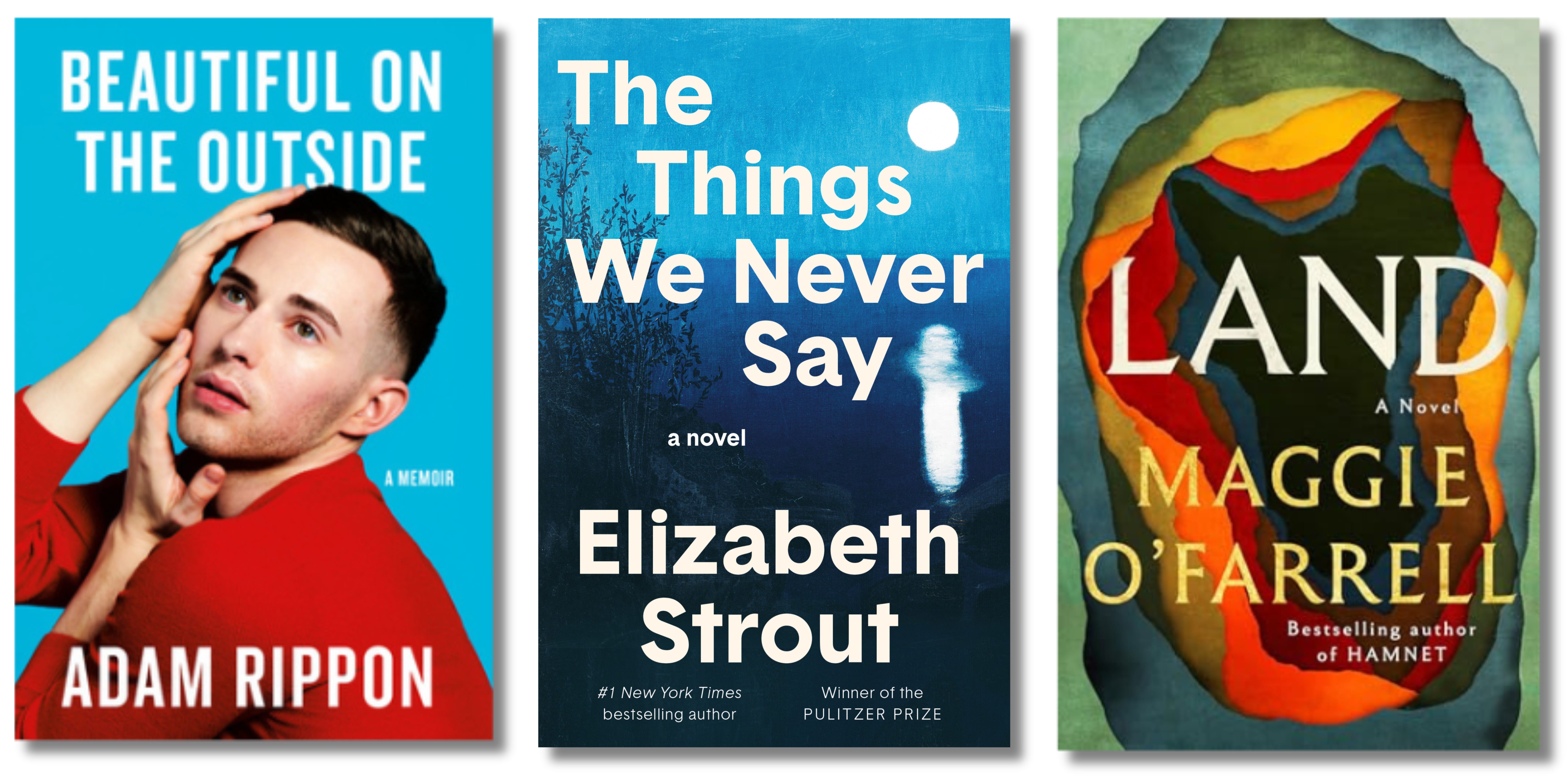
Beautiful on the Outside by Adam Rippon. I have been a devoted fan of The Runthrough—my favorite figure skating podcast—since it launched. The show is hosted by Olympians Adam Rippon and Ashley Wagner along with their NBC Sports producer friend Sarah Hughes (no relation to Olympic champion Sarah Hughes, and yes of course that is an ongoing bit on the show). But while I followed much of Ashely’s career in real time, I wasn’t particularly family with Adam until the 2018 Olympic season when he became a media darling and breakout star, as well as the first openly gay man to qualify for the Winter Olympics. This summer, The Runthrough is doing a deep dive series on each host. Learning about Adam’s life and early career was delightful, so I decided to pick up his memoir on audio because I didn’t want the podcast to end.
The book proved to be a nice companion to the podcast. There are a lot more details of course as well as more emotional, personal reflection on how some of the major moments felt to Adam at the time. I always love hearing how people first get involved in figure skating. It’s such a nice sport that beginning at all is rare and shifting into the competitive arena is even rarer. Those early stories are some of the best because they reveal just how wild the entire world of skating is—even at the earliest levels. I also loved getting a behind-the-scenes peek at the Olympics, especially Adam’s savvy strategy for coming out on top even when an individual medal wasn’t in the cards. You really can win the Olympics without bringing home a gold medal. The writing in the book is not good, which is fine because that’s not what I was there for. It gets clunky and repetitive, particularly in moments where you can tell there’s more complexity to the situation than the author is willing to share on the page. I also wish an editor would have helped him streamline the organization. It feels like it wants to be organized into thematic essays, but can’t help falling into the comfort of a chronological rehashing. Still, there are passages when Rippon’s voice, sometimes humorous and sometimes heartfelt, really shines, demonstrating out the fortitude, grit, generosity, and sense of humor needed to succeed in the sport of figure skating. Unlike some sports books, I wouldn’t necessarily recommend Beautiful on the Outside to anyone who isn’t already interested in and invested in Adam, but if that’s you, this is a fun way to fill the figure skating void during the off-season. Bookshop | Libro.fm

The Things We Never Say by Elizabeth Strout. One of the joys of my reading life in the last few years has been Strout’s ongoing Lucy Barton series. There was something healing about Strout’s imaginings of how her beloved characters coped with the pandemic, aging, new and old loves, and more. Oh William! and Lucy by the Sea feel like the very definition of character-driven novels in that she took characters many of us already knew and loved and explored what they would think and feel and do in the world we’re living in now. The casualness and open authenticity of Strout’s prose worked beautifully in this mode and reading her books felt like visiting old friends.
And yet I was excited to hear that in Strout’s newest novel, The Things We Never Say, she was moving on from Lucy and Olive and bringing us to a new place with a new batch of characters. This one follows Artie, a high school history teacher in his fifties who finds himself achingly lonely despite a long marriage, students who love him, and colleagues who admire him. Artie is a gem of a man, kind and considerate, a good friend and patient teacher, and a person who is rightly enraged by the actions of the currently government and I really enjoyed getting to know him. Yet while he felt like a complex character, the book’s themes were flattened by authorial heavy-handedness. Of course I don’t know how this book came into being, but it really felt like a book that began with knowing what it wanted to say about politics and loneliness and then molding a plot around that rather than beginning with questions to explore through fully realized characters. Perhaps it didn’t help that I listened to this podcast on my recent roadtrip which is basically the research equivalent of what The Things We Never Say seemed bent on demonstrating—sometimes our own life and media context influences the books we read in ways we can’t undo.
Despite having some major issues with it, I am glad I read this. Strout’s writing is always so easy and engaging—especially on audio—and I listened to the whole thing in two days. But if you’re new to her work, I wouldn’t recommend starting here. Of course, Olive Kitteridge is an absolute classic (and there’s a cute nod to that in TTWNS) and I also think Anything is Possible is a great starting point for understanding her style and the type of characters she tends to write about. Bookshop | Libro.fm

Land by Maggie O’Farrell. Land begins with a father in a copse of woods near an Irish coastline. The father, who speaks both the local language and the Queen’s English, has been tasked with surveying and maping the country. But something is strange in these trees and while the sone flees, the father remains returning days later babbling incoherently about maps and names and land. What follows is a sweeping depiction of a family both their futures that are irrevocably altered by this moment and a past that’s so deeply rooted in the land and its people it continues to have profound impact on the residents of this mystical place.
This novel is ambitious and, for the most part, successful. The writing is rich, layered, and totally transporting. O’Farrell is very skilled at providing enough detail to make you really feel like you’re in the story with the characters without sacrificing momentum. This book moves, and it needs to, as it spans centuries and continents while mining the interior lives of half-a-dozen complex characters. I never felt the book was a slog, and yet I also felt that she gave the story enough room to breathe by sitting in the quiet moments of her characters’ lives. O’Farrell’s narrative style and ability to flit into the minds of every character (even the animals!) give this novel a kaleidoscopic quality I adored. And thematically, what she’s exploring here is beautiful and timeless. The tension between the living breathing land and the names and maps used to claim and conquer is just as vital now as it is for these mid-19th century characters.
Because the book is doing so much, I do think this book felt a little more pandering than some of her earlier books. It seemed like she really wanted to make sure we readers understood her aims and she leans into guiding us towards the intended destination. There’s foreshadowing of what’s to come, repetitive traumas, characters who feel designed to serve a purpose, and direct reflection on the novel’s themes from the narrator. Normally, this is the kind of thing that can make me turn on a book (remember my unpopular Demon Copperhead opinion?), but I was more forgiving, or perhaps generous, with this one. I could see some potential reasons for these choices outside of guiding the reader that made me feel more okay with them even if it kept this book from being perfect for me. This novel feels like an homage to ancient modes of storytelling and all of my qualms about the style of the narrative work within that framework. That didn’t make me forgive every choice, but it did help me look beyond some frustrations of personal taste so that I could lose myself in the sweep of the novel as a whole. Bookshop | Libro.fm
Now I’m reading…
I’m almost done with The Möbius Book by Catherine Lacey, which was the most recent selection for my IRL book club. I also started The Unicorn Hunters by Katherine Arden, which isn’t my typical fare, but I couldn’t resist the cover.
New on my TBR…
Ben Rhodes’s book All We Say: The Battle for American Identity: A History in 15 Speeches sounds like an AP Lang/Am Lit teacher’s dream book, despite the horrifically long title.
💬 Tell me about your week in books! What did you finish, what are you reading now, and what have you added to your TBR?

The Guardian released their reader selected list of 100 best novels of all time and it was much more interesting than their official list. (The Guardian)
The best books of the year so far. (Vulture)
This is what you want to read this summer. (It’s Been a Minute | NPR)
The most anticipated queer books for summer 2026. (Electric Lit)
The best audiobooks of 2026 (so far). (NYT, gift link)
10 new books in June will transport you. (NPR)
Why the American novel refused to grow up. (New Yorker)
How lit mags are dealing with AI-slop submissions. (Vulture)

I have given up on keeping track of items I need frequently in several different places and started investing in multiples. We now have a hairbrush in Louise’s room, the family room, and her swim bag, which means I no longer have to run up and down the stairs right before school drop-off or as part of the bedtime routine. I now have small trash bags stocked in every single bathroom. I have charging cables in every high use room in the house and in the car. Honestly I don’t know if this is an extremely obvious hack and I’m late to the party or the wasteful practice of a disorganized mom, but either way it is making my days a fraction easier in a way that qualifies as significant life improvement.
This week I started stretching at night before bed while listening to my audiobook and it’s the ideal way to wind down before sleep. I’ve been looking for opportunities in my day to listen to my books in a more mindful way and this checks that box perfectly. But it also helps my body feel more ready for sleep and I wake up less sore. I’m going to try to keep up the habit because I’m also trying to improve my flexibility now that I’ve been skating again. Here’s hoping I can make it a true habit.

For questions, comments, or suggestions, please don’t hesitate to reach out by emailing fictionmattersbooks@gmail.com or responding directly to this newsletter. I love hearing from you!
This email may contain affiliate links. If you make a purchase through the links above, I may earn a small commission at no additional cost to you.
If you enjoyed today’s newsletter, please forward it to a book-loving friend. That’s a great way to spread bookish cheer and support the newsletter!
Happy reading!