
May Reads
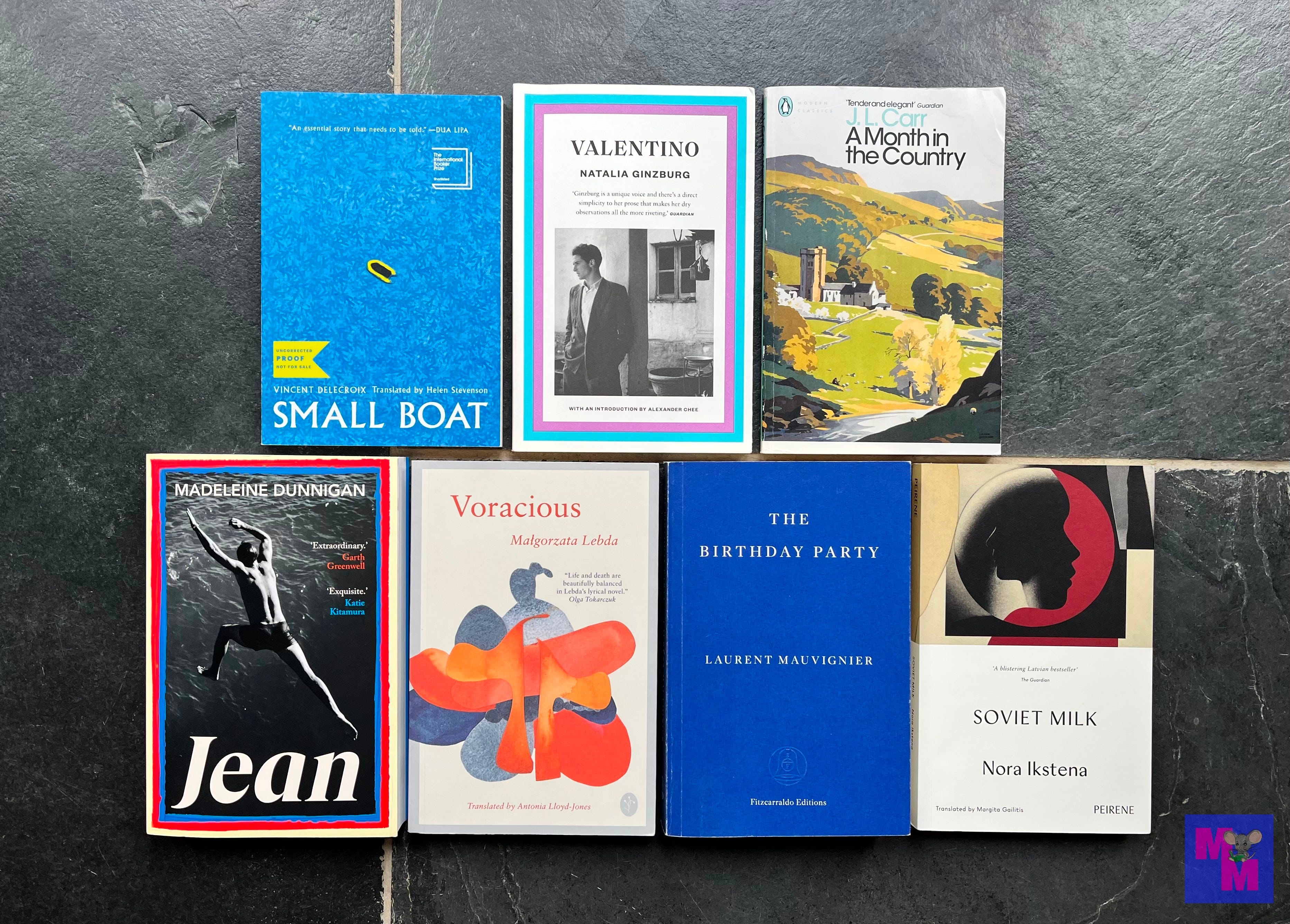
Summer is almost here for us in the Northern Hemisphere. Last week, I shared ‘A Translated Summer Reading Guide’ for you all as a little beginning of summer treat to help inspire some summer reading! I also share some of the books I am hoping to read this summer, if you would like to read alongside me.
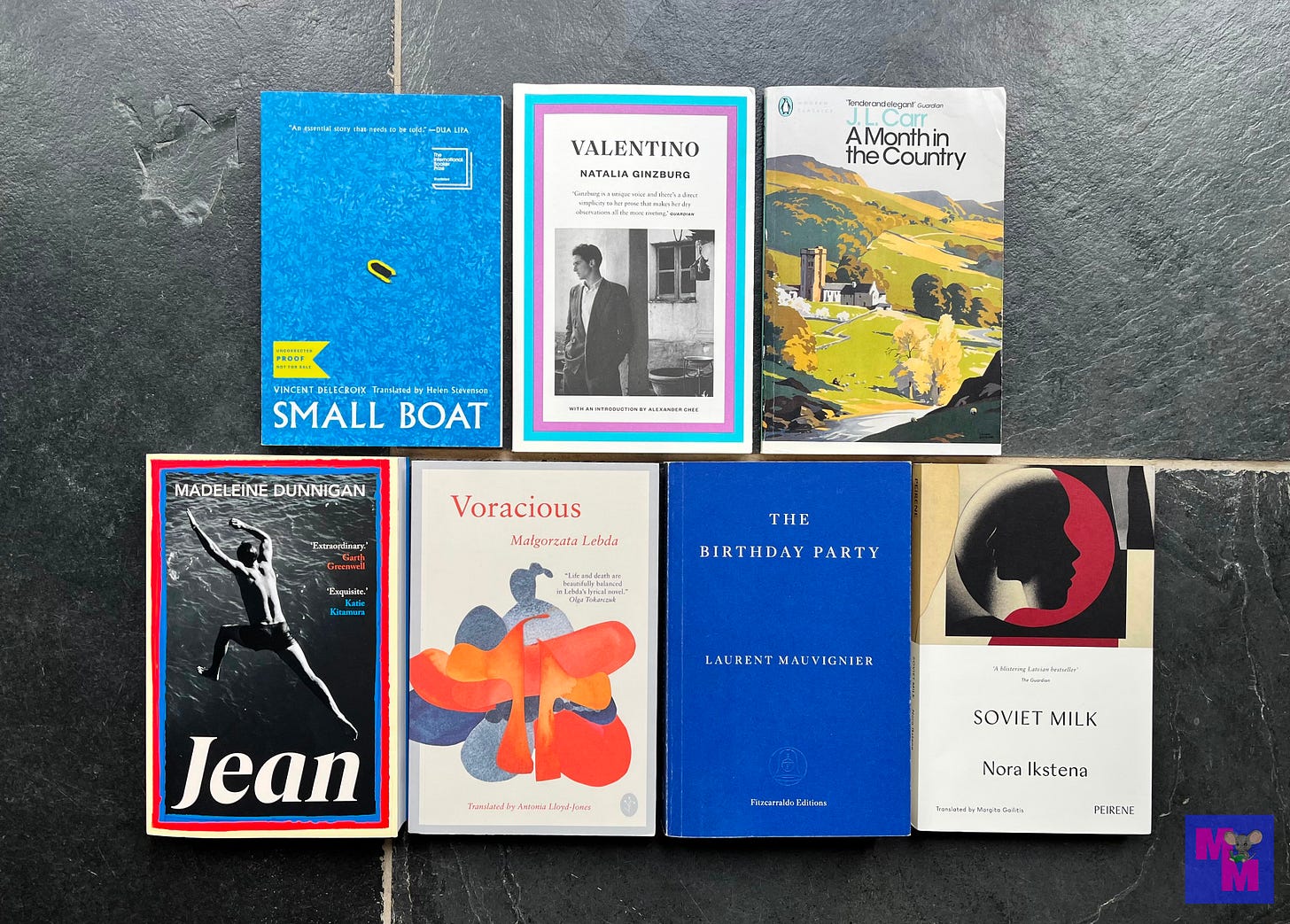
Overall my May reading was good! It was the most I’ve read in a month since December, which is a good sign my relationship with reading is recovering (thank god). A few of these books are very ‘summer’ coded - ‘Jean’ and ‘A Month in the Country’ being two of them. Those of you who are eagle eyed may notice that Tomb of Sand isn’t mentioned here, despite naming it as my first read of May. I had to put a pin in it because I wasn’t expecting such little narrative trajectory. I wanted the opposite at the time, but I truly intend to revisit it in June. I have nothing else to say, so let’s get into the reviews.
To see the translated reads from May on Martha’s Map, including authors from Poland, France, Latvia and Italy, click here.
For those who are new, buy, borrow, bust is my recommendation key: Buy = I loved this book and highly recommend it. Borrow = I liked this book and think it is worth a read. Bust = I wouldn’t recommend this book from my reading experience.
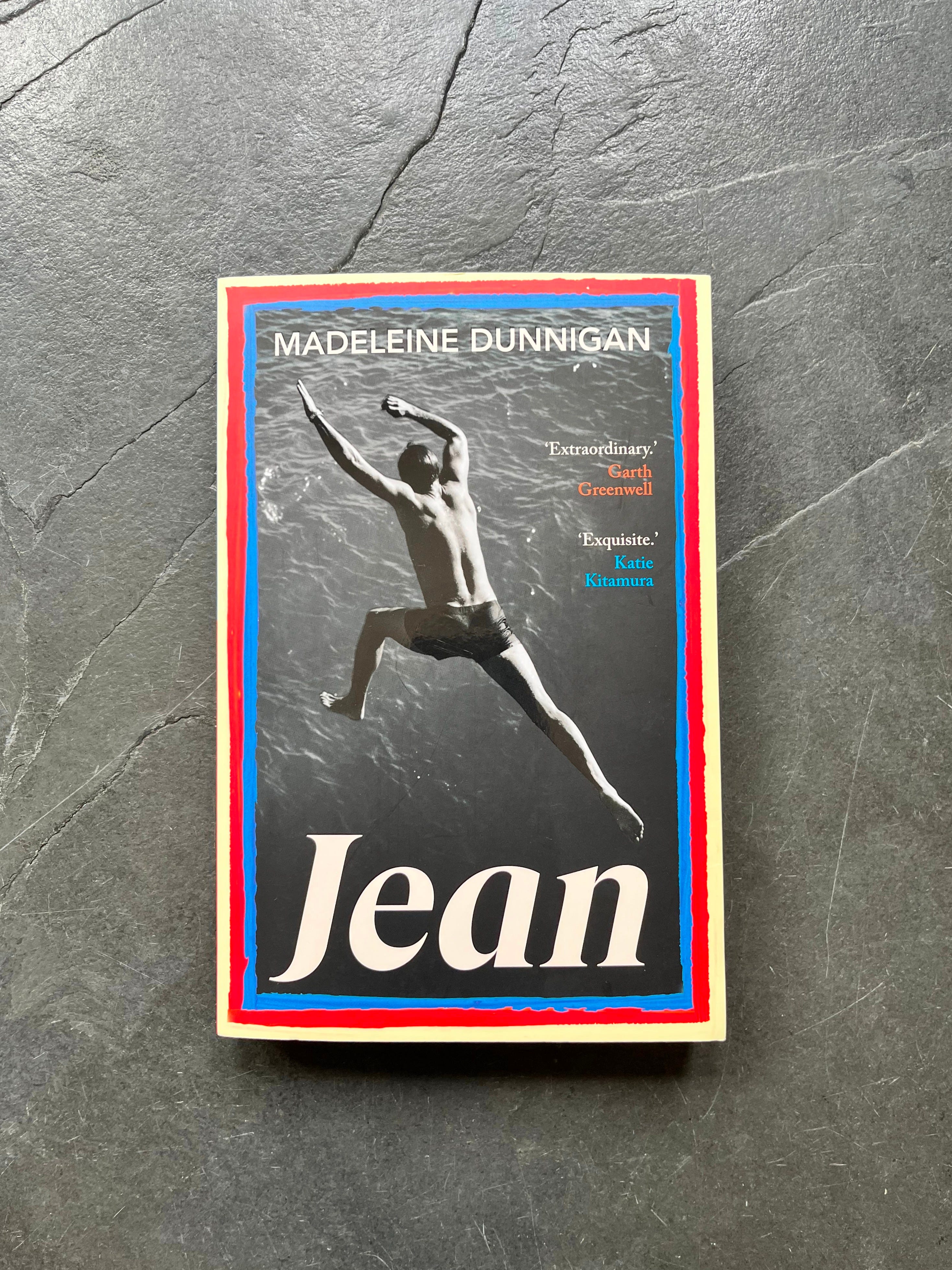
‘Jean’ by Madeline Dunnigan
It’s a hot summer in 1976 at the eccentric boarding school for problematic boys, Compton Manor. One afternoon, despite having barely interacted with each other before, Jean and Tom share an indiscernible gaze. This gaze marks the beginning of a shared secret intimacy; one that is defined by love and violence. As their relationship deepens, so does the risk of being found out, but this risk is characterised very differently for them.
While Jean is a heartrending story of the intensity of adolescent love, it is primarily an astute analysis on class. Jean is Jewish, the son of a single mother and on scholarship at Compton. He has been an outsider most of his life, sent to the school as a last attempt to ‘fix’ him. His place at the school consistently remains on thin ice because his behaviour is considered ‘difficult’. Jean is surrounded by rich boys from affluent families, whose future is not dependent on their performance at the school because they are part of networks that are undetectable to him. Tom is part of this group, and this disparity between their social standing is deftly explored by Dunnigan.
Class is not overt in this story, but it is undeniably ubiquitous throughout. It takes a while for Jean to detect that this is what is at play here. Jean attributes his lifetime of feeling like he doesn’t belong to various factors; his mother, his absent father, his attraction to boys. But ultimately, Jean suggests that it doesn’t matter how ‘different’ Jean is - the reason he feels like he can never quite find his footing at Compton Manor is because he is excluded from the world he is surrounded by.
This exploration, coupled with the burgeoning relationship between Tom and Jean, creates a narrative of violence and desire. Dunnigan incrementally feeds the reader details about Jean’s past that slowly begins to reveal a portrait of who he might be, and what has happened to him. His narrative is sparse and we get a sense that there is a lot left unsaid. Jean is predominately characterised by fear; of being vulnerable and being hurt.
Jean’s delicate sense of self, exclusion and blossoming feelings for Tom creates a story that tugs on your heart. It maps the intense violence adolescence alongside beginning to understand more about the world. Tom and Jean’s relationship is both volatile and sweet as they straddle an innocent boyhood and a hardened manhood. Sometimes one eclipses the other, but both characterise their relationship. There is a lot of friction between them, some which is welcomed, other which is feared.
Set against the backdrop of the exceptionally well characterised school, which is as bizarre and bohemian as you’d assume a posh English boys school in the late 1970s to be; it is enigmatic, dangerous and idyllic all at once. A sense of unease radiates throughout this entire story; from the school, their peers, Tom and Jean. Dunnigan’s prose is sparse, but vivid. The story is compulsive because of the role Dunnigan puts on the reader - one of vigilance as we wait for one of the many delicate balances of life at the school to crumble.
I flew through this book. The setting is so vivid, Tom and Jean’s relationship is full of a lot of friction to chew on, the anthropological commentary on society well done. It’s mysterious, endearing and tense. I thought the tone of adolescence was handled well by Dunnigan, creating a narrative driven by disillusionment and discovery. While Dunnigan takes many formatting liberties that many could find infuriating, I found her marginally experimental narrative mostly effective. I would recommend this to anyone who enjoys stories about the battle to understand oneself, particularly in a body that feels inherently an outsider, and the exploration of class. I would call it a buy!
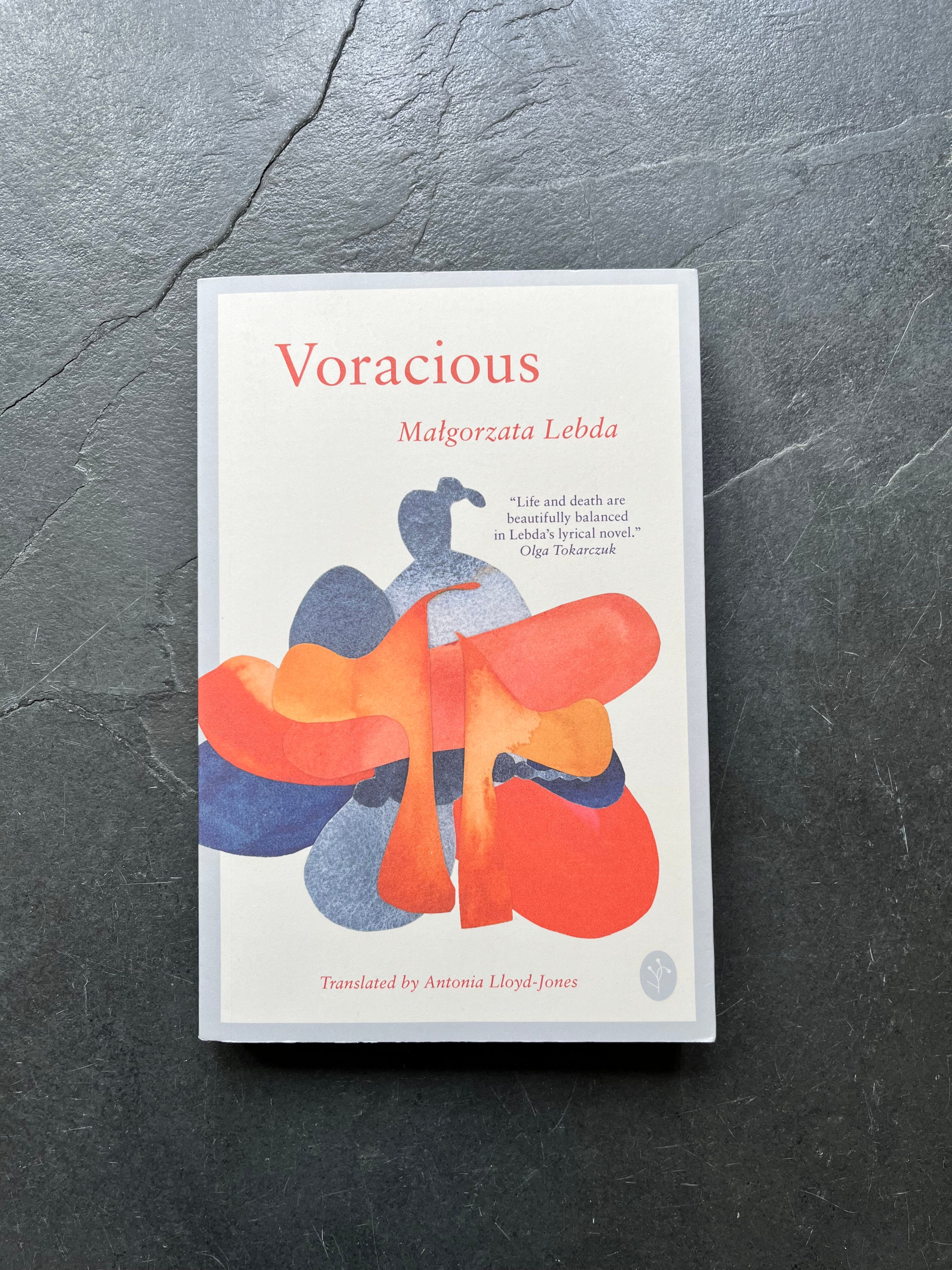
‘Voracious’ by Małgorzata Lebda (translated by Antonia Llyod-Jones)
Voracious follows a year in the life of a young woman caring for her dying grandmother, alongside her grandfather and friend. Her grandmother is a woman who cares deeply about all life, from moths to spiders, her pets and plants. Outside of this isolated cocoon where life and death are at odds, their small village echoes with noises from the nearby slaughterhouse.
This is a lyrical novel that is constantly colliding life and death. Lebda meditates on the banal stress of sickness and the mundane profundity of it. In this mountainous village, death is not a spectacle but part of the essence of life. Voracious situates the grandmother’s sickness within the cycle of life that is normal in agricultural communities. As the economic engine of this village is a slaughterhouse, you might assume that there would be little spectacle of illness due to their familiarity with it. But Lebda makes a poetic distinction that people continually cannot resist the fascination of illness, no matter where they live.
‘The force of attraction of an illness is great and the spectacle of it is curious for the eyes of others’ 1
The narrative lacks much in the way of trajectory, instead the story continually swirls with observations about the cycle of life. Her grandmother is floating between the two kingdoms of life and death, sometimes more distinctly in one than the other. But the emotion in the house constantly remains overridingly gentle.
Life is voracious because it gives us everything, and subsequently takes it all away. It is challenging to articulate the emotion all of this, with language often feeling like it fails us in moments where it is incomprehensive to articulate the beauty and cruelty of it all. But Lebda manages it. She articulates how to witness life come, and go, is a devastating privilege; that there is beauty within all aspects of our existence.
I find it hard to read books about sickness that meditate on the paralysing existence of being sick for a prolonged period of time, because I know what that is like. It’s always a gamble (for me) to pick up a book about sickness - sometimes it is great, others it is terrible. This sits somewhere in between. Voracious is the kind of novel that lets you imprint yourself onto it - which is exactly what happened. All the characters are nameless, the experience of humanity in it so familiar that many will be able to see themselves somewhere in it. Lebda’s poetic incisiveness places the reader in a trance, one that encourages you to think about what it means to be alive. I would recommend this for lovers of lyrical, meditative stories with little trajectory. This sits somewhere between a bust and a borrow. I liked it as a contemplation exercise more than as a ‘novel’.
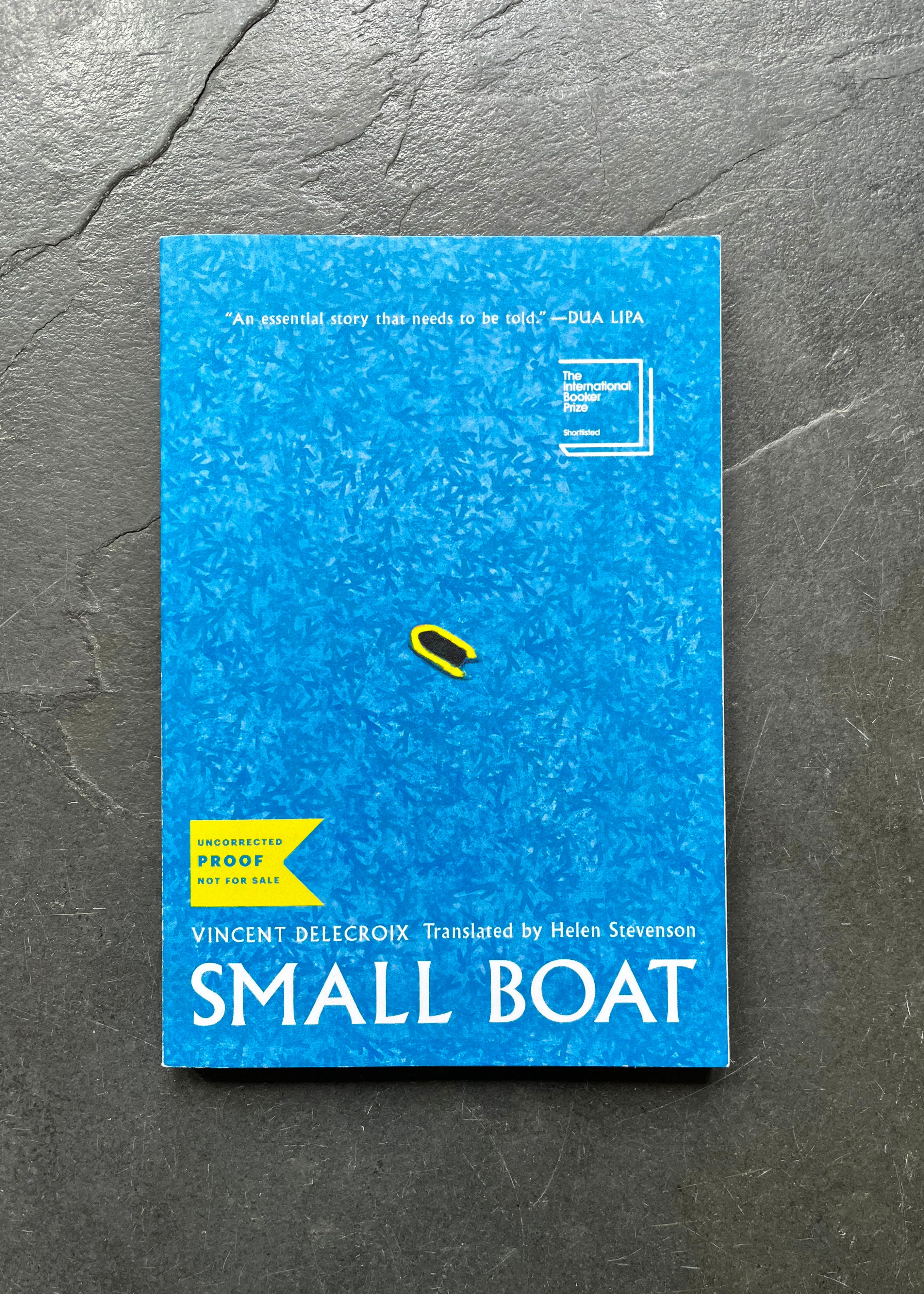
‘Small Boat’ by Vincent Delecroix (translated by Helen Stevenson)
Small Boat is philosopher Delecroix’s thought experiment inspired by the incident in November 2021, where a small boat carrying migrants capsized in the English Channel. Despite receiving calls for help, the French authorities wrongly told the migrants they were in British waters and had to call British authorities for help. By the time rescue vessels arrived, twenty seven people had died. Small Boat is a fictional account of the French naval officer who took the migrants’ call and refused them help.
Small Boat is a profound exploration of many things, but primarily into how we are all complicit in this crisis. It is intentionally probing about one of, if not the most, defining news items of the last decade. While a human rights issue, small boat crossings have become a heavily politicised issue from all sides in government in the UK - but the book is absent of this specific exploration. Instead, it is about trying to understand the psychology of the officer behind the call and what it reveals about the wider societal attitude towards migrants.
We are plunged into the thoughts of the unnamed call operator as she is interrogated by a police officer. The call operator is a woman of many shades; a mother, a member of the military who is following orders, and a resident of Calais, one of the most heavily documented transit points for migrants globally (see Calais Jungle). Where perhaps you would expect an overt portrait of a villain, Delecroix deftly explores the complex position she is in who is constantly watching ‘the migrant drama’ from ‘the best seat in the house’. Her apathy is alarming, but there are glimpses where the reader can understand how desensitised she is to it, because the crossings are rapidly encroaching her personal and professional life.
Delecroix puts the reader in an uncomfortable position, one in which they might occasionally find themselves understanding the operator’s perspective. She discusses how she is following military orders, but her role in monitoring the coast line is consistently being conflated with the objectives of a charity. Then, she’ll suddenly say something utterly senseless, such as how the migrants were ‘washed up well before they drowned’, and the complexity of her character continues to grow. It is provocative to read a protagonist that you constantly are changing your mind about, one minute understanding the point she is trying to make, the next horrified at her callousness. In trying the best she can to stay emotionally uninvolved in order to perform her job correctly, she manages to not perform any job at all.
Blame is ubiquitous throughout this novel, with the operator trying to blame the migrants, the police interrogator blaming the operator and a public opinion conflated between wanting someone to blame, yet ignoring the issue at the same time. Embedded in between this is the sobering, panicked perspective of someone slowly drowning in the channel. Through all his provocative questioning, Delecroix asks that rather than getting caught up in finding someone to blame, perhaps we all need to understand to what extent we are all complicit? Delecroix articulates that this is becoming a spectacle increasingly devoid of empathy.
‘From inside their own homes, they are all watching the drama, and the drama is never-ending; it plays out every day, every night, on high days and holidays, even when they’re doing other things, they’re still spectators of the ‘drama at sea’ 2
People often want to turn away from the issue of migration because it is one of the most divisive issues of the twenty-first century, and it is only becoming more divisive in UK politics. What Small Boat does so well is hold a mirror up to the reader and ask us how much we are all part of this; because the incident is not isolated. Delecroix’s novel is about having compassion for those who come here for a better life. It is not about assigning blame, but rather that we should always be leading with empathy towards those who have risked everything to try and have a life as safe as ours.
This book is masterfully written. I thought Delecroix’s skill in writing from the perspective of the call operator was genius, the nuance of her opinion incredibly well handled. I would recommend listening to Delecroix’s interview with Dua Lipa for those who want to understand a bit more about the tension that exists between the English and French coastlines when it comes to small boat crossings. The philosophical thought exercise of this novel was my favourite aspect - I love a book that asks more questions than it answers, which is exactly what happens in Small Boat. I would call it a buy!
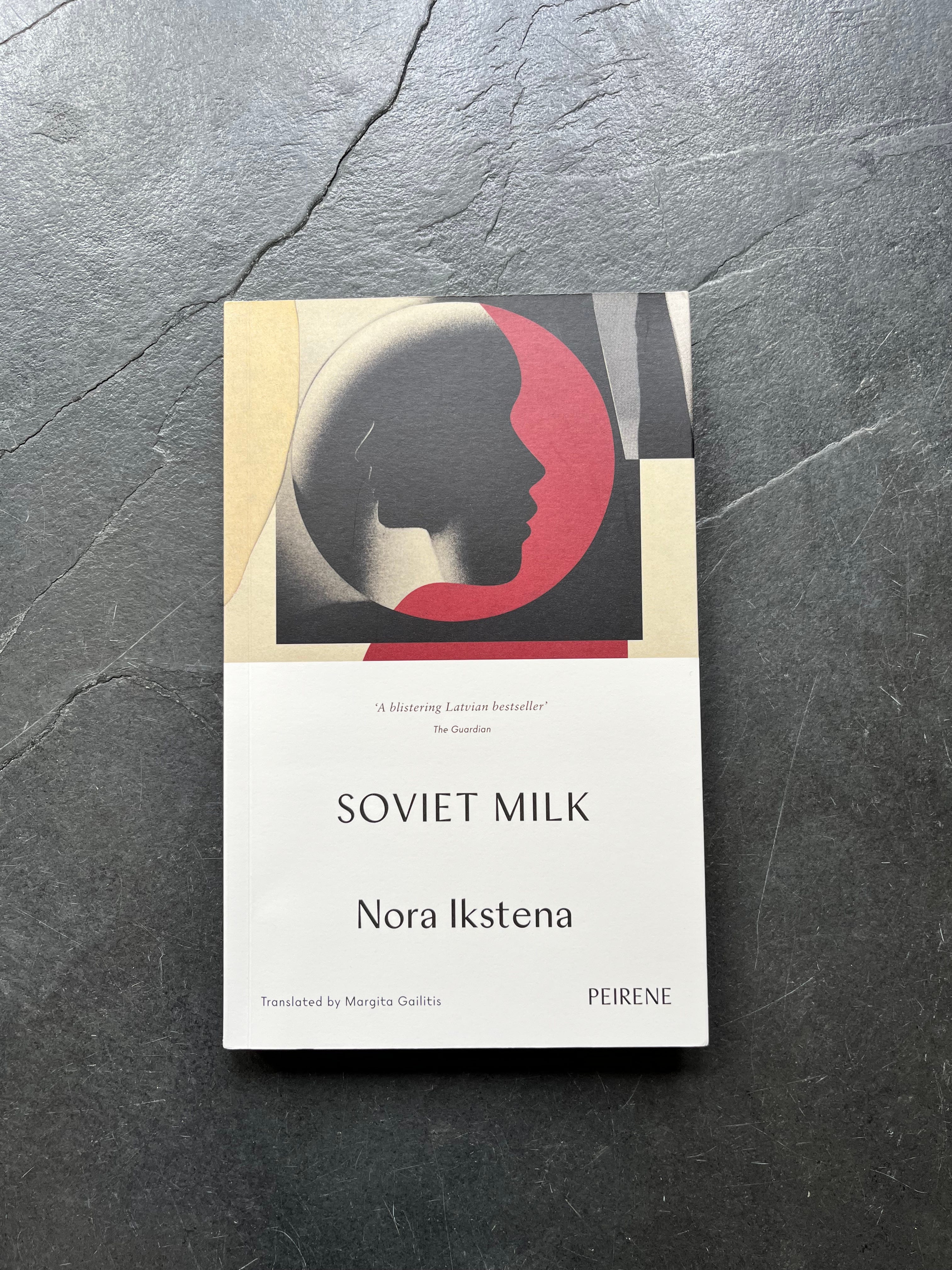
‘Soviet Milk’ by Nora Ikstena (translated by Margita Gailitis)
Soviet Milk is a tale of the relationship between mother, daughter and Latvia. Spanning over fifty years, from the end of World War Two to the fall of the Berlin Wall, we follow their relationship alongside the backdrop of the Soviet reoccupation of Latvia, renamed the ‘Latvian Soviet Socialist Republic’. The mother, born in 1944, is determined to follow her dreams to become a doctor, but is exiled to a rural village after defending a patient from abuse by a Soviet officer. Her daughter, born in 1969, grows up with her grandparents, confused by her mothers distance and the pressure of being moulded by a society that leaves no room for autonomy. As time passes, her mother slips further into despair while her daughter begins to understand why her mother is so devastated.
This is a profound, extraordinary tale of personal and national liberation. The narrative alternates between mother and daughter, offering us brief but in-depth insights into their emotional landscapes. Mother is initially presented to us as distant, troubled without explanation. But as her narrative takes us into the past, we begin to understand why. The relationship between them is incredibly emotive, but what is even more moving is the relationship the mother has with ‘her Latvia’. The pain of understanding what has tangibly and immaterially been lost through the Soviet reoccupation is devastating.
Her love for her country, and the despair that she cannot escape thinking about what Latvia could have been, is palpably painful. Ikstena personifies the nation state in a way I haven’t come across before; it truly is heartbreaking. The daughter, who is born after the reoccupation, doesn’t understand why her mother yearns for a past Latvia. These moments where the disparity between their individual relationships to the country are so distinct are quite painful. Ikstena writes with such complexity about how our sense of self is intertwined with nationhood, and how challenging they can be to separate.
The three generations of women (grandmother, mother, daughter) skilfully mark the changes in the country, each a product of an entirely different time period. Ikstena uses these women in absence of a rigid timeline, immersing us in three drastically different understandings as to what ‘Latvia’ is. It is painful to increasingly understand how much the reoccupation has destroyed this family, markedly characterised by fear in three remarkably different ways. Soviet Milk is vivid in its exploration of pain and sacrifice, demonstrating how each of these women have internalised the Soviet Rule they were subjected to in their youth. The horrors of internalised political oppression show up in each generation differently, but each is uniquely potent.
‘All of us are the living dead here’ 3
Ultimately the love between mother and daughter is what makes Soviet Milk so vivid. Watching it develop over time was so endearing, it moved me to tears. The tone throughout is one of fear that the world around them is fragile it could fall at any moment; literally and metaphorically. While the mother is a tragic figure whose intellectualism becomes her detriment, daughter and grandmother balance her bleakness. Their relationship blisters with a love and hope that the mother finds too hard to access.
I thought this book was truly unbelievable. I loved Ikstena’s prose, how she characterised such remarkably different women and the exploration of a nation’s right to their freedom, which was deeply evocative. Latvia is a country I knew little about before reading Soviet Milk. I learnt so much about the emotional state of the nation through this mother daughter relationship. This book has been blurbed by Evika Siliņa, the Prime Minister of Latvia, which attests to how brilliant it is. I don’t recall ever seeing a sitting Prime Minister blurb a novel?! Ikstena’s writing is extraordinary, she has left a remarkable legacy with this book. I would recommend this endlessly, especially to readers who like their novels to be very historically and politically situated. I call this an undeniable buy! I was truly blown away by it.
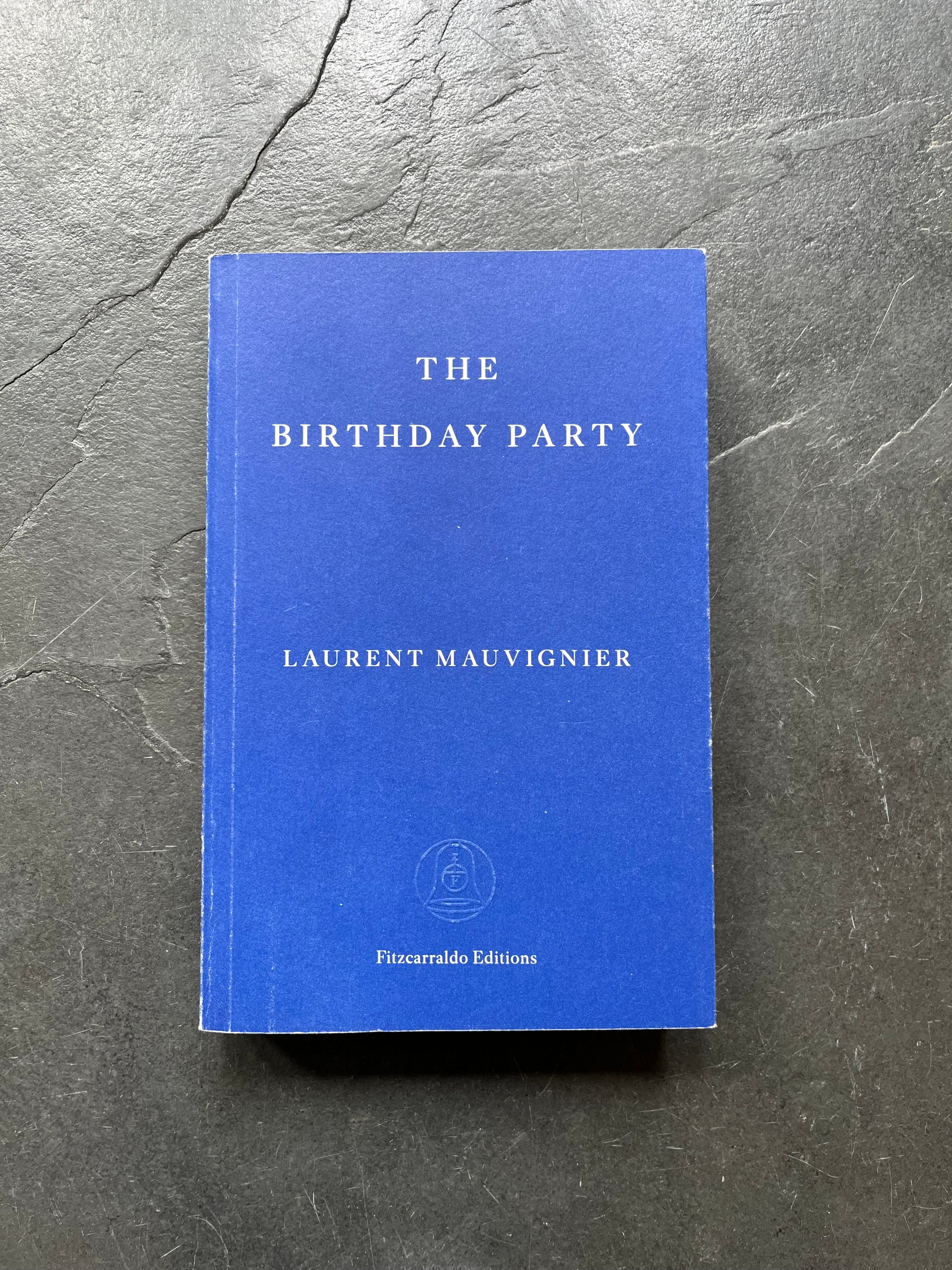
‘The Birthday Party’ by Laurent Mauvignier (translated by Daniel Levin Becker)
Ida lives in a little isolated hamlet, called the Three Lone Girls, in deep rural France with her mother, Marion, father, Patrice and neighbour, Christine. Christine is an artist who has a wonderful relationship with Ida and Patrice, but is suspicious of Marion. Despite this, she puts her feelings aside when Patrice asks if she’ll bake a cake for a surprise party for Marion’s upcoming fortieth birthday. Just as the plans for the party begin to take shape, unexplainable events start to happen. Anonymous menacing letters turn up at Christine’s door, and an unfamiliar car arrives in their driveway. As night falls, strangers take them hostage, unleashing a haunting chain of events.
The Birthday Party occurs on one terrible day in the hamlet. The prose alternates between their four perspectives, submerging us into a collective web of consciousness. Mauvignier’s ability to immerse the reader in the psyche’s of each character was incredibly impressive. He writes with an almost remorseless logic, positioning the reader as the overseer of the evening. We always know more than the characters, and while this makes some aspects predictable, it also makes it incredibly gratifying when you know that you picked up on the seed Mauvignier planted a hundred pages earlier.
The stark difference within the characterisation of Ida, Marion, Patrice and Christine offers an alluring variety of reactions to the macabre evening. Marion and Patrice’s relationship is the most fascinating to follow because they are both lying to each other, as it becomes increasingly clear that the events of the night are linked to a past Marion has fought tooth and nail to hide. There is abundant pathos throughout that isn’t just for those who are being held hostage, but also the strangers who come to blow up their life. Mauvignier’s characterisation of these men is exceptional, full of shades of light and dark where, at times, I ended up feeling quite moved by them despite their violent behaviour.
It felt like I was in a washing machine reading this. It is a suffocating novel, which defers the gratification of knowing what will happen next with incredibly lengthy prose. I suspect some would suggest it’s overwritten, and while the density of the narrative expertly builds up suspense, this overdrawn nature was sometimes wildly infuriating to read. The Birthday Party is a labour of love, a read which has good propulsion even if it occasionally takes a while to land. It completely consumed me for the few days I was reading it, and reminded me of The Drama in its philosophy of asking how much can we ever truly know about those closest to us. In this, The Birthday Party is effective in exploring the humour, and horror, in knowing too much, and not enough, about your romantic partner. It contrasts quiet rural domesticity against a trio of nasty intruders to create an inciting and abrasive unravelling of family life.
This was a consuming and entertaining read! I liked it, I would recommend it to those who like ‘high brow’ thrillers and call it a borrow! In its Chekhov’s gun design, taking place across one terrible day, The Birthday Party is quite similar to House of Fury. But its tone could not be more different. While House of Fury is about the psychology of a society under great strain, The Birthday Party is about the psychology of a family and the performances we take part in in order to achieve that perceived unity. This is a good ‘summer’ read because it is transportive in all the best ways. I could imagine tearing through this by a pool. The less I say the better for this thriller - so if you’re interested, you’re just going to have to read it for yourself!
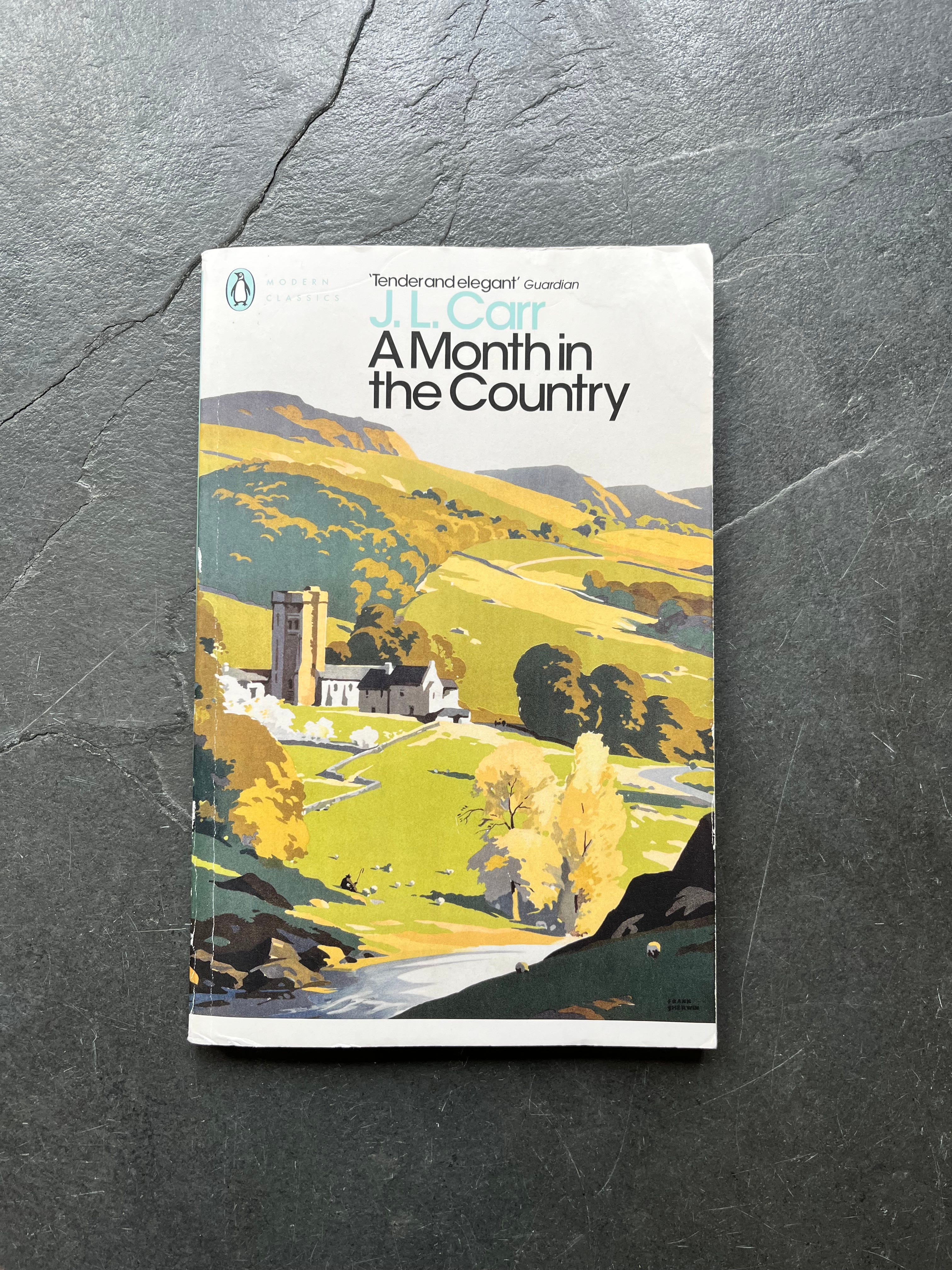
‘A Month in the Country’ by J L Carr
Tom Birkin is an art restorer and in the summer of 1920, finds himself commissioned to restore a huge mediaeval wall painting. Birkin’s life before this summer was very different; he is a survivor of the First World War. But as he immerses himself in the quiet routine of restoration surrounded by beautiful countryside in the village of Oxgodby, he experiences a sense of renewal and a newfound belief in the future.
A Month in the Country is narrated retrospectively by Birkin, who is now an old man. He looks back at this idyllic summer with longing, reminiscing on it as a precious memory that he has held onto so tightly over the years. This is a post war novel that avoids mentioning the war almost entirely. While we are aware that Birkin is a veteran, Carr gives us no details as to what happened. We are introduced to him as having a stutter, and some form of facial paralysis. Over time it becomes evident that he has post traumatic stress disorder (PTSD), but this is not something that would have been known, or understood, in 1920.
Instead, he is told his ‘nerves’ will get better ‘with time’. Moon, another man who is working in the village over the summer, carrying out the grave digging task of trying to find someone’s relative, is also a veteran. The air that hangs between them is thick with questions about what they went through, but neither men are willing to divulge into any kind of detail, seemingly out of fear - but for two different reasons. A quiet familiar understanding grows between them that is endearing to see.
It becomes quickly evident that the peaceful, predictable countryside is the exact environment Birkin needs. Throughout the restoration of the painting, he also restores himself. He is notably more relaxed, he starts to notice the beauty of the countryside, falls in love and forges relationships with the villagers that are charming to see.
The novella reads like a tender celebration of life in the English countryside, of the expansive beauty it offers but also the expansive freedom that must have been felt after winning the war. It is a novel that celebrates a humbly quiet life, something that Birkin seemingly wasn’t aware he wanted so desperately after the War, but regrets walking away from. There is equal beauty and pain in Carr’s prose, a gentle tale of love. But not primarily romantic love, but love for being alive, safe and the invigorating wonder of creative passions.
I read this from cover to cover on a sweltering afternoon last week in the heatwave. It is a pensive, gentle novel that explores the beauty and regret of letting opportunities pass us by. Carr’s prose explores the restorative nature of art and a slower way of life in a way that is truly very beautiful. This is a borrow! I recommend reading it in a park (or other green space) on a hot summers day.
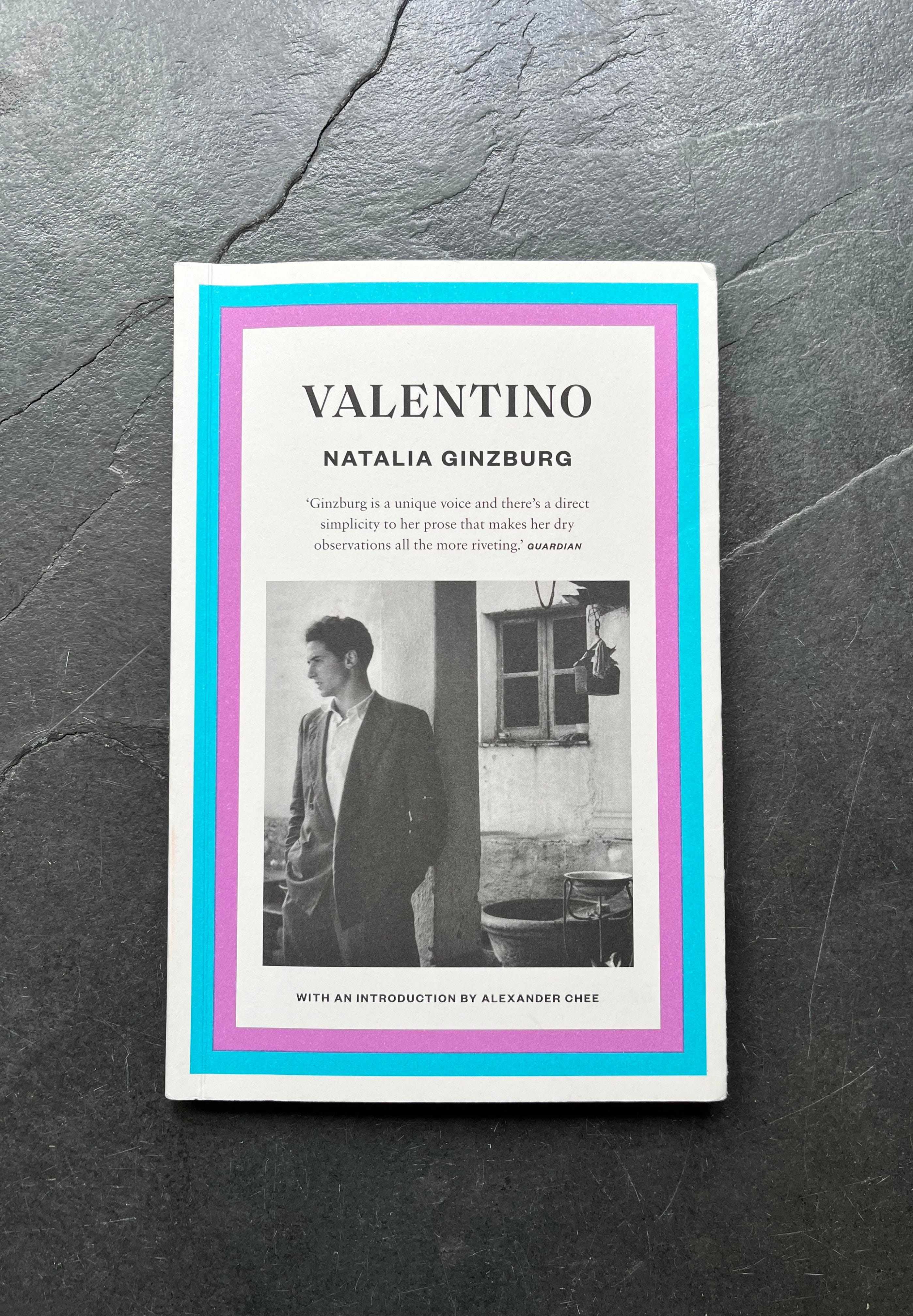
‘Valentino’ by Natalia Ginzburg (translated by Avril Bardoni)
I squeezed this read in on the last day of May, reaching for it because I wanted a book to make me laugh; Ginzburg’s social commentary is reliably sharp and spirited. But ultimately, while Valentino is hilarious, the novella unravels into a devastating story that is as heartbreaking as it is heartwarming.
Valentino has two sisters, but as the title suggests, he garners the most attention in the family. The narrator, his little sister, Caterina declares that Valentino has been a supreme burden on them. Stated by his parents as having the destiny of a ‘man of consequence’, they have poured from an empty cup to sustain his studies to become a doctor. While his parents have created this myth of excellence for Valentino, it is immediately evident he is not remotely interested in it. Caterina and her sister, Clara, have lived in his shadow. Caterina describes Valentino as a useless, apathetic, vain man who only cares about how he looks.
Despite this, their parents cannot let go of the fantasy of what he will achieve. One day, he announces his engagement to Maddalena, who is incredibly wealthy. His parents begin to unravel, particularly his mother, at the sight of her, who cannot stop lamenting about how ‘strikingly ugly’ Maddalena is. The family is mortified by his choice of bride, beginning to realise their dreams for Valentino may never materialise.
Ginzburg is a master at exploring societal expectation, wealth and class with immense subtlety, and Valentino is no less. With keen psychological insight, Ginzburg unflinchingly excavates the role that money and class play in family life. Although Valentino is not remotely interested in the expectations his parents put on him, this patriarchal fantasy is one rooted in their belief that Valentino will bear the societal fruits of all their labour. The girls are disregarded by their parents, which given how much more reliable they seem to be, is as hilarious as it is infuriating.
The next fifty pages are characterised by what happens next for the family after Valentino and Maddalena marry. Caterina is a matter of fact narrator who can not quite see the truth about who her brother is, or what his relationship with Maddalena means. This subtle use of Caterina’s narrative is described by critics as the ‘staging of the unsaid’ by Ginzburg. In between Caterina’s misunderstandings of her brother lies the increasingly overt portrait of who Valentino truly is. Truthfully, I do not wish to divulge any further on what the unsaid is, because it is a spoiler. And in such a brief novella of sixty pages, it is much more enjoyable to find out for yourself.
Ginzburg perceptibly explores the enormous roles that social expectations have on relationships and how we position ourselves as individuals. She interrogates the psychological impact of their presence, and the third party role they often inhabit. Valentino’s relationship affects his entire family; it determines their future, but not in the way his parents imagined. The novella is anchored by its interrogation into gender roles, the illusion of social mobility and the desperation in marrying to attempt to secure a better life for themselves.
I loved this, as I do with every Ginzburg I read. She writes such endearingly beautiful tales of ordinary family life in Italy. But Ginzburg uses this guise of domesticity to interrogate societal norms and challenge our guise of morality. This is a buy! It is a good time, and a sad time, all at once - but absolutely worth it!
And that concludes my May Reads! My favourite books of the month were Small Boat and Soviet Milk.
My first read for June is Rock, Paper, Grenade by Artem Chekh which is our next book club pick! The meeting is in a couple of weeks (17th & 21st June) so there is still time to read the book, and join us for the discussion, if you wish.

Let me know your thoughts:
✹ What have you read and enjoyed in May? Do you have any recommendations for me?
✢ Do you have any recommendations for me based off the themes of this month?
☆ Have you read any of these books? Would you like to?
✼ What books have you read that explore ‘nationhood’ very emotively like in Soviet Milk? I want more of it.
✵ I always feel like summer is the best season for reading coming of age novels (like Jean). Do you have any favourite coming-of-age novels to recommend - bonus points if they are translated!
☞ Why do you think we leave books we are so certain we are going to love unread for a long time? I have had a copy of Small Boat for so long and it has taken me until now to read it, because I knew I’d love it - and I was right.
Thank you, as always, for being a reader. In July, Martha’s Monthly turns 3 which is insane. I feel like I have been writing this newsletter forever, and also for 5 minutes. Time flies when you’re having fun!
Happy Reading,
Love Martha
If you enjoyed this, or anything else you see on Martha’s Monthly, why share it with a friend so they can enjoy it too!!
Catch up on what you might have missed:
And what I read in May 2025; this was a bad reading month but standouts are Kick The Latch and The Little I Knew.
May 2024; What Is Mine and Cantoras are standouts!
Subscribe if you enjoyed this and want to support the newsletter (and me) <3
The Monthly Reads will always be free, but if you would like to join the book club, consider upgrading your subscription!
p.57 in Voracious by Małgorzata Lebda
p.103 in Small Boat by Vincent Delecroix
p.171 in Soviet Milk by Nora Ikstena