

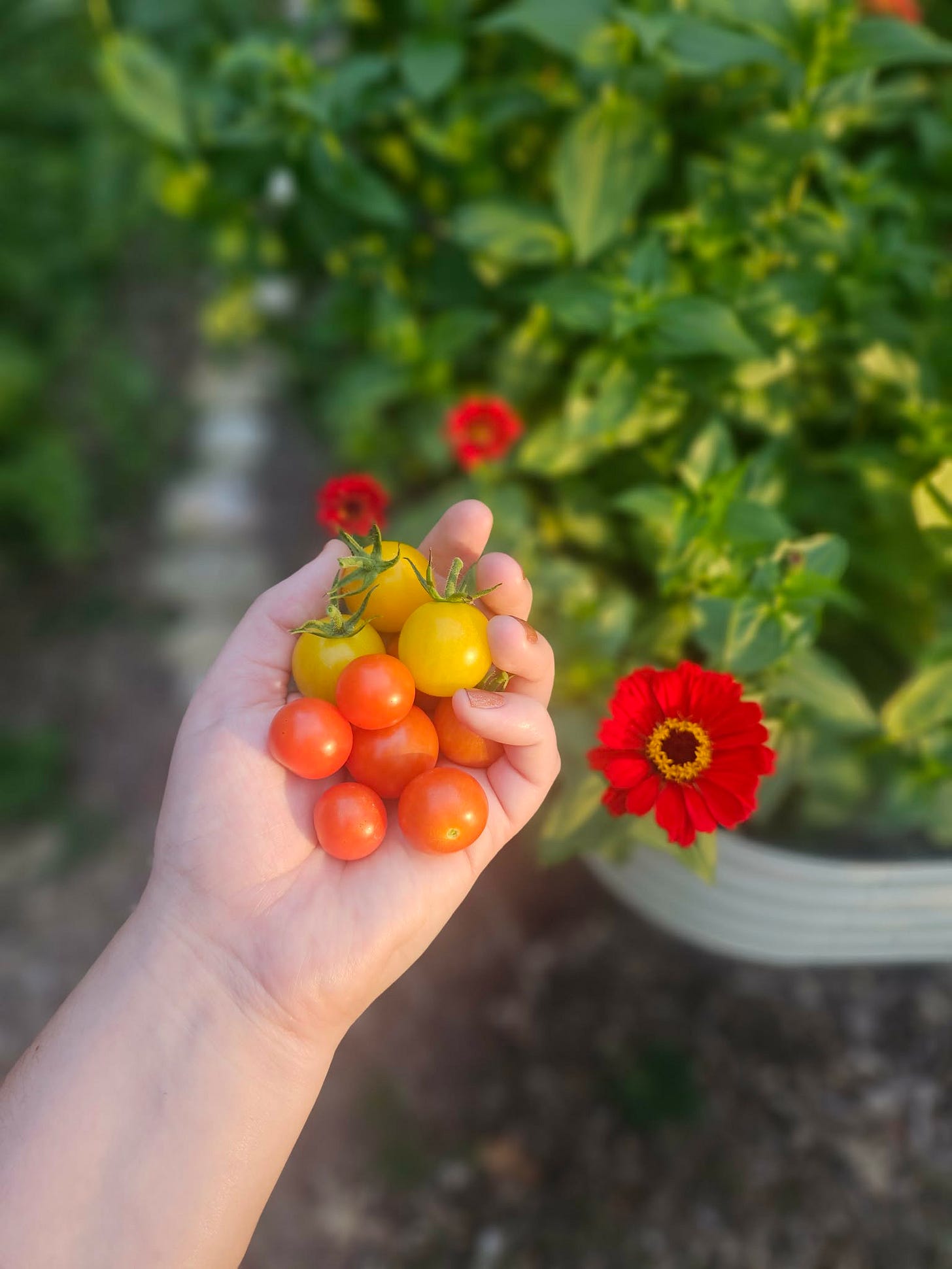
Every garden is a community garden
After last year’s gardening adventures, I decided that moving forward, I would focus on flowers. I loved growing zinnias from seeds and sharing a bounty of blooms with friends and neighbors. Growing vegetables, though satisfying, didn’t feed my soul the way cut flowers did—and I figured I could free up a garden bed by growing tomatoes on our patio.
Then, a few weeks ago, more articles about potential food shortages and rising costs crossed my screen, and anxiety entered my gardening dreams. My Costco card-carrying family is comfortably situated, but the what-ifs still pricked the back of my mind. “Do I need to grow more food this year instead of just flowers?” I asked my husband one day. He probably knew I was anxiety-spiraling, so he stayed neutral, telling me, “Whatever you want to do.” AKA “Just tell me where to put the dirt and let your green thumb do the rest.”
I thought about last year’s bunny-nibbled kale and squirrel-ravaged carrots. My cucumbers and tomatoes did pretty well, and the yellow squash was delicious. But I didn’t grow nearly enough to feed my family for the summer, much less the cold season. Would I have to learn canning? Add more garden beds? Buy special fencing to keep the squirrels away? I would much rather take a nap.
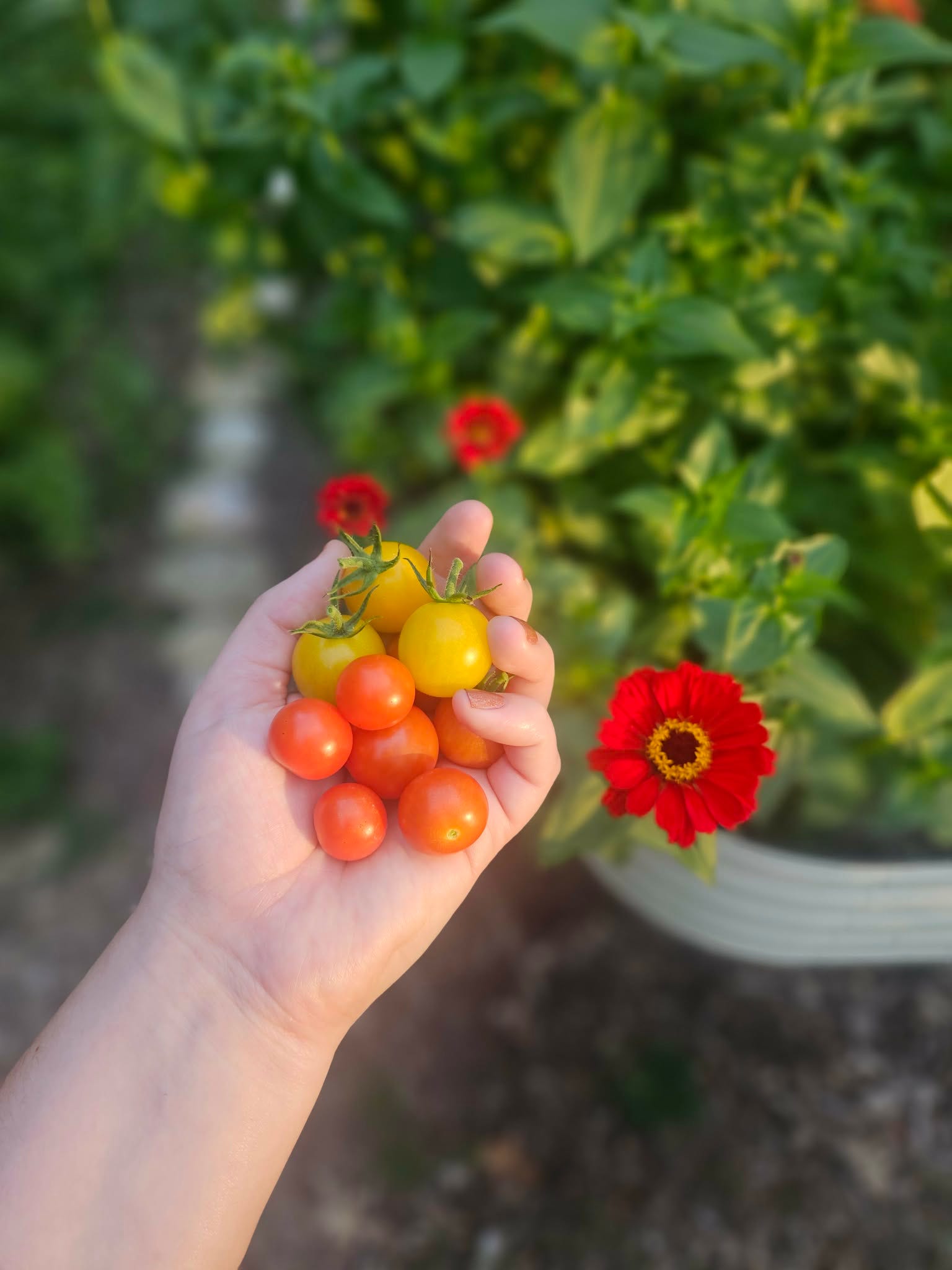
Last summer, after the yellow squash stopped producing, the zinnias kept at it. On a sunny day in September, I had tons of clippings to spare, so I put mini bouquets in plastic cups and set them on a card table outside. I hastily made a “free flowers” sign and, later that afternoon, walked to my neighbors’ doors to hand out the last three cups.
When I returned to my driveway, a paper bag was sitting on the table with a thank you note. Inside, I found three gorgeous beefsteak tomatoes from a gardener down the road—perfect for BLT sandwiches. Some people say there’s nothing like eating a homegrown tomato, but I might prefer a gifted one.
About one in every ten houses in my neighborhood has a garden. (I should do an actual count next time I’m on a walk.) The lots here are perfect for gardening, if you can fence the deer out. Some folks have one small bed in the backyard, and others have sprawling garden plots out front, wherever the sun shines all day. We’re becoming friends with one of the “sprawling garden plot” families, and I asked them what they’re planting this year. Cucumbers, tomatoes, pumpkins, lettuce…all veggies I’m less enthusiastic to plant myself, but they offered to share their bounty.
If nearly everyone in my neighborhood is gardening, I have no reason to embark on a solo mission to stockpile vegetables like I’m Ma Ingalls on the prairie. In fact, it shouldn’t be a solo mission. Sharing food, and building community in the process, will create a better support system in the long run. If food shortages do hit our grocery store shelves, or if we’re all staying home more because gas prices skyrocket, I would rather turn to my neighbor for help than be siloed by self-reliance.
I have (mostly) talked myself out of my anxiety spiral and set realistic expectations for my garden. There is a small chance I won’t have any flowers to share, no spare rhubarb or cherry tomatoes to swap—after all, plants are fickle and subject to any number of variables. But by nurturing my garden, with a focus on my beloved flowers, I replenish my energy in order to give back in other ways. When I treat gardening as a mindful practice, I have more capacity for patience, gratitude, and serving my community through event planning, friend-making, or donating to those who face food insecurity. We can’t all dedicate our lives to agricultural pursuits, but, somehow, we can all contribute to our neighborhoods. We can plant seeds, tend the soil, and hope for beauty to emerge.
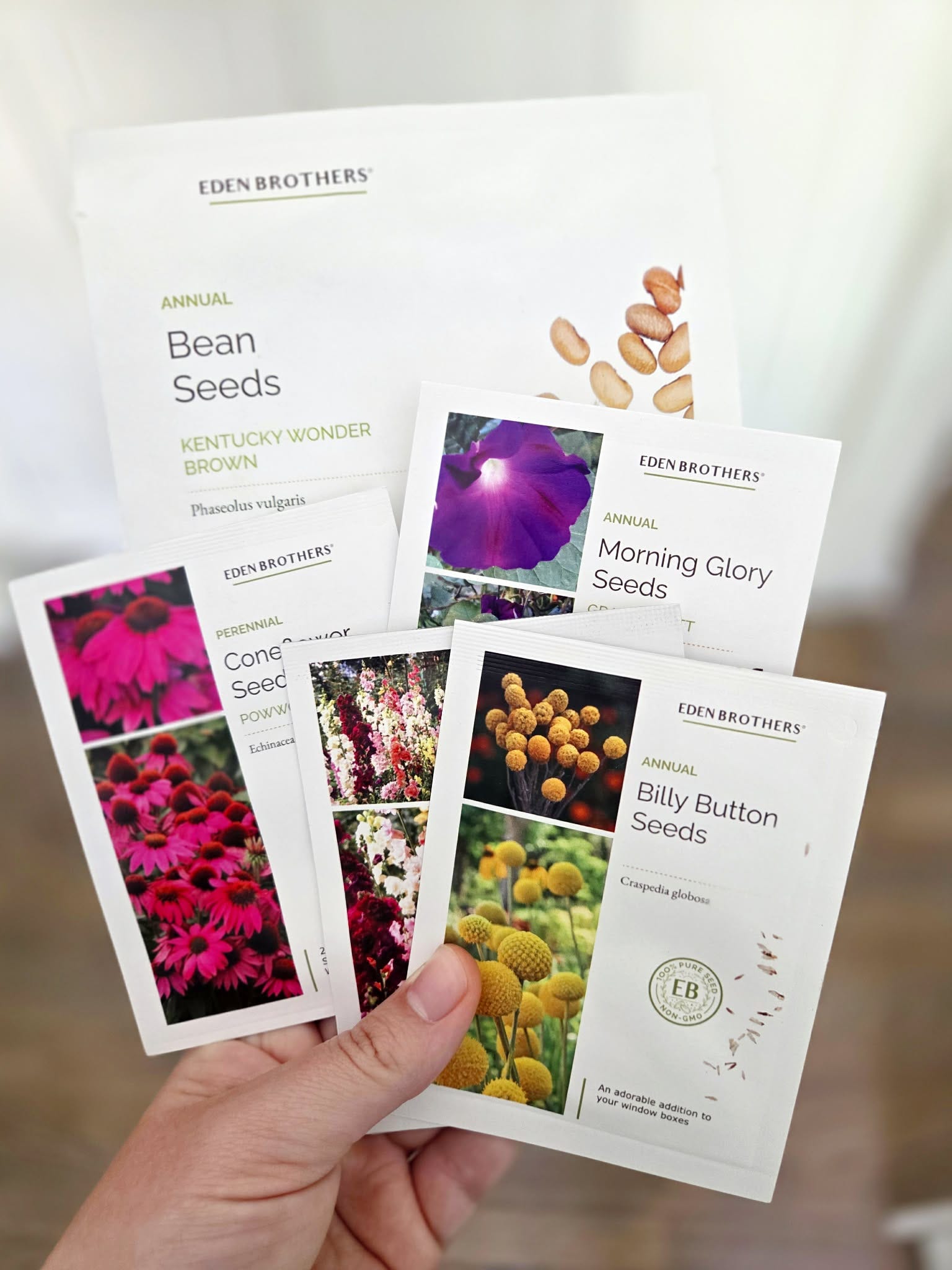
This year, I’m planting pole beans near my trellises. I will purchase one or two patio tomato plants because they are Theo’s favorite. My rhubarb patch is busy pushing up new leaves, but I plan to make room for some free cabbage seeds I got from Theo’s teacher. I am cutting dead branches from our raspberry bushes and sprinkling organic fertilizer.
I am planting zinnias, of course, and trying my hand at a couple of dahlias to see what the fuss is about. I selected filler flowers for bouquet-crafting: amaranthus, billy buttons, and snapdragons. I have a packet of sunflower seeds. If he can make the time, I will enlist my carpenter grandfather-in-law to help us with plans for a little free flower library in the front yard. I imagine leaving a mix of books and blooms for my neighbors to grab on their walks, and a space for them to leave a tomato or cucumber to share with everyone else.
Like last year, I’ll send installments of my garden journal to all of you—including photos and watercolor illustrations. I’m gearing up to start my seeds this weekend, but in the meantime, I would love to hear about your garden plans in the comments.

P.S. If you’re looking for pantry-stocking inspiration and budget-friendly recipes, be sure to visit & ’s recent newsletters.


You might also enjoy
Friday Mood Recs: Six books to read while coming down from your Artemis II high

Seven bookstores within five miles

LA Times Festival of Books Q&A
Books to read when you're sad
Reading in Public No. 97: My approach to reading poetry