

LA Times Festival of Books Q&A
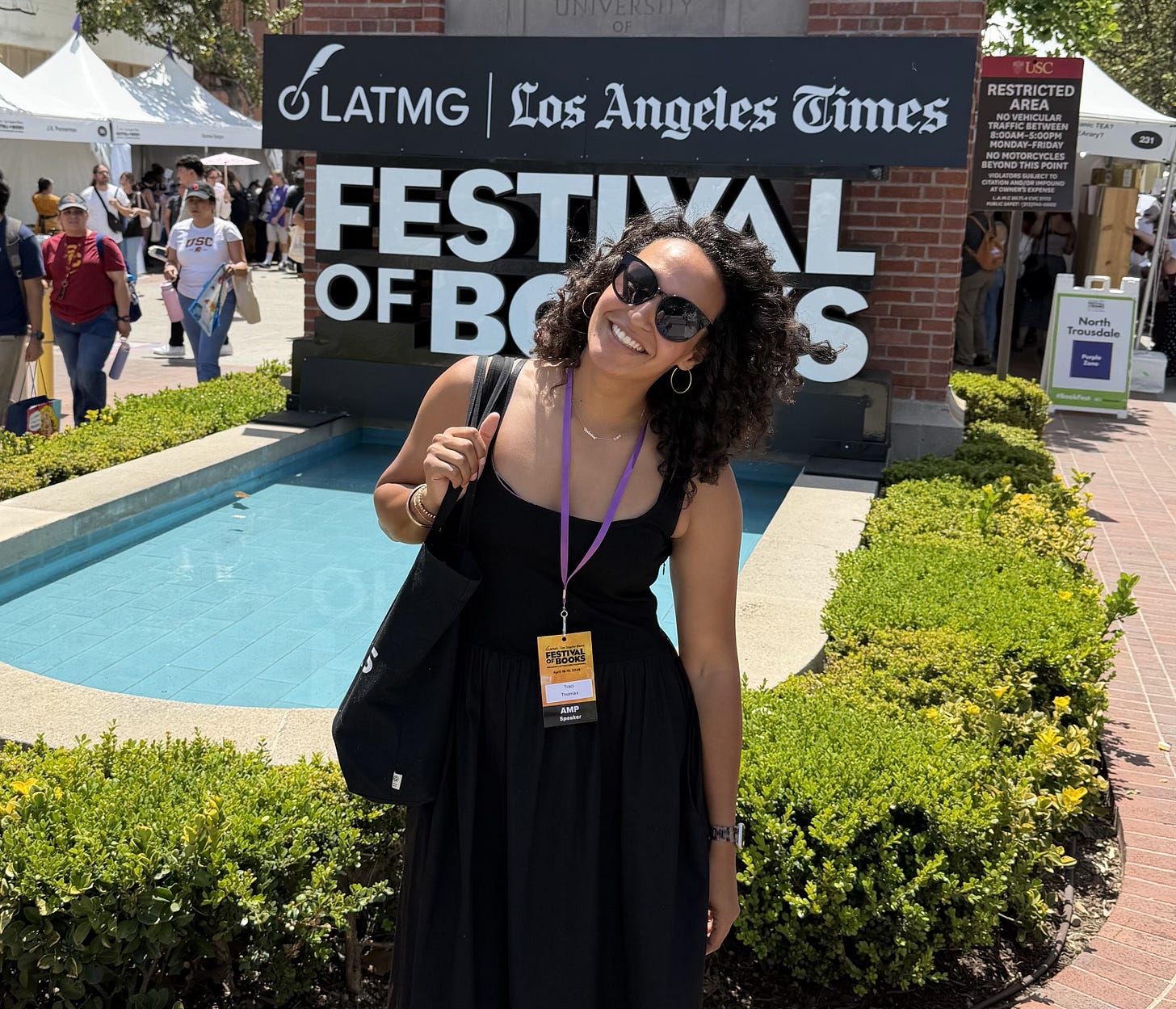
This was my fifth year participating in the LA Times Festival of Books. It is my hometown literary festival, and I might be biased, but it is the best one. I asked you all to ask me your questions about the festival this week, and below are my answers. And yes, you should 100% come to the festival next year. It is worth the trip.
But first, really quick. You should subscribe to Unstacked. When you subscribe you won’t miss a thing, including my reading rankings and the forthcoming Nonfiction Reading Guide.
Q: For those who haven’t been, what is it like generally?
A: First, can I just say, bless the people like this question-asker who give us question-answerers a chance to give you all a general background. Every time I do a Q&A-style thing, I worry I will have to fabricate a question like this to give the lay of the land, and every time someone steps up as a hero to ask this question.
The Los Angeles Times Festival of Books, AKA Bookchella1, is a two-day book festival held at the University of Southern California.2 In addition to the festival itself, the LA Times presents its annual book awards on the Friday night preceding the festival.
The two-day festival features over 500 authors and moderators and sees around 150,000-160,000 attendees across the two days. It is free to attend, and features indoor and outdoor programming. The outside stages feature a range of speakers and themes from the main LA Times Stage (big-name celebs—this year, it was Lisa Rinna, Tina Knowles, Emma Grede) to the children’s and YA stages (Mychal Threats, Jason Reynolds, and Blippi, among many others). There is a poetry stage, a food stage, and the De Los stage (which is the bilingual Spanish and English stage with LA Times Español). This year, they added a podcast and audiobook stage (where I was on Saturday, more on that later).
In addition to the outdoor stages, there are indoor ticketed panels, the majority of which are free, aside from a $1 fee to reserve your ticket through their booking website (Eventbrite or whatever it is). If you go to the festival and walk up on the day of, you can usually get into a ticketed panel without having to pay to reserve. These panels are usually comprised of 3-4 panelists and one moderator, and are themed around the books. The titles of the panel do a lot of work, and seeing what they come up with is one of my favorite pre-festival rituals.
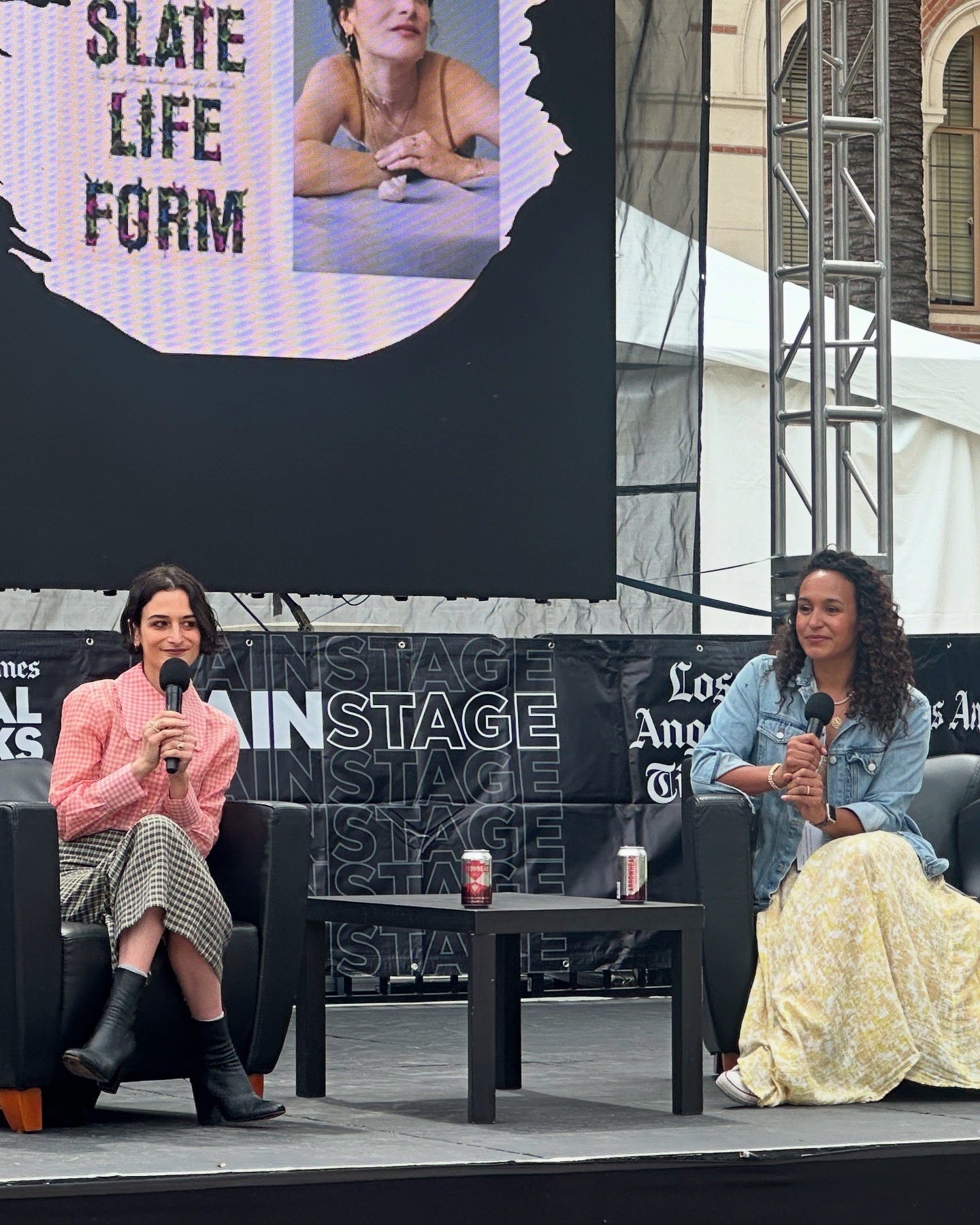
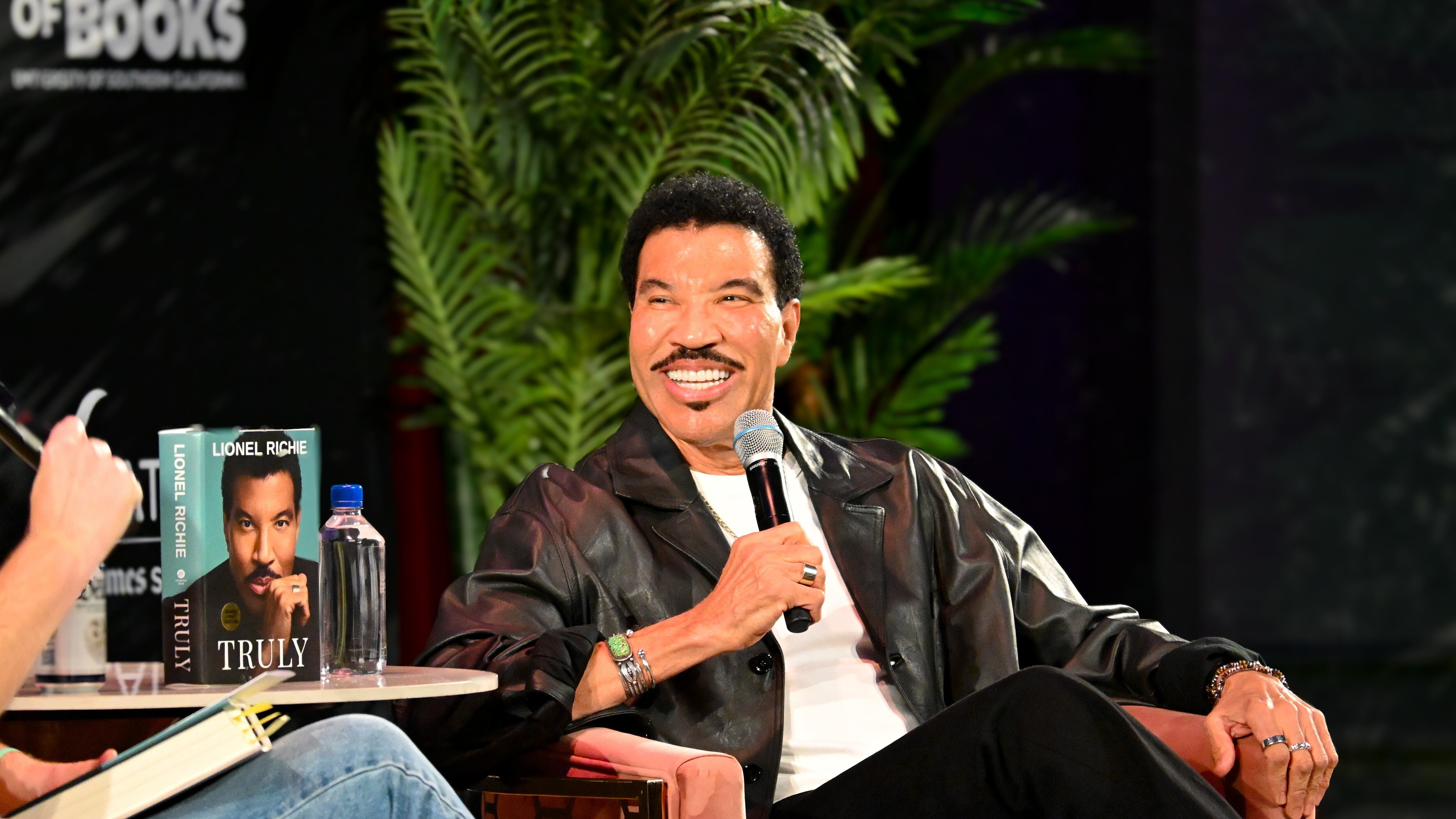
There are also paid ticketed conversations, which usually involve big-name celebrities and authors. This year, Lionel Richie was one of the paid ticket holders. But the majority of panels and events are free, and they do a very good job of making sure plenty of big names are on the free outdoor stages. Last year, that is where I interviewed Jenny Slate.
The exhibitor area runs through the center of the festival and around the edges. So, pretty much everywhere you go, there are tents of businesses and nonprofits. Publishers often have tents, LA’s many indie bookstores have tents, and some out-of-town bookstores even come to town, Libro.FM has a tent, local radio stations have tents. There is an indie author row they reserve for a handful of indie authors to be featured. And more indie authors purchase tents to show off their work.
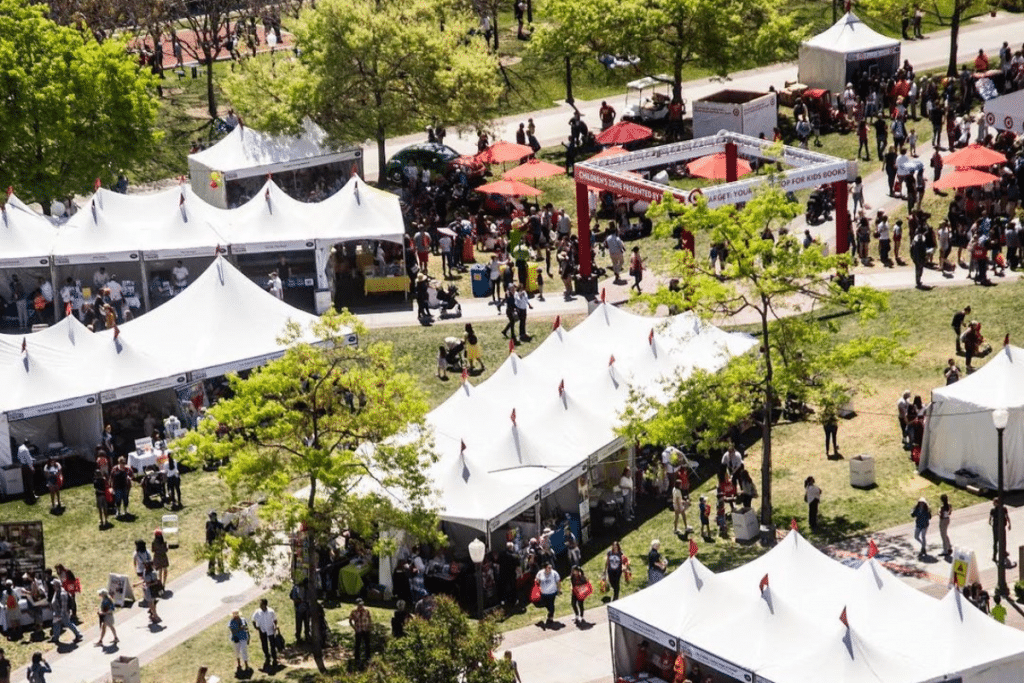
I hope that gives you a sense of what the festival is and the different spaces that are represented.
Q: Is this event open to the public? Is it hard to get tickets?
A: Something I love most about the Festival of Books is how easy it is to participate at your own level. You can just show up and roam (no ticket needed), or you can level up and attend a bunch of panels. The festival is easy to attend (aside from parking, which can be a pain), and you can choose your own adventure. As I mentioned, if you want to reserve a spot for the indoor panels, you can do that for a $1 service charge or just wait and stand by for free. You can also just show up to the festival and catch people on the outdoor stages. The tickets are easy to get and are available the week before the event online. The only real commitment is the paid tickets to the biggest names, which will run you $40 or so.
Q: I would love to know everything to do with creature comforts: Do you and the authors at the festival get VIP treatment? What kind of support and information emails does the festival offer beforehand? Is there a greenroom or a private place only authors and panelists can go to recharge?
A: There is a mega-greenroom for authors and panelists at the festival. It is a big, two-story building with a patio space. Lots of socializing goes on in the greenroom. In years past, I have spent almost the whole time in the greenroom just hanging out and talking and meeting folks.
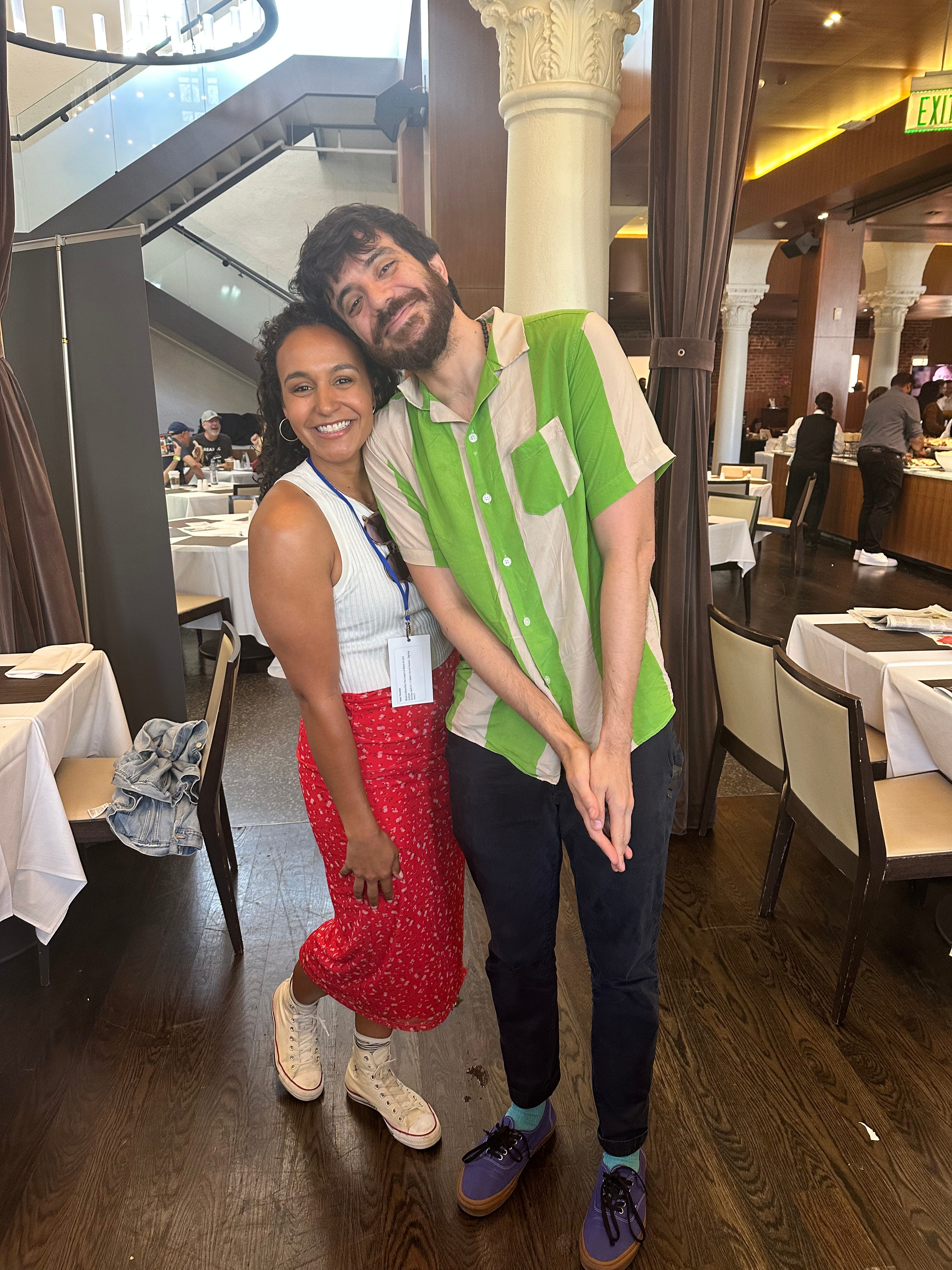
The downstairs is mostly food and bevvies. They have three distinct food services each day: Breakfast (oatmeal, pastries, yogurts, etc.), Lunch (sandwiches, chips, cookies, pasta salad), and an evening snack (chips, treats, dips). I don’t think the food is particularly good.
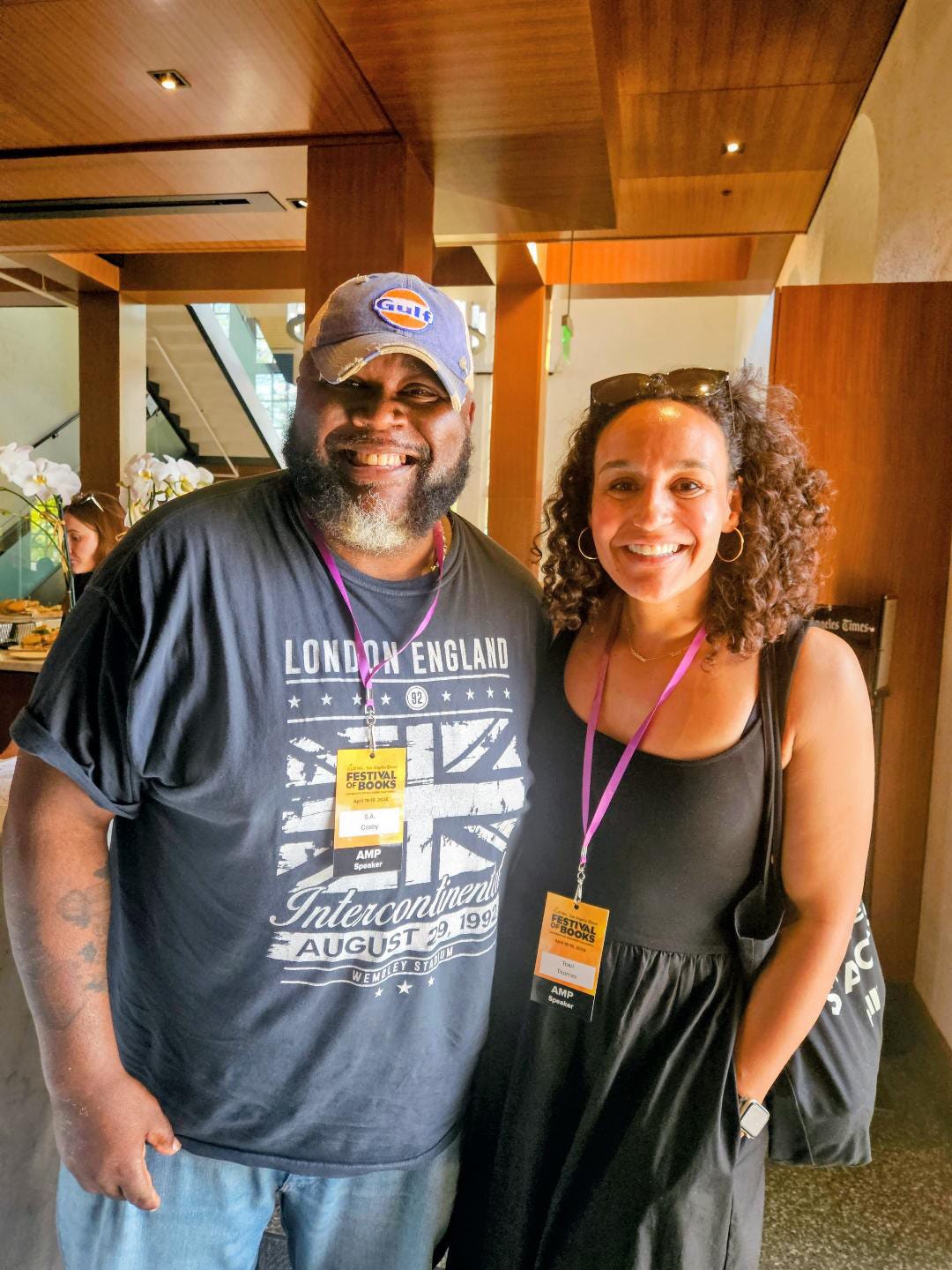
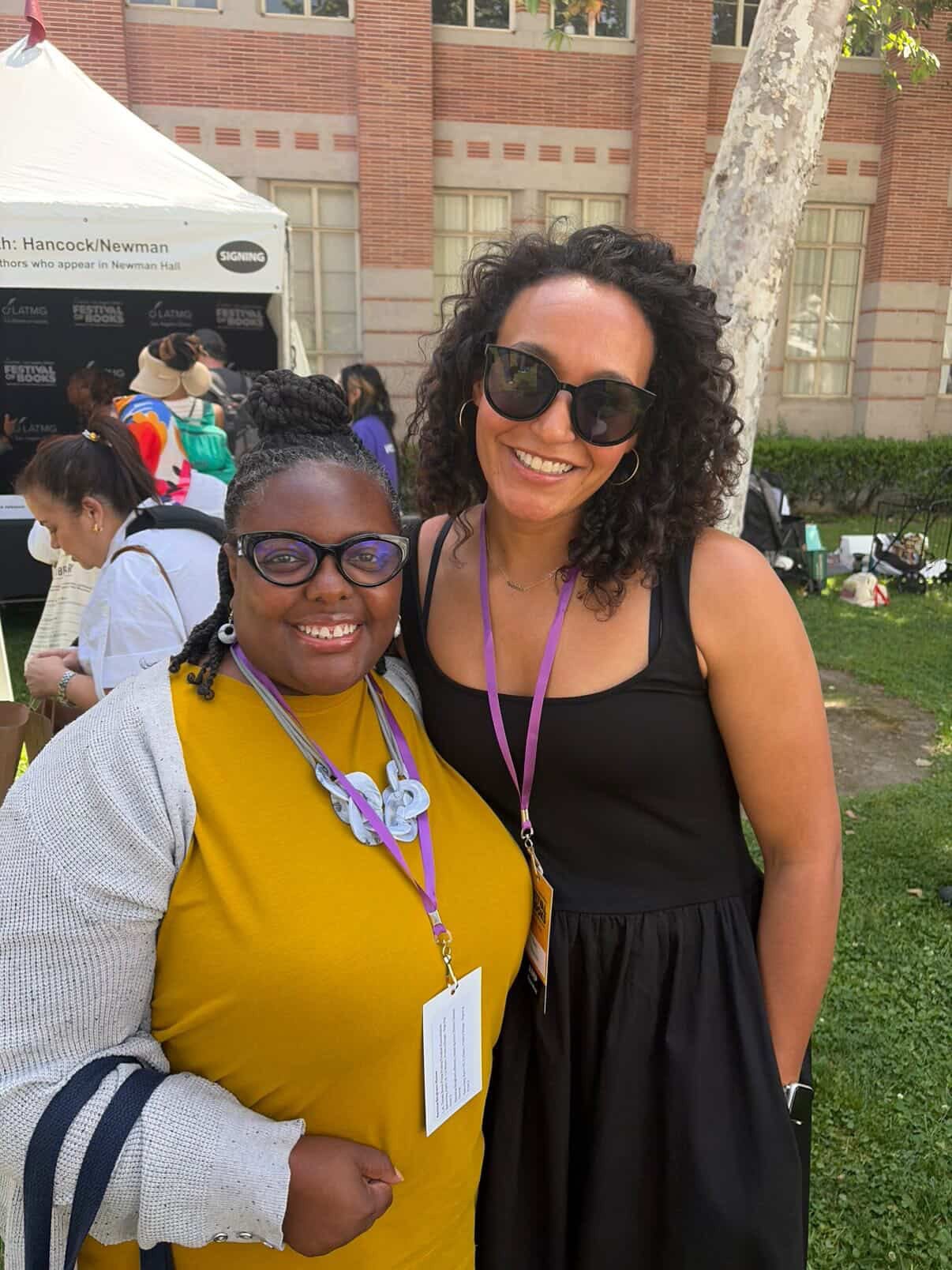
The best part of the greenroom is that everyone who participates in the festival has to come through, so it is a chance to get a little face time with friends and people you want to fan out over. This year, I got to meet S. A. Cosby there.
Upstairs, there is the photo and media area, where you can get your headshot snapped by the LA Times’ own Myung J. Chun. They also make those little social media videos up there, like this one.
30 minutes before your panel, they call your name and the name of your panel and fellow panelists over the loud speaker. Then you all meet at the door3 and a volunteer escort drives you in a golf cart or walks you to your stage/room. You keep those volunteer handlers from when you leave the greenroom until you’re done with your signing. Then, you’re either brought back to the greenroom or set free to roam.
As far as pre-festival communication, we get emails about who is on our panels, parking/transportation details, information about when we need to get to the greenroom. They do a great job of keeping the emails to a minimum. They are LONG but all the info is needed.
Q: Besides the awards and panels, are people selling books?
A: Yes! There is so much bookselling going on. The exhibitor tents are filled with people selling books. Many of the bookstores have tents with books for sale, like a bookstore pop-up. They also have author signings separate from the main signings4, which are connected to author’s panels. This gives folks multiple chances to connect with some authors.
Q: What is the sweet spot for interacting with authors at the festival, given that they are likely exhausted post-panel and interacting with a ton of strangers (including many parasocials)? Even as an author, I kind of don’t know, so I end up not talking to many writers whose work I really admire.
A: If an author is doing a bonus signing at a tent, that is the best, or you can try right after their panel at the tent. If you want a little extra face time, I would suggest hanging back and getting your book signed as the line dies down. I can’t speak for authors, and it really depends on the person, but I always love to talk to people after the panels.
Q: I would like to know a bit about how the authors are selected to attend, or if it’s something their publisher or agents organize?
A: I do not know all the details here, but what I have gathered5 is that authors are submitted by the publisher to be considered for the festival, and the festival reaches out to some people. Even with 500+ participants, it is notoriously hard to get into this festival. If your book is a finalist for the LA Times’ book prize, you are automatically invited to participate in the festival. Because the panels are built around themes, there might be two authors who fit really well together, and the festival will reach out to a third or fourth person to fill out the panel. They fill a range of programming and a diversity of topics, styles, genres, identities, etc. So, it is some pitching, some getting asked, and some luck.
Q: Do you get a list of panels that need moderating? Do you pitch panels? Are you given a list of authors? Basically, how is it determined who you get to talk with?
A: You get what you get and you don’t get upset. Every year in March, I get an email from the organizers with the name of my panel and who is on it. Every year, I say thank you and do whatever they tell me.
In the past, I have moderated panels on a variety of topics from food memoirs to satirical novels. This year, my panel was centered around Black American memoirs.
This year though, the woman who runs the festival told me she had slotted me in for an hour on the podcast stage. This was a brand new stage for 2026, so she told me I could fill the hour however I wanted. I got to pick my guests and my angle for the event. I’m honored they trust me. It was also great to get to put together a conversation on reading and loving books with and Mina Kimes. Because, while we here at The Stacks know that this pairing makes sense, most people wouldn’t think of it.
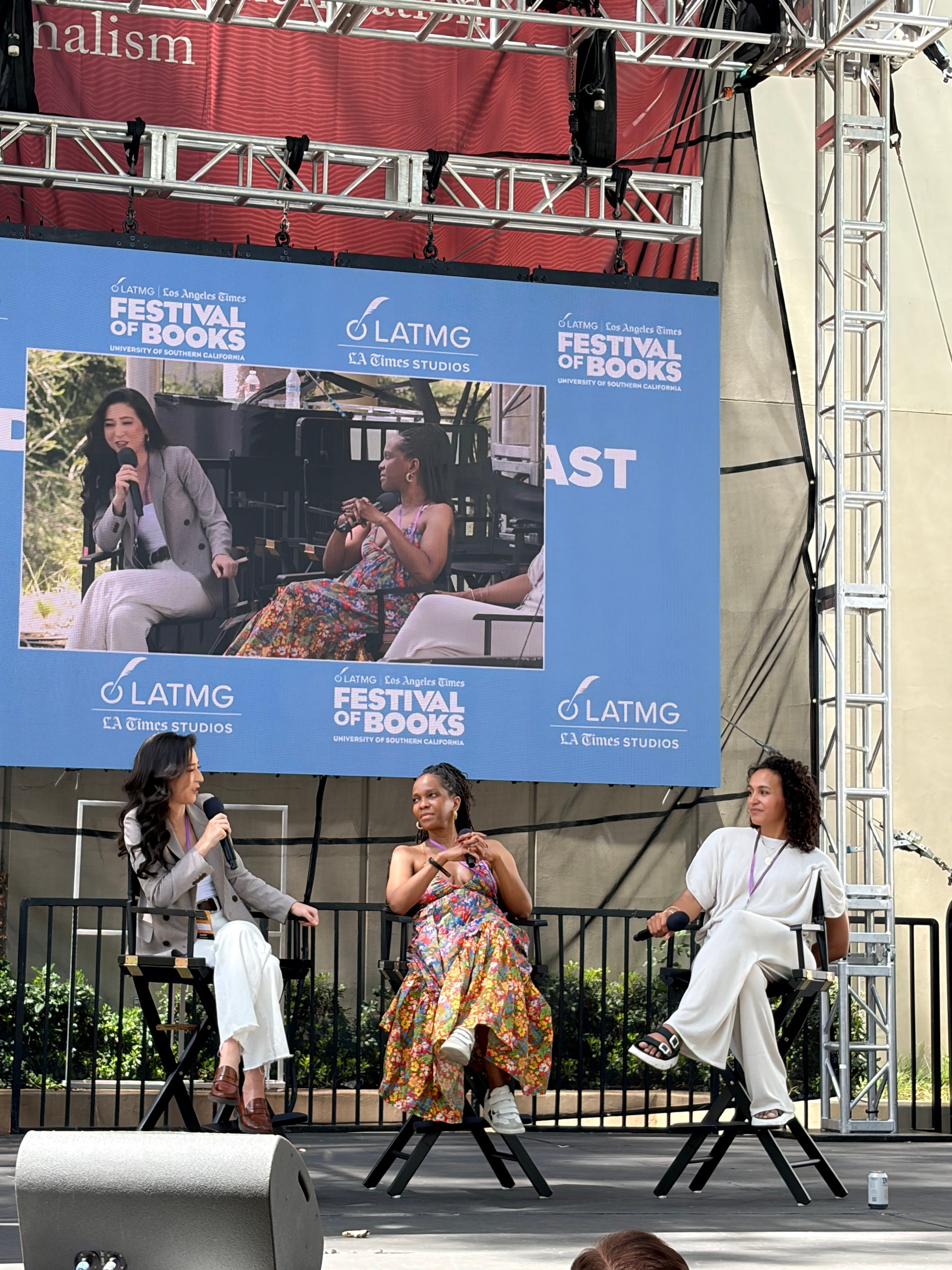
It should be said that aside from AWP, at every festival I have been a part of, I was told where I would be and who I would be with. The organizers are balancing a lot, so I understand why they can’t really take requests. I do know that some authors have approved lists of people they will be in conversation with, and others do require that they get final approval. I’m not there yet in my career. And also, I personally love the challenge of trying to make four books fit together for a meaningful conversation.
Q: How do you prep for moderating these panels? Do you riff in real time?
A: The first thing I do is read all the books. That might sound obvious, but some people moderate panels and you can tell they have not read the books.
When I am reading for a panel, I try and think about the theme/title of the panel and use that to shape my questions and how I approach the texts. This year, my panel was called “The Mosaic of Us: Individual Memoirs and the Collective Truth of Black Life in America,” so as I read the books6 I wrote down questions and thoughts that link to this title in some way.
I create a new note in my phone for the event and then subtitle each section with the author’s name. As I read, I take notes and write big questions that I think might work for the group, while also noting smaller, more specific things that fit each book on an individual level.
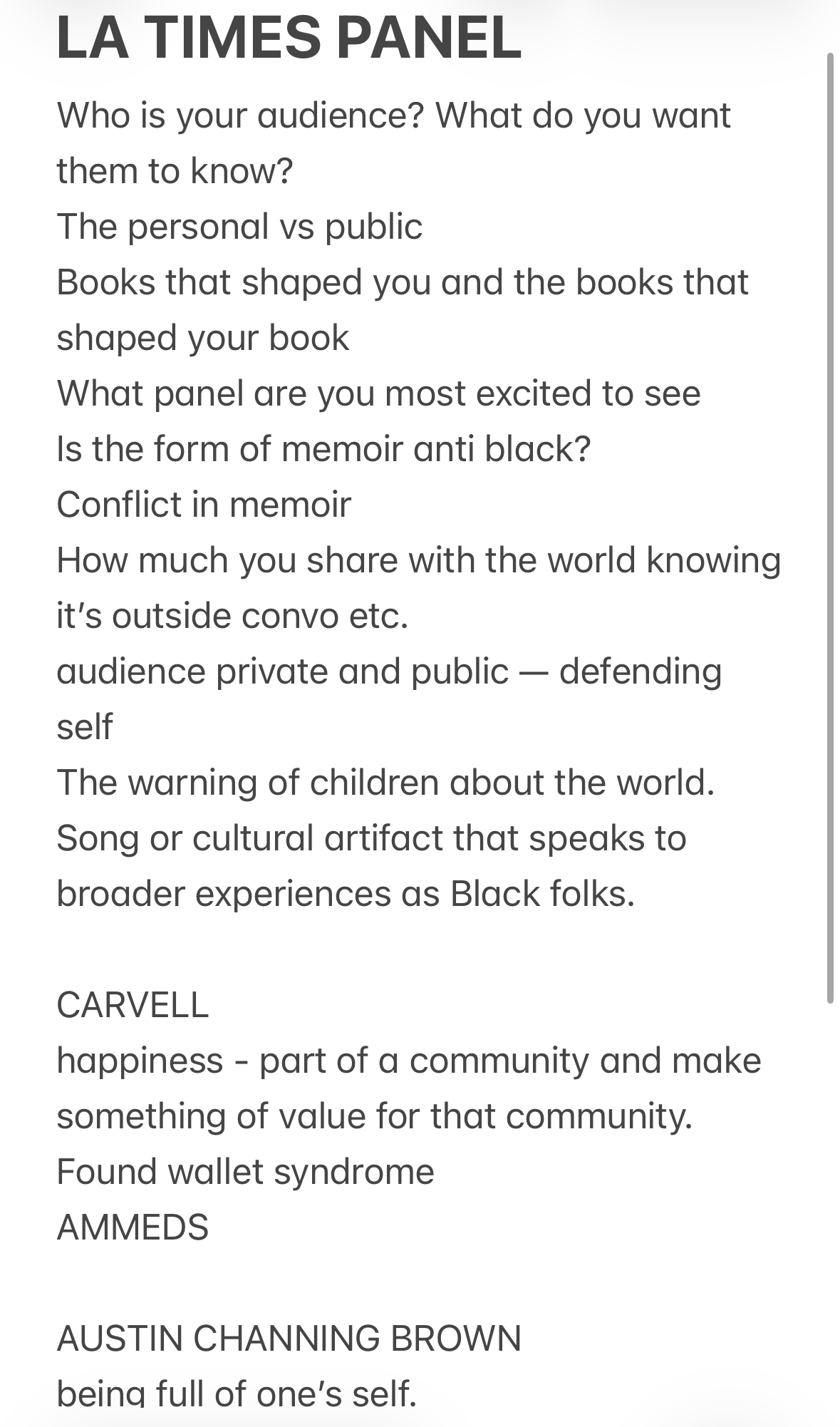
After I finish all my reading, I comb through this rough notes app draft and try to finesse questions that situate the books in conversation. What is something that I notice in all the books? What is one thing that an author felt strongly about that maybe another author had a different take on? How can we talk about that?
I have pretty intense performance anxiety7, so it is very important to me that I prepare a shit ton of questions. Way too many. I like to know I have options for which direction to steer the conversation should the wheels start to fall off. There are times that no one on the panel is interested in the things I really want to talk about, . Or times where they get hyper-fixated on one thing when I want us to pivot.
Right before any panel or live event, I always try and study up on my questions as a way to re-focus my energy and remind myself of what my plan is. The more prepared I can be, the less my anxiety can get in my way.
Before we start, I always try and check in with everyone on the panel to get a sense of who they are (their cadence, energy levels, verbosity) and let them know what I’m hoping for in the panel—like that I want them to talk with their fellow panelists and not just at me. With this, I’m doing a temp check and trying to set the tone.
Once the panel starts, I do my best to ask my questions, listen very, very closely, and try and think and come up with follow-ups. My goal is to be present and to also be ahead of the audience and panelists with where we should go next.
To answer your second question, yes, I love to riff. Sometimes something comes up organically that is so juicy. It is a nugget worthy of discussing. And so that is what we do. I aim to be over prepared so I can recognize those moments as they present themselves and seize on them. If I am worried about what I am going to ask next or trying to think of things to say, I can’t be present for what’s happening in front of me. Which means I miss out on the golden opportunities that make a panel really special.
Being flexible as a moderator is really important. And as a pretty inflexible person8, it takes a very concerted effort and a level of preparedness to pull it off.
Q: I am wondering if there is one official bookseller of the festival? Also, do authors and speakers get paid?
A: There are a bunch of official booksellers. Each venue (outdoor and indoor stage) has a bookstore associated with it. Which means any event at Newman Recital Hall has a signing at XYZ tent, and people can buy authors’ books there. The bookstore tied to each tent has books for sale for all the people who come through that stage for the two-day festival. Many of the official booksellers also have their own paid tent in the main exhibitor area, where they host their pop-ups and feature whatever books they want.
To my understanding, no one is paid. Now, that might not be true. But that is what they tell me. I wonder how it works for the big big big names. It does help that the festival is in LA and lots of big-name people live here and wouldn’t have to travel to attend.
Q: How much did Bezos pay to get Lauren to be added to the lineup? Was she a late add-on?
A: I didn’t even know she was there, to be honest. But Audible does sponsor an award and they are a major sponsor of the festival. So like, a lot of money?
Q: They probably don’t write their books, but were there any celebrity authors you were excited about?
A: Lionel Richie. I didn’t meet him or see him. But I sensed him, and I like to think he sensed me, too.
Q: Curious about BookCon vs. Festival of Books. And why were they on the same weekend?
Q: LA Bookchella vs NYC BookCon: Which is better and why are they at the same time?
Q: Obvs not in your control, but wonder why it’s the same weekend as BookCon? Odd to conflict?
A: The LA Times Festival of Books has been on the same weekend for 30 of the last 31 years9. It is the third weekend in April. Period. This is the first year BookCon was held since 2019.
BookCon made the choice to host their event the same weekend as the Festival of Books. Everyone10 knows when the festival of books is. It is the largest book festival in the country, and has been around for 31 years. They knew what they were doing.
The good news is, BookCon has moved their event in 2027 up to April 10-11. The Festival of Books will remain on their usual weekend, April 17-18.
As far as the events go, I went to BookCon in 2019, and I’m sure things have changed a lot as the book landscape has changed. But BookCon is much more like a convention. It is inside, it is ticketed, you have to sign up for events and signings in advance and pay. It is now—from what my sources tell me—very genre-centered (romance, fantasy, etc). There is a fervor to the weekend that is not there at Bookchella. Bookchella is crowded, yes, but it is outside and there are plenty of places to chill out and hang. It is more festival than convention. So, I guess, the names are doing what they need to do.
Q: Were there any star-studded after-parties, hang outs, or anything you caught wind of? Did you discover any author news, like new collaborations, upcoming projects, or someone supporting a fellow author in a big way?
A: There is one star-studded after-party that I know about. I got the invite—but that is because I host it. The Stacks does an annual party at Reparations Club on the Saturday night for friends of The Stacks. Because so much of the podcast is recorded virtually, there are many past guests who I have never met in person. So I started doing this party four years ago, and it is the best. It is just incredible to be in a room with so many people who have written the books that are on the shelves.
For me, in a very personal way, it is a physical manifestation of the work I have been doing mostly alone in front of a computer. Like, all these people who have meant something to me and the show are all here in this one room just vibing out and eating and drinking. In my mind, I know that they would all be friends, because I think they’re all great, but seeing them meet or reconnect is so special.
As far as author news, I don’t think I have anything I am allowed to break here. I was sitting at a few tables over the weekend listening to gossip and trying to play it cool. I can’t repeat any of it—you know that is the number one rule of getting to hear more gossip—but just know the book world is filled with feuds, many of them very trivial. I love it.
Q: What one book recommended to you this weekend are you picking up first?
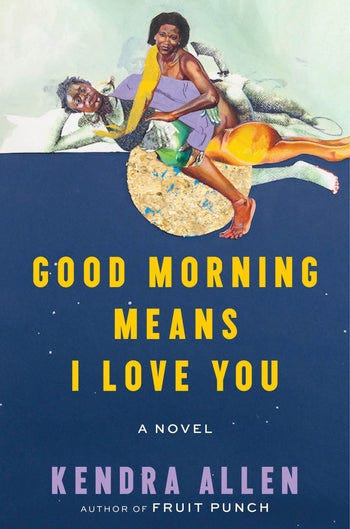
A: Jason Reynolds mentioned a forthcoming book he is reading called Good Morning Means I Love You by Kendra Allen. He told me it is like if Sula had kids and they grew up—this is their book. So you know, I reached out to the publisher, and we shall see.
Q: I’m wondering what panels you went to at the FOB and what books/authors you may have discovered (new to you).
A: Here is where I confess. I was a bad girl this year. I spent a lot of time in the greenroom and just roaming around the campus with friends. I only went to one panel that wasn’t mine, and it was with and Justin Torres. It was fantastic.
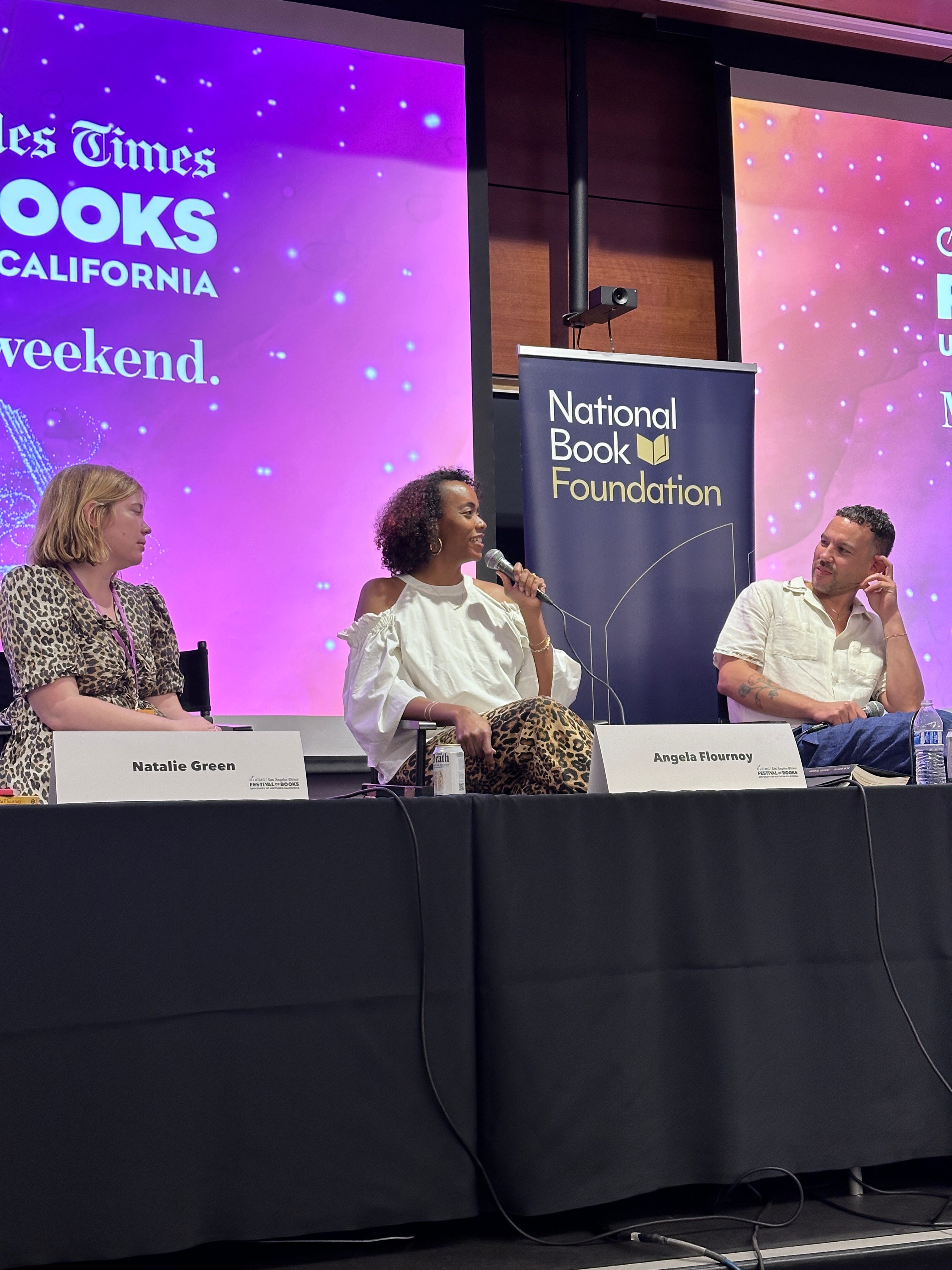
I did meet and she was so cool that I feel like I finally need to read Girlhood. I also got to spend time with Elizabeth Crane11 (who everyone loves) and found out she has a story about nemeses, so now I must read that as well. And I finally got to meet the great . She is better than I could’ve imagined.
Thank you all so much for asking your questions. This is a long one, so if you made it to the end, give yourself a gold star. And feel free to ask follow-ups in the comments. Happy to blather on.
If you want more of me and my nonsense be sure to listen to The Stacks podcast every Wednesday and follow me over on Instagram for a lot more book content. Make sure you’re subscribed right here, so you never miss an installment of Unstacked.
You can earn a free subscription to Unstacked by sharing it with the people in your life. Just tap the button below and spread the word.
This post contains affiliate links. If you make a purchase through the links above, I may earn a small commission at no additional cost to you.
Bookchella is a specific term for the Festival of Books. Some people like to use it for other festivals. They are wrong. This is the only Bookchella. It happens the second weekend of Coachella, and in LA, that means something. Just like there are other music festivals but only one Coachella, there is only one Bookchella.
For the first 15 years of the festival, it was held at UCLA, and in 2011 it moved to USC.
In the picture with me and S. A. Cosby, we are standing right in the doorway where you meet to head out for your panel.
Every panel has an assigned signing time immediately following the panel. It’s at a signing tent, so this bookstore-related signing is a bonus activity in addition to the official signing.
Authors and publicists, please correct me if I’m wrong.
Black Genius by Tre Johnson, Another Word for Love by Carvell Wallace, Full of Myself by Austin Channing Brown, and I Lived to Tell the Story by Tamika D. Mallory.
We could talk about performance anxiety one day if people want. I have it for everything I do, including every recording of the podcast.
This is a kind way to call yourself a control freak.
Last year, they held it the fourth weekend because Easter fell on the Sunday of what is normally the festival weekend.
In the book and festival space, at least.
I have had the pleasure of seeing her over the years, so we had met before.
You might also enjoy
Friday Mood Recs: Six books to read while coming down from your Artemis II high

Seven bookstores within five miles
Every garden is a community garden
Books to read when you're sad
Reading in Public No. 97: My approach to reading poetry